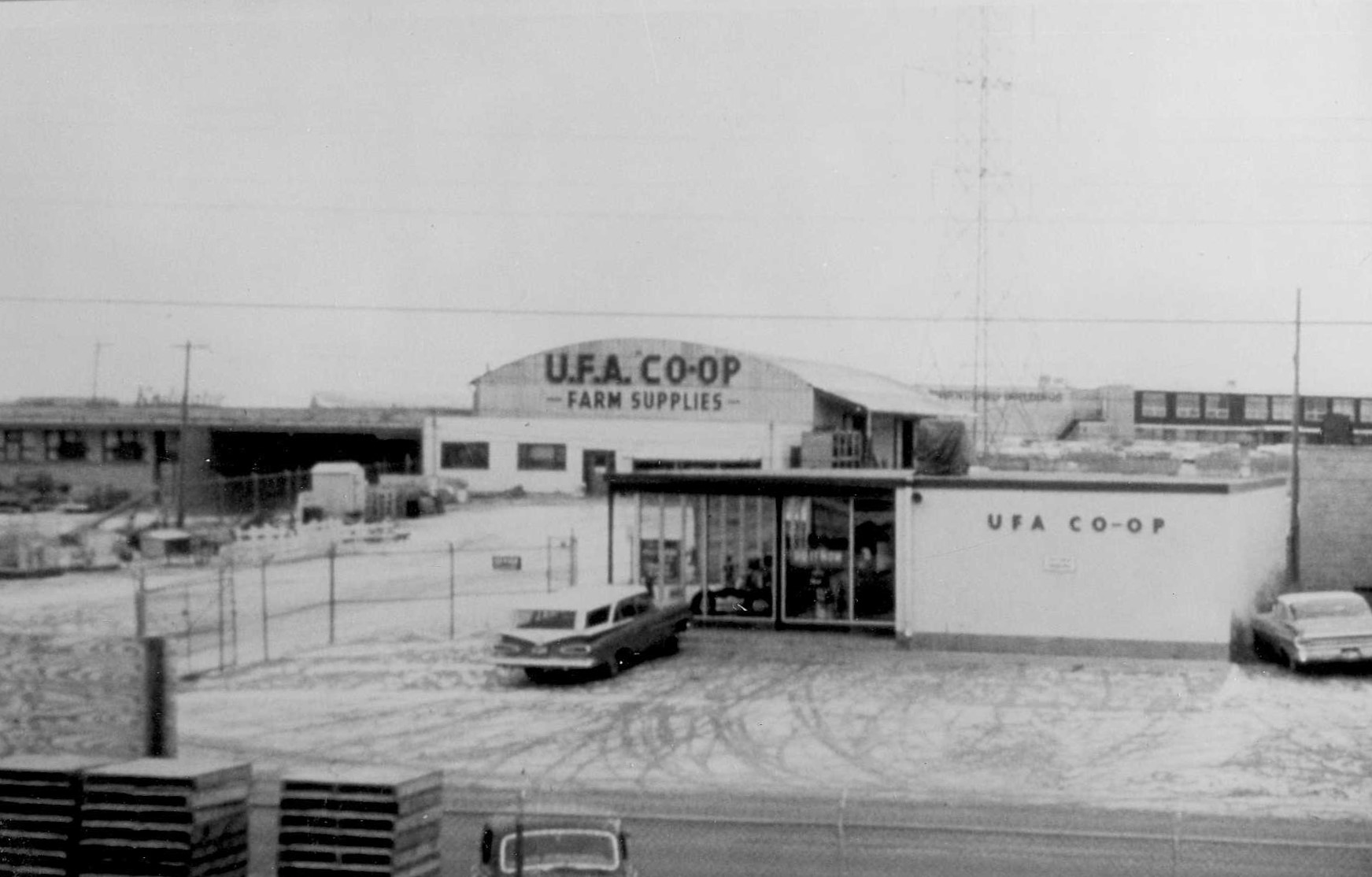

United Farmers of Alberta (UFA) have been a cooperative since 1909, but it was not until 1953 when the first UFA Farm Supply store was built in Calgary. Douglas H. Smith, along with many other forward-thinking UFA employees who followed him, developed the strong foundation of the UFA Farm Supply Division that would withstand many challenges and constant changes of the world. Throughout the province, there are UFA Farm Supply stores present to this day, as it was through their sincere intention to serve local farmers and ranchers that the farm stores remain standing tall.
Before the UFA Farm Supply Store, there was the UFA Central Co-operative Limited that carried grocery, hardware, household items, etc. similar to other local cooperatives. In fact, their supplies came from Alberta Co-operative Wholesale Association (ACWA). However, unlike other cooperatives, the demand for UFA Co-op was greater and ACWA struggled to keep up with their supply.
In 1951, despite the high demand in UFA stores, UFA left the wholesale retail market to focus on their members: farmers and ranchers, and shifted to a market that would solely cater to farmers’ needs. UFA sold their 21 branches of stores to ACWA and Douglas Smith was appointed manager of the newly created UFA Farm Supply Division.
Unfortunately, Smith passed away before he could witness the impact of his work, which turned out to be a strong foundation for the UFA Farm Supply Division. The UFA Farm Supply Division was eventually handed down to Bill McCartney in 1953, who was UFA’s credit manager at the time. McCartney continued Smith’s work and ensured that the UFA Farm Supply store was one that farmers and ranchers would trust and turn to for wherever they were in the province.
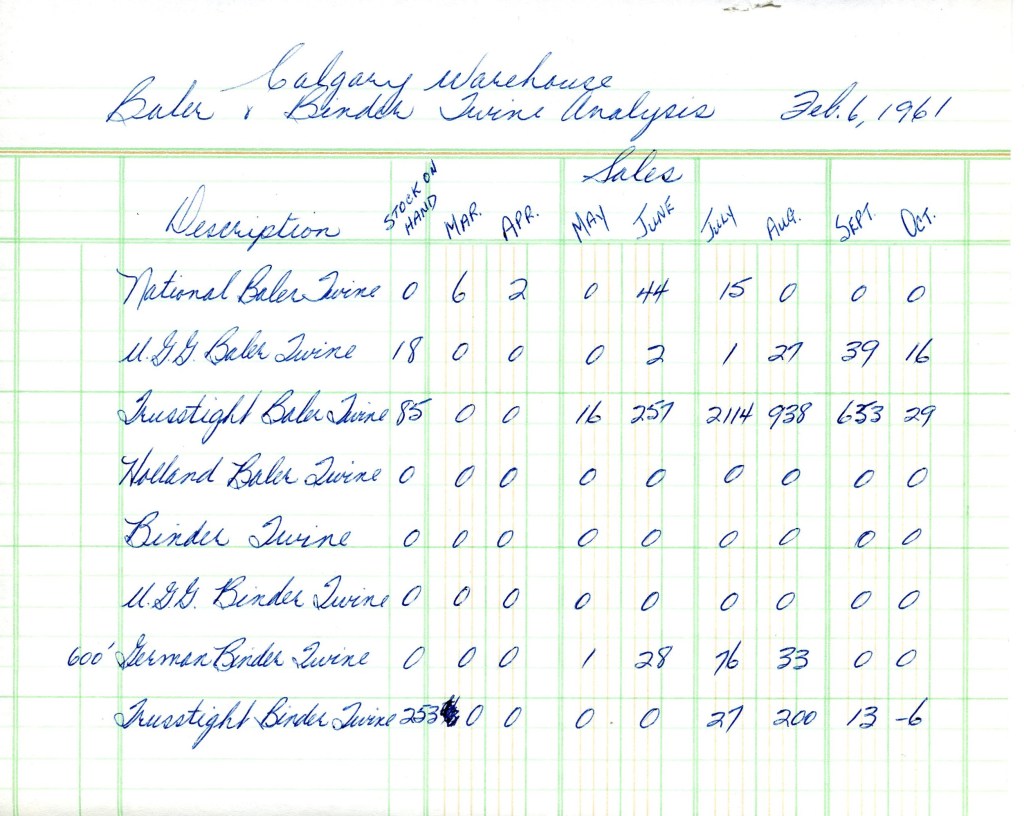
To achieve his vision for the UFA Farm Supply store, Bill McCartney ensured that the products would come from great quality yet low cost suppliers, so he inspected materials such as twine from mills in Portugal, England, and Holland.
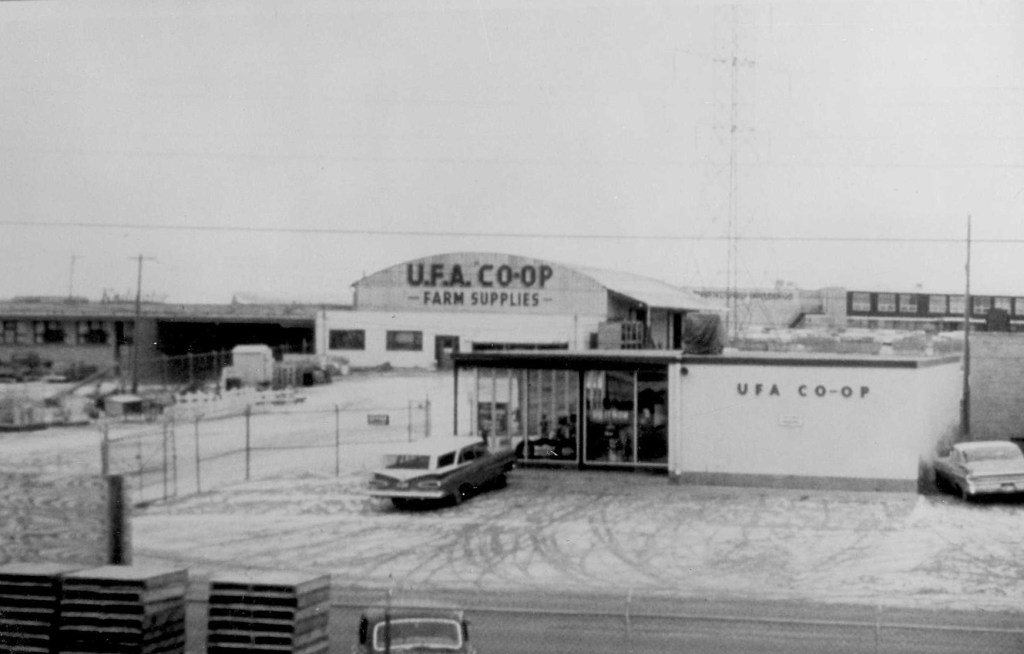
In addition, the design of the farm store was also meant to be organized differently than other cooperatives and went beyond the sales counter; it had a showroom, storage for retail stock, and stockpiles of inventory ready for shipments to locals across the province. It became more than a simple fenced yard with a 60’ x 100’ warehouse building.
With a different look that set it apart from the competition along with the big bold letters that spelled “U.F.A. CO-OP FARM SUPPLIES”, UFA successfully attracted their target customers. The Calgary Farm Supply store gave an inviting impression to the farmers almost as if saying, “This is the store for you. We have everything that you have been looking for and more”.
The first UFA Farm Supply store proved so popular with farmers and ranchers that in the span of eight years since it opened in Calgary, UFA built four more stores in different locations. In 1957, the second farm store was built in Edmonton. Three years later, in 1960, they opened their store in Grande Prairie.
Six years after the Calgary location was opened, in 1963, sales from each farm store totaled over $2.5 million: a great achievement and a testament to the success behind the careful and thoughtful planning that had gone into each farm store. It was such a success, that locals from different parts of the province would send letters to UFA requesting to build a farm store in their town.
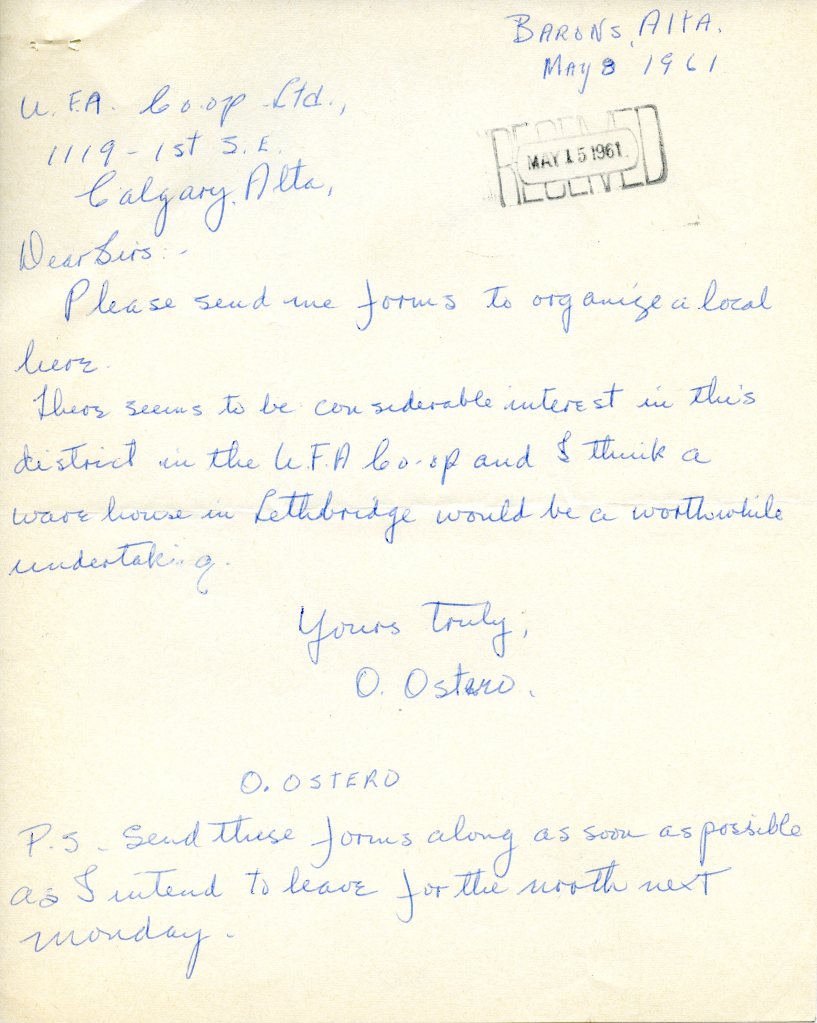
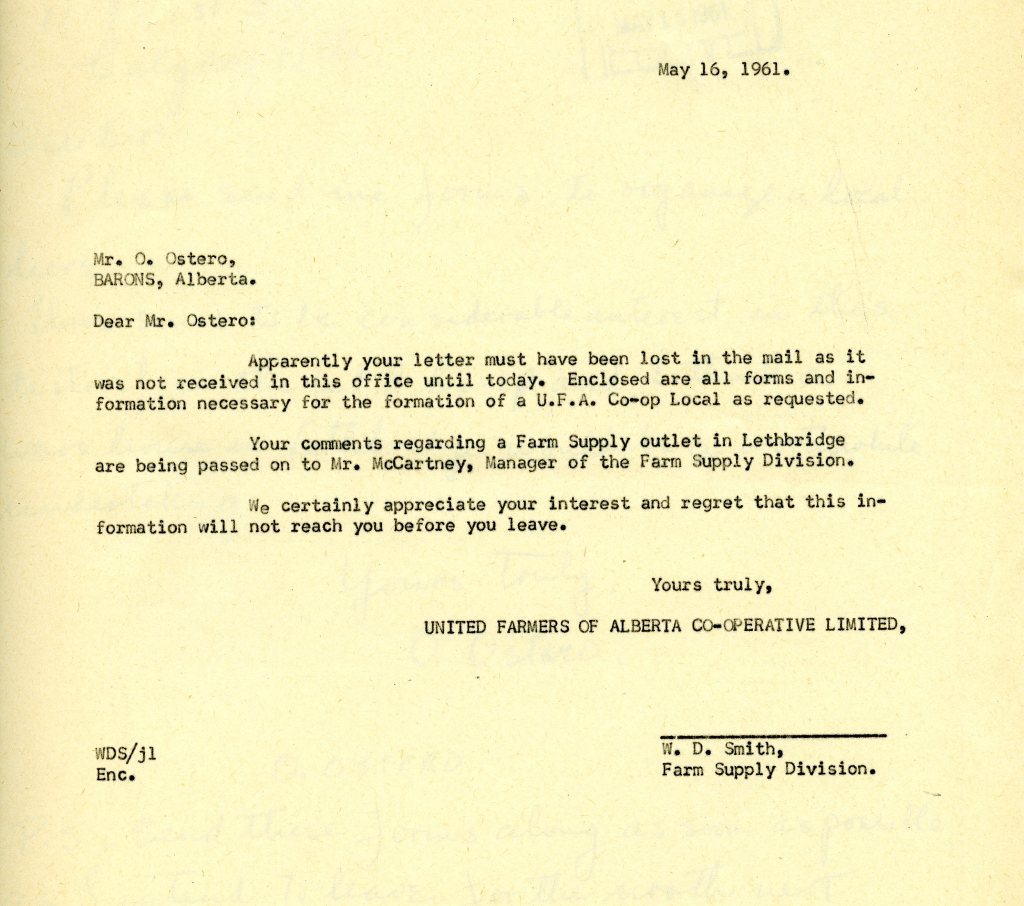
In the following years, two more stores opened to the public: one in Red Deer in 1961, and another in Lethbridge in 1962. With the additional locations, sales kept increasing. As of 1963, there were five farm store locations across Alberta, and the Farm Supply Division reported a new sales record of $6.5 million under the management of Bill McCartney. A year later, McCartney was appointed General Manager (a title which was later changed to Chief Executive Officer in 1982) and Farm Supply Division sales hit $18.7 million.
In the span of 10 years, revenue from Farm Supply stores have multiplied more times and there are many contributing factors and reasons in addition to Douglas Smith’s and Bill McCartney’s combined efforts.
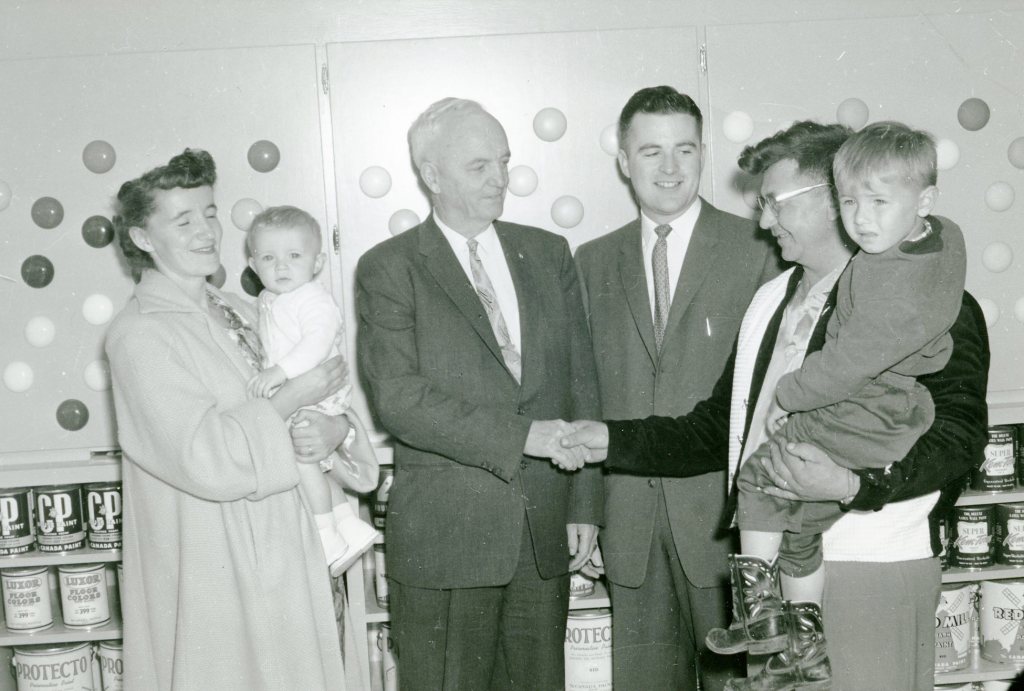
While it is true that the first Farm Supply stores were built in Alberta’s major cities with the highest population, and that played a role to its huge success, there were other people that should be given credit to. Managers that were appointed to their respective store locations were chosen carefully, such as Lloyd Clark and Gordon Wenzel. Clark was the first manager of the Grande Prairie Farm Supply store and a former partsman dealer for International Harvester.
Lloyd Clark “brought knowledge of the agriculture industry and of the machinery that producers relied upon to run their operation.”
Gord Tolton in “Deep Roots”
Gordon Wenzel, while not the first manager of the Red Deer Farm Supply store (he was the second), was previously a salesman for International Harvester and Cockshutt farm equipment until he joined the UFA team in 1959.
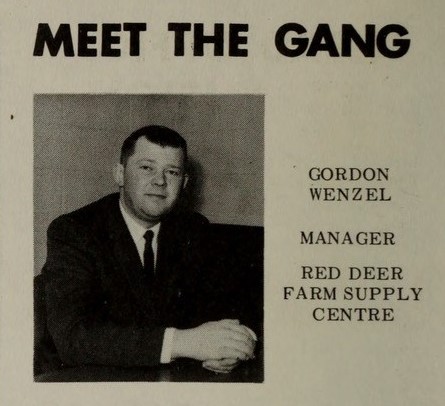
Both Wenzel and Clark were equipped with sufficient experience and knowledge about agriculture, farming, and sales. Interestingly, this tradition would go on for decades as many of the managers for Farm Supply stores were hired for their farming background, experience within UFA, or were a previous manager of a UFA Farm Supply store.
In addition to well-equipped chosen managers and to the strategic placing of the Farm Supply stores in major cities of the province, there was another geographic strategy that UFA employed. Farm store locations were determined by their proximity to the railway, which was crucial to move people, products, and petroleum. It was important that the Farm Supply store would be close to the railway for easier transportation of supplies and the fact that it would lead people to the store.
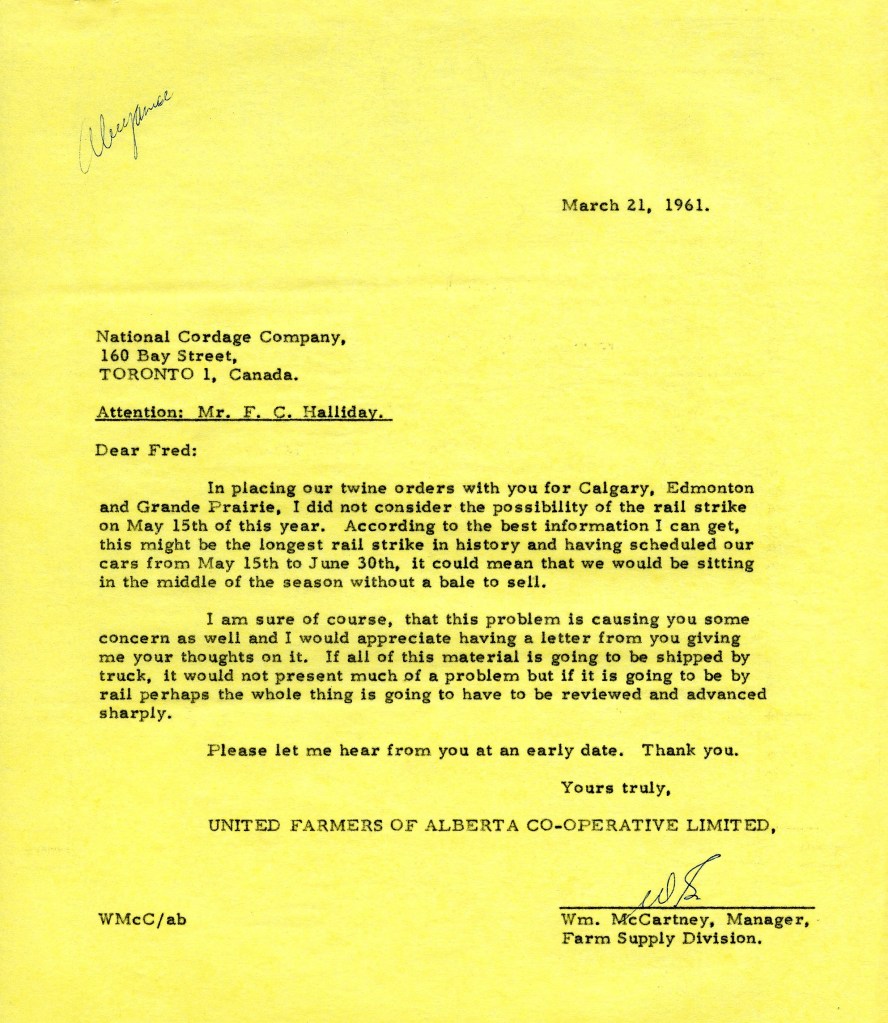
Unfortunately, there was a time when the railway did not bring convenience to UFA, when a rail strike happened in 1961. According to the correspondence sent by Bill McCartney to National Cordage Company, supplier of UFA’s twine:
“it could mean that we would be sitting in the middle of the season without a bale to sell.”
In addition, long before UFA was founded, the railways brought urbanization and industrialization as an engine of progress that shaped the province. In response, a working class population emerged, fled to the cities, often leaving farms unattended. While farming areas had a remarkable population decrease of 67%, Alberta’s regional hubs – Calgary, Edmonton, Grande Prairie, Red Deer, and Lethbridge – emerged. It was for this reason that the first five UFA Farm Supply stores were established at those primary locations.
Less populated farm areas meant less target customers for the UFA Farm Supply stores outside of the regional hubs, but with industrialization, remaining farmers became more specialized. Farmers started raising purebred cattle and farming registered seed farms. Chemical fertilizers and farming equipment also entered the agricultural market. With the regional hubs slowly converting into urban cities, stronger rural regions emerged, such as Westlock, Barrhead, Camrose, Wetaskiwin, Vermilion, Lloydminster, Brooks, Taber, Claresholm, and High River. Agriculture depended on these new centres, and with a UFA Farm Supply store present in town, farmers had access to supplies and services to meet the industrial changing world.
From 1964 to 1966, UFA opened six more farm store locations in Vermilion, Camrose, Grimshaw, Hanna, Stettler, and Westlock.
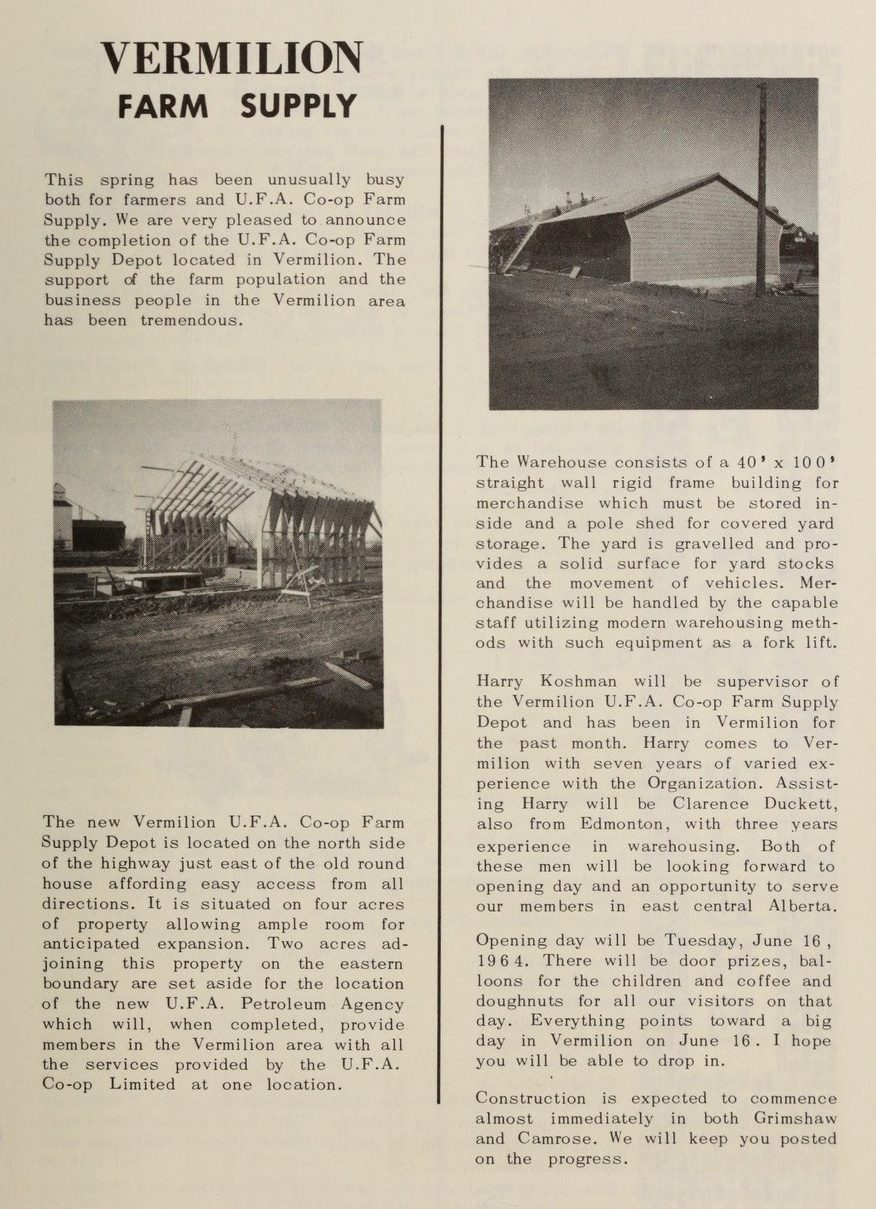
These new store locations were not solely determined by proximity to the railway anymore, but through their proximity to these regional hubs. For example, Vermilion was 125 miles east of Edmonton; Camrose was close to both Edmonton and Red Deer; Hanna was the centre of short grass grazing north of the Red Deer River. By 1966, UFA boasted 11 Farm Supply stores all throughout the province.
However, there were challenges for the UFA Farm Supply Division and tough years as well. Even the continuous growth of the UFA Farm Supply Division became a problem, as it became harder to manage. More farm store locations meant more employees.
In 1974, the position of Farm Supply Division Manager was left to James (Jim) Shindler, and he introduced a new position of regional managers to supervise the stores more closely. The focus shifted from a macro lens of expansion to micro supervision of the farm stores. Efforts were made to improve customer service in stores, such as holding seminars and conferences for branch supervisors.

The UFA Farm Supply Division was not only challenged by expansion and growth but also from natural and world events. From the 1970s until the early 2000s, agriculture had seen several droughts and outbreaks that severely impacted farms and livestock. This was compounded by the economic uncertainty spanning from the 1980s including high interest rates and rising building and land costs.
For UFA Farm Supply stores, the rise of globalism had both positive and negative impacts, which contributed to another opportunity of growth for the UFA Farm Supply Division. Globalism allowed for the North American Free Trade (NAFTA), an open-border of trade imports and exports between Canada, US, and Mexico. However, globalism also allowed for protective tariffs in countries outside North America to protect their local products; at times, this has depressed the market for Canadian agricultural products.
With competition from other global retailers looking to enter or expand in Canadian markets, UFA had to expand product lines and stores. This included a rebranding in the 1990s, starting with a tagline, “Service You Can Trust”.
Also included were new strategies to attract non-members. From the 3,000 different types of products, farm equipment and chemicals that were offered in the 1960s, they expanded their product line to include clothing, such as high-end western wear, lawn and garden supplies and machinery, hand and power tools and other hardware items, building supply products, and even home renovation products. Expanded product lines also meant that UFA needed more spaces in store locations.
Despite some earlier challenges brought by the 70s until the early 2000s, UFA did not stop expanding their network of Farm Supply stores in the province. By the end of the 20th century, in 1999, there were a total of 34 UFA Farm Supply stores across the province and the Lethbridge Farm Supply store reopened as the biggest store of the Farm Supply Division.
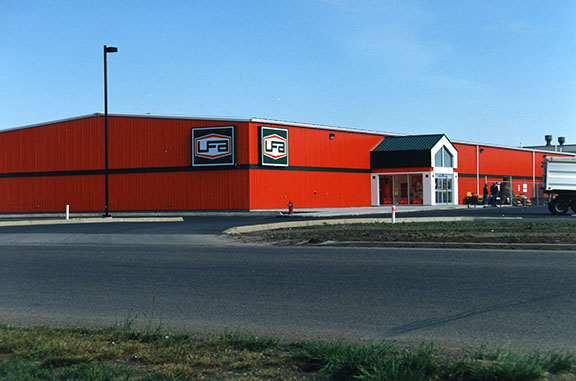
The Lethbridge Farm and Ranch Supply store “featured a 12,000 square foot showroom, a drive-through warehouse, expanded product lines, and the latest merchandising techniques.”
The UFA Farm Supply Division has continued for more than seven decades and that says a lot about their resiliency. When times are tough, the UFA Farm Supply Division saw challenges as an opportunity to grow.
Douglas H. Smith likely did not imagine that his efforts and ideas would sustain UFA Farm Supply stores all these years, but it was because he took the first steps and those after him followed suit. Bill McCartney, Jim Shindler, and all the employees of the UFA Farm Supply Division and Farm Supply stores are equally responsible for its subsequent success.
In the late 1950s, U.F.A. Co-operative Limited printed an announcement on the growth of its farm stores along with the history of the organization entitled “The U.F.A. Co-op Farm Supply Can Serve You Best: Here is Why”. It lists 11 reasons to persuade non-members to join the membership at U.F.A.
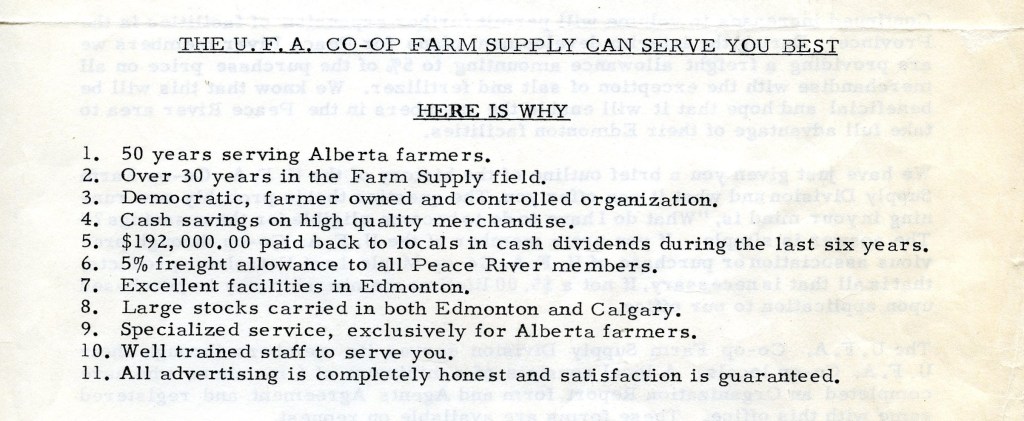
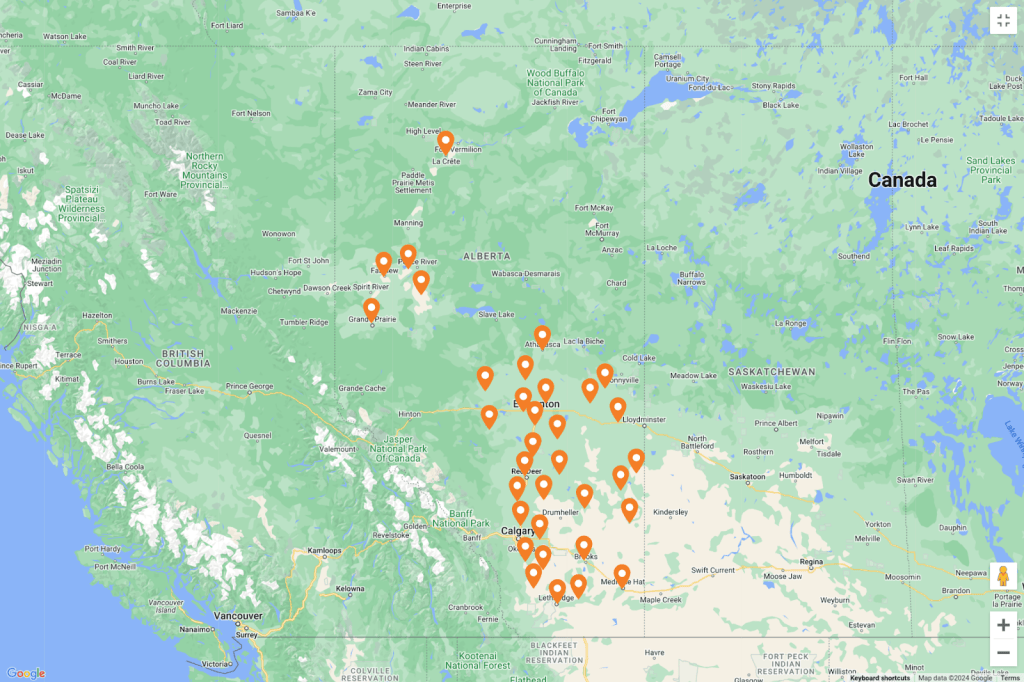
Today, when you see an orange UFA Farm Supply store standing tall, it not only invites farmers and ranchers, but everyone else to come, visit, and know their story. Looking at the UFA Farm Supply stores now and knowing the history behind its struggles and strategies through time, it becomes an unwritten self-advertisement of “The U.F.A. Co-op Farm Supply Can Serve You Best”. After all, it has been decades and decades later, and it still has the best “Service You Can Trust”.
Written by Thrisha Go, Archives Assistant
References
Calgary Farm Store. (1959 – 1960). UFHS photo collection (Fonds 11, series 18, file no. 3), United Farmers Historical Society Archives, Calgary, AB, Canada.
Grande Prairie Farm Store Opening. (1960). UFHS photo collection (Fonds 11, series 18, file no. 41), United Farmers Historical Society Archives, Calgary, AB, Canada.
Paterson Photography. (1999). Lethbridge Farm Store. United Farmers of Alberta Co-operative fonds (Fonds 4, series 19, file no. 46), United Farmers Historical Society Archives, Calgary, AB, Canada.
Switzer, Alice. (1966). “In the Spotlight: Bill McCartney”. The U.F.A. Co-operator (Vol. 4 no. 6, pp. 2-3). United Farmers of Alberta Co-operatives Ltd.
Switzer, Alice (Ed.). (1973). “Seminar for Supervisors”. The United Farmer (Vol. 11 no. 4, pp. 12-13). United Farmers of Alberta Co-operatives Ltd.
Switzer, Alice (Ed.). (1984). “Stand and Be Recognized”. The United Farmer (Vol. 22 no. 5, p. 3). United Farmers of Alberta Co-operatives Ltd.
Tolton, Gord. (2009). “Boom Times”. In Deep Roots. Promising Future. (pp. 156-160). UFA.
Tolton, Gord. (2009). “Co-operative Ups and Downs”. In Deep Roots. Promising Future. (pp. 137-139). UFA.
Tolton, Gord. (2009). “Defining Co-operative Success in a Hostile Environment”. In Deep Roots. Promising Future. (pp. 171-177). UFA.
Tolton, Gord. (2009). “Return to the Frontier”. In Deep Roots. Promising Future. (pp. 148-150). UFA.
Tolton, Gord. (2009). “The Ugly ‘80s”. In Deep Roots. Promising Future. (pp. 160-162). UFA.
UFA. (2024). Farm & Ranch Supply Store Locations [Screenshot]. https://ufa.com/myUFA/locations.
United Farmers of Alberta Co-operative. (1961, February 6). National Cordage Company. United Farmers of Alberta Co-operative fonds (Fonds 4, series 18, file no. 9), United Farmers Historical Society Archives, Calgary, AB, Canada.
“Meet the Gang”. (1964). The U.F.A. Co-operator (Vol. 2 no. 4, p. 1). United Farmers of Alberta Co-operatives Ltd.
“Vermilion Farm Supply”. The U.F.A. Co-operator (Vol. 2 no. 6, p. 6). (1964). United Farmers of Alberta Co-operatives Ltd.
Further Reading
Switzer, Alice (Ed). (1968). “Fifteen Year Service Award”. The United Farmer (Vol. 6 no. 4, p. 5). United Farmers of Alberta Co-operatives Ltd.
Switzer, Alice (Ed.). (1972). “Camrose Farm Supply Centre”. The United Farmer (Vol. 10 no. 10, pp. 7-8). United Farmers of Alberta Co-operatives Ltd.
Switzer, Alice (Ed.). (1977). “Farm Supply Division”. The United Farmer (Vol. 15 no. 1, pp 6-7). United Farmers of Alberta Co-operatives Ltd.
Switzer, Alice (Ed.). (1980). “Farm Supply Division – Appointments”. The United Farmer (Vol. 18 no. 1 p. 7). United Farmers of Alberta Co-operatives Ltd.
Switzer, Alice (Ed.). (1981). “It’s Happening in High River”. The United Farmer (Vol. 19 no. 6, p. 11). United Farmers of Alberta Co-operatives Ltd.


One thought on “The U.F.A. Co-op Farm Store Can Serve You Best: Here is Why 70 Years Later”