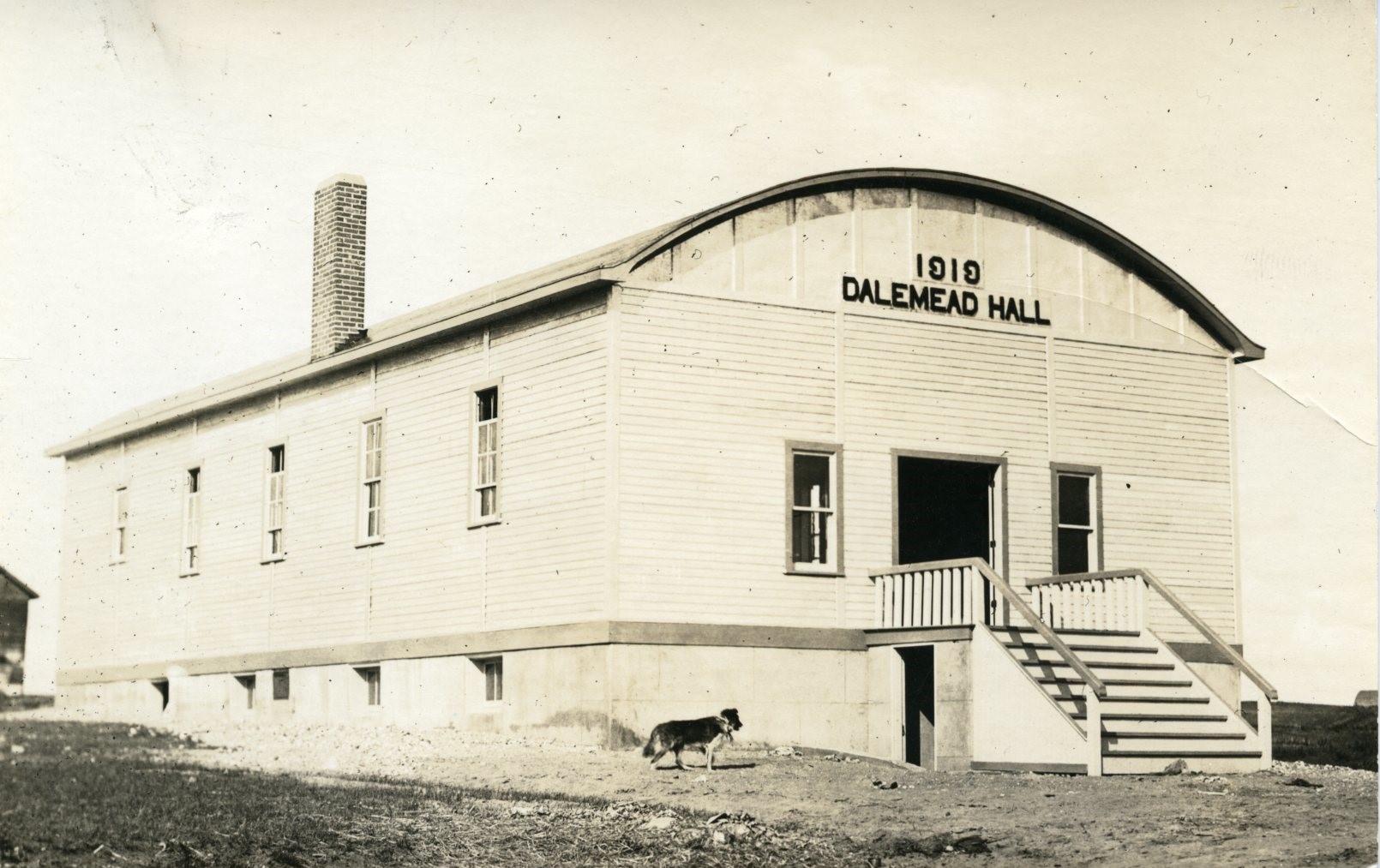

The community hall is often a symbol of a community’s priorities, to gather, organize, hold events, provide support, communicate information or various other reasons. The tradition of the hall goes back a century when pioneers and settlers were looking for ways to create bonds in their new country and fulfill organizational duties as burgeoning communities. Communities, of course gathered prior to this, but the turn of the century saw an increased focus on having a dedicated structure built to serve the needs of the people, whether religious, political, educational or social.
The United Farmers of Alberta (UFA) formed in 1909 and had a community focus from the beginning, that started with the Locals. Gord Tolton, author of UFA’s centennial history book, describes the Local as a unit that “brought the community together…[going] beyond neighborly assistance, to discussion on weighty issues of economics, politics and the power of community initiative.” UFA depended on its Locals to bring issues from the community forward so that they could help improve the agriculture business as a whole and modernize rural living conditions for farmers. This included lobbying for improvements to rural roads, better rates for farm loans, and building grain elevators and packing plants.
A UFA Local was the intermediary between its members and the organization, and they had freedom to support community initiatives and events that were of importance to their specific communities. Locals were known to fundraise for their community, for buildings and services that were needed including hospitals, schools, cemeteries and of course community halls. UFA volunteers would even provide the labour required for these projects.
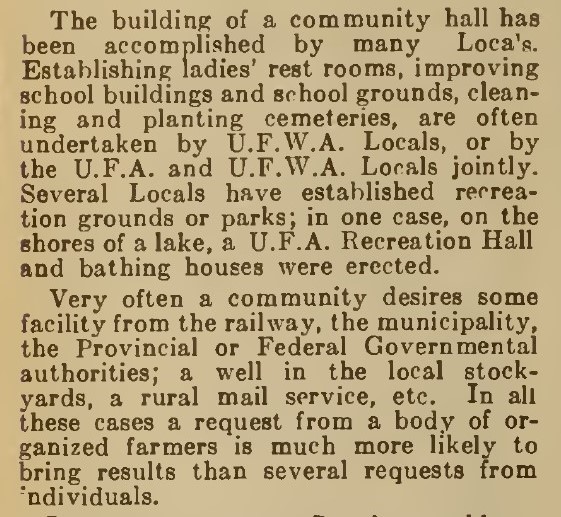
UFA Locals heard from their members that a dedicated space for community meetings, weddings, seminars and other events was needed. As well, UFA Locals were growing and gaining members, and were soon in need of a larger meeting space to conduct their own business. A letter from T.P Taylor from the hamlet of Blackfoot, Alberta to UFA Secretary Herbert Higginbotham on May 18, 1919 reads “in the early days of our community the want of a meeting place was felt. The plan of going to a member’s house, taking each in turn, was tried out and proved wanting in some of the most essential points.” The need for communal spaces was increasing and soon the momentum for communities to build their own halls was in full swing.
The hamlet of Blackfoot was determined to have its own hall, and a UFA member proceeded to collect funds from both members and non-members, organize a building committee and drew up plans for a 26 ft. by 46 ft. hall. A location was chosen in January of 1915 and work started that month despite the weather dipping 20 to 30 below 0°C. About a month later, the hall was completed and opened with a community dance. T.P. Taylor noted in his letter to Higginbotham that the biggest criticism the hall faced when it first opened in 1915 was that it was too large. By 1919, Taylor was pleased to report that they had started working on an extension to the original hall as it had become so filled during events. According to Taylor, one thing was for sure, the Blackfoot UFA Local’s meeting attendance was far better since having their own public meeting space.
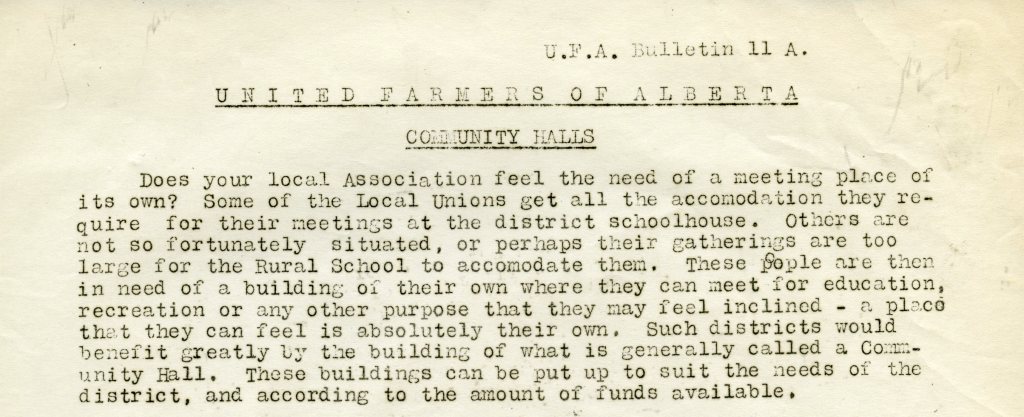
A U.F.A. bulletin published around 1920 outlined community halls to encourage other Locals to build a hall in their own community. Simple halls were described as having an auditorium, movable seating so the space could function as a meeting room, a dining room or dance hall, a stage for theatre with dressing rooms, and a kitchen equipped with a stove. Some halls might have contained special rooms such as a library, game room, or women’s room. The land the halls were situated on could have been one to several acres, with larger sites sometimes having baseball diamonds, basketball courts, or playgrounds.
The bulletin states that raising money for the construction of the hall was secured “by the sale of stock in a community organization” or by soliciting general contributions. Another way was to accumulate funds through dues, hall rentals and entertainment activities repaid to the lender after construction was completed. However, labour and materials contributions were often done by the Locals and other community members. Depending on the needs of the community, a hall could cost between $2,500 and $7,000, with the exception of the Garden Plains UFA, who reported that their hall was valued at $800 in 1914. Advice from J.W. Robson of the Lockhart UFA Local recommended to others looking to build a hall “do not try to build something fancy. Build something plain and roomy and easy to keep up.”
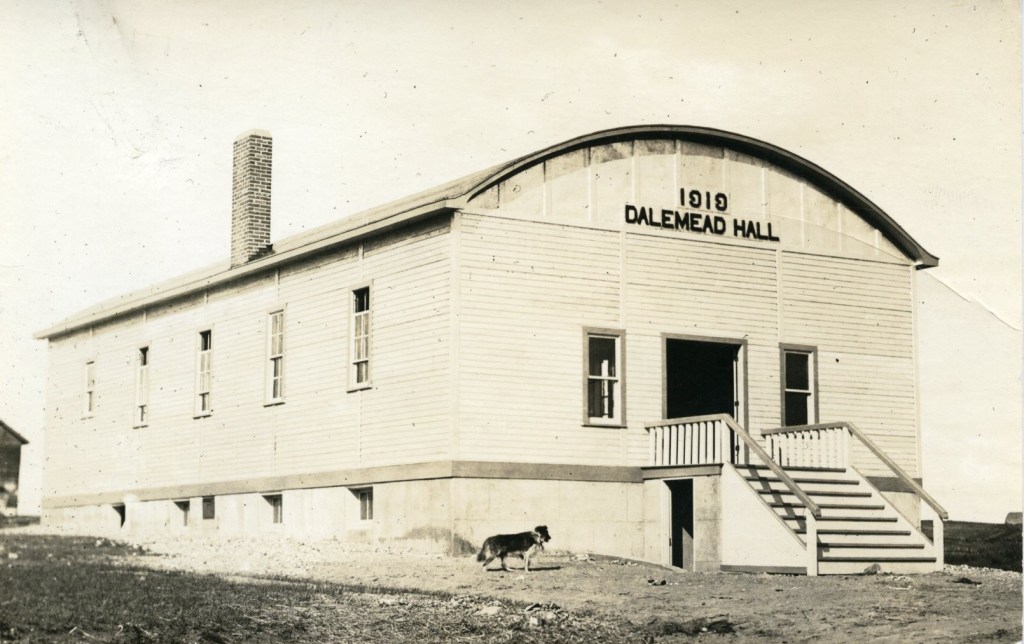
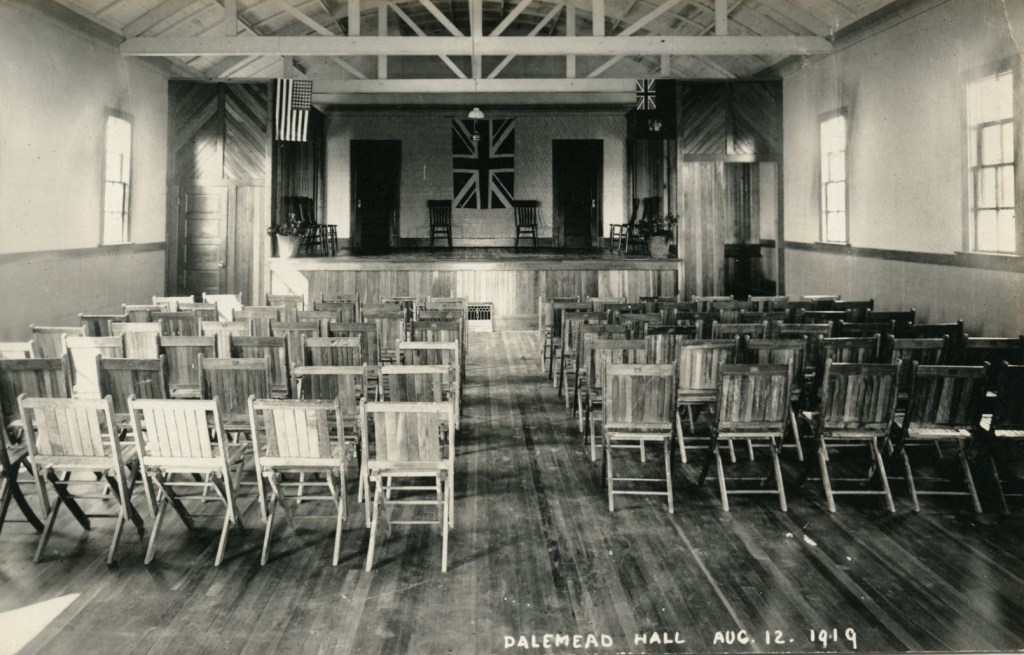
In comparison, the Dalemead community hall near Langdon was considered a “triumph” and described as one of the finest community halls in the province. A 1922 article from The U.F.A publication profiles the Dalemead hall, describing it as 30 ft. by 60 ft. with a full basement including a dining room, kitchen, gymnasium, pool table and nursery. On the main floor was an assembly hall, stage, dressing rooms and box office.
In addition to being used by for UFA, United Farm Women of Alberta and Junior UFA meetings, the Dalemead hall also functioned as a “social church” under Reverend F.T Cook, a summer camp for children and hosted fundraising drives, dances, debates, singing and sewing classes and sporting activities.
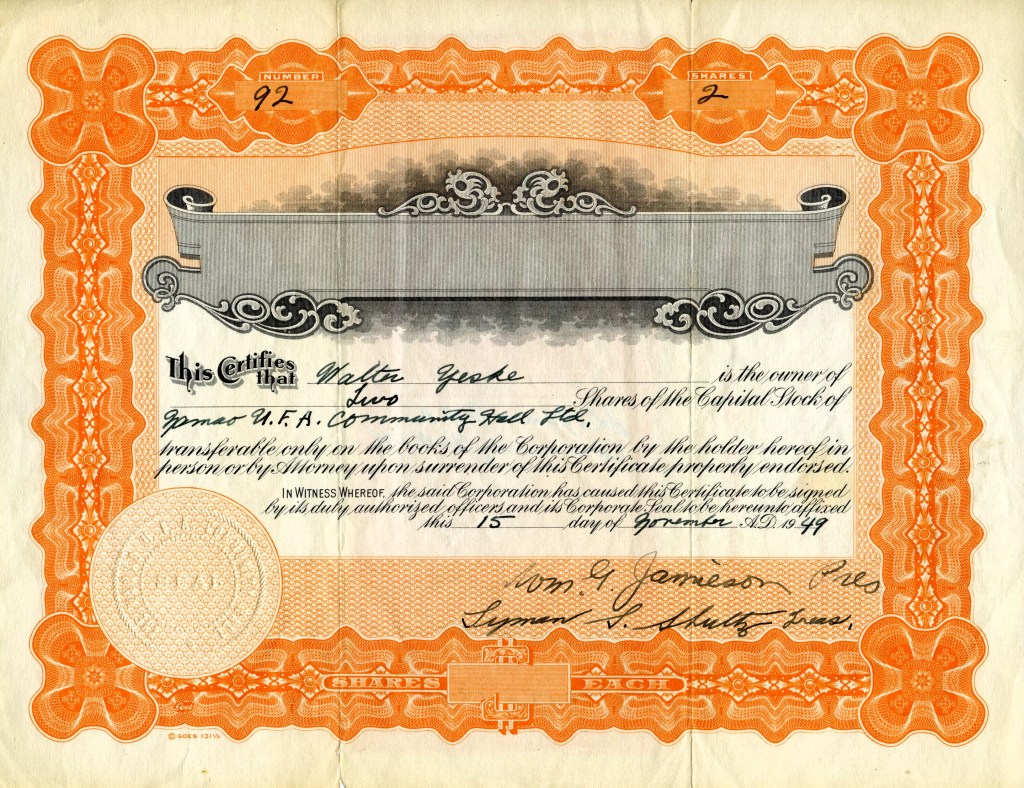
The Queenstown UFA Local in the Milo area formed in 1910, and when the surrounding schoolhouses became inadequate for larger functions, the Local discussed building a hall for the community. After deciding on a central location in the district, two acres of land was donated by a member, and raising money for the building costs was the next step. The Local opted to sell $50 shares, with the proceeds going towards building the hall and shareholders became full members of the Queenstown UFA Co-operative Association. Once completed, the hall was used for church and Sunday school, UFA meetings, movie nights and other gatherings. During the 1918 – 1919 flu epidemic, the hall converted to a hospital with a full staff of nurses and doctors.
John Glambeck, secretary of the Queenstown UFA Local, said of their hall “It might not be advisable or necessary to put up a hall as big or expensive as ours, especially in smaller districts, but get a hall at any rate.” Glambeck was encouraging other Locals and communities to build their own hall, but that it did not need to be fancy to be functional.
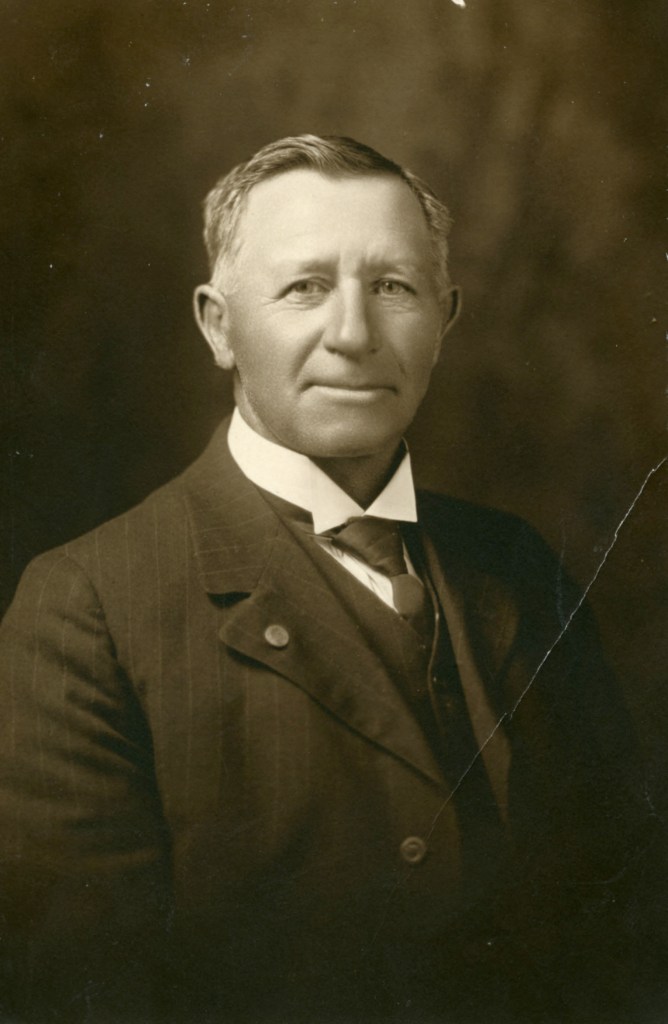
In the summer of 1929, Balzac opened their community hall to great fanfare with at least 400 attendees and an evening that included a supper and musical performance by the “Wheat Kernels.” A highlight of the evening was the appearance of U.F.A. Premier John E. Brownlee to officially open the hall. An article recapping the event was published in The U.F.A. with the headline “Premier Opens Fine U.F.A. Community Hall at Balzac” and remarked that “The movement in Balzac is not only not languishing by reason of its nearness to Calgary, but is obviously, in spite of its excellent record last year, still continuing on a rising tide of interest and enthusiasm.” The opening included several other notable guests including U.F.W.A. President Mrs. Amy Warr, the UFA MLA for Cochrane Milton C. McCool, and George Church – Chairman of the U.F.A. Community Hall Association and future president of UFA from 1945 to 1961.
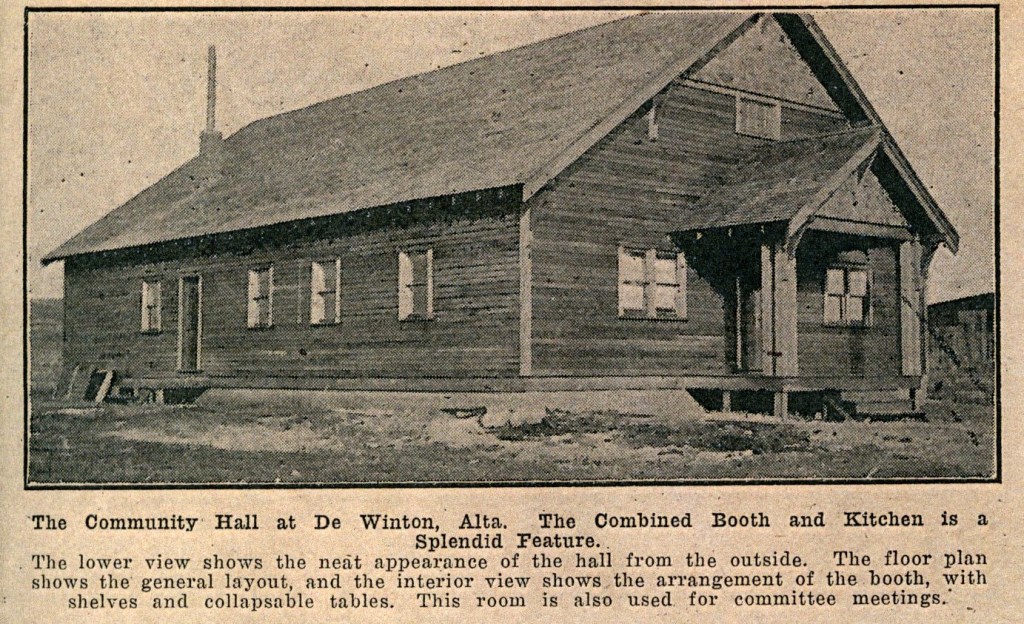
The community of De Winton came together in 1918 to fund their own hall, raising $600 in donations and borrowed $1,200 from the Merchants Bank in Okotoks. Five trustees were appointed to oversee the operations of the hall, and a building committee was formed, along with an entertainment committee who would arrange functions after the hall was built to generate revenue. In a letter from Miss Jean Bremner, Secretary-Treasurer of the De Winton Hall, to UFA Secretary Herbert Higginbotham she states that the De Winton Hall is “NOT a U.F.A. hall…but a Community Hall.” Apparently work on the hall had already commenced by the time the De Winton UFA Local had organized later in 1918. According to Miss Bremner, she doubted that their UFA Local would even have been formed without a dedicated place to meet.
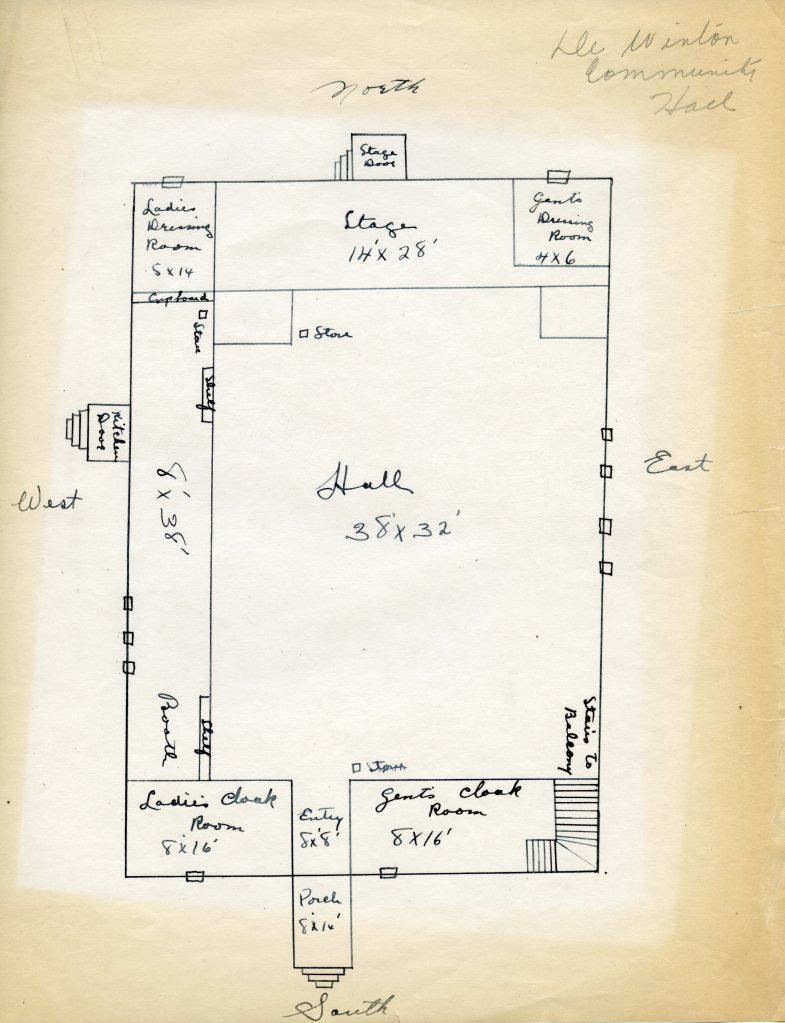
Which raises the question of what makes a hall a UFA hall? Was it where UFA meetings were held? Did a UFA Local need to initiate the project? Or maybe UFA members needed to contribute materials or volunteer their labour? Halls were generally built for the good of the whole community and used for a variety of purposes, not limited to UFA activities. Records from the United Farmers Historical Society archives show that several halls were founded, built and maintained by a mix of UFA members and non-members. While there does not seem to be any clear criteria for a UFA hall, it was apparent that halls were in demand for many communities across Alberta.
While the total number of UFA initiated halls is unknown, many Locals reported to The U.F.A. publication about their intentions to build a hall of their own, and on their activities once building was completed. In addition to the areas mentioned previously, halls were also built in the areas of Bremner, Kinuso, McCafferty, Irricana, St. Paul, Rumsey and many more. Records show that UFA halls continued to be built into the 1940s.
By the 1920s, public gathering spaces had become a priority for localities and contributed to a communal sense of pride when a hall was built. The UFA was known to be integral to the communities where Locals had been established, therefore if a hall was important to the community, it was important to the UFA Local. Not only did UFA halls provide meeting space for the Locals, the halls were also a hub for activity. The majority of UFA halls are no longer standing today, but community halls are still a mainstay across the province, and used for similar purposes as originally intended a century ago – to bring people together for a variety of reasons and to foster community well-being.
Written by Erin Hoar, Archivist
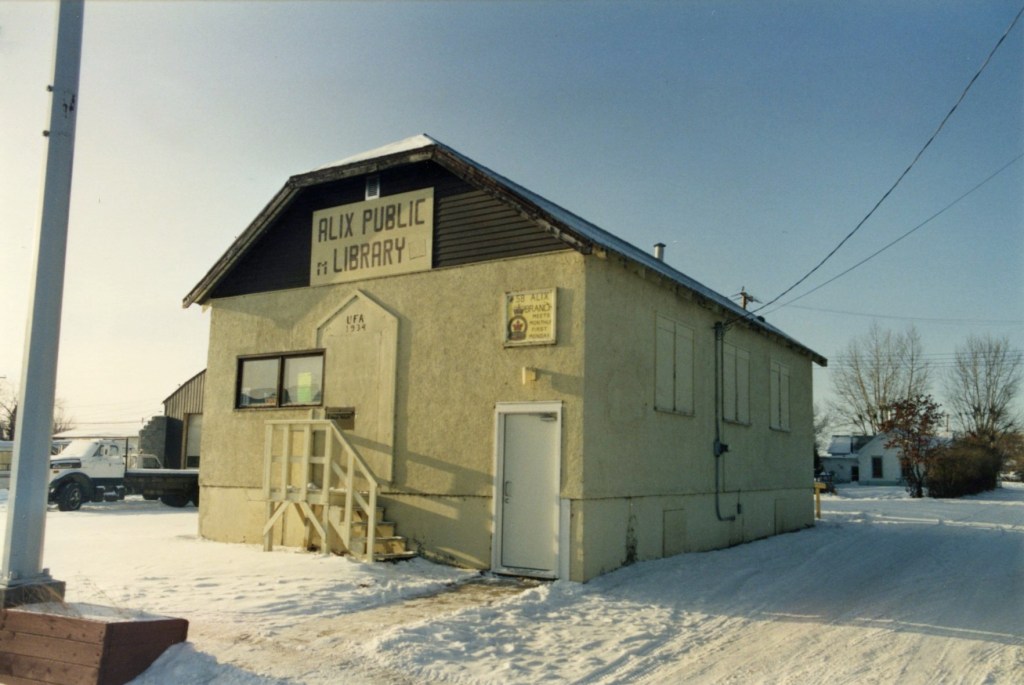
Alix Public Library, the writing on the door reads “UFA 1934” (Alix Wagon Wheel Museum, https://www.onthisspot.ca/cities/alix). 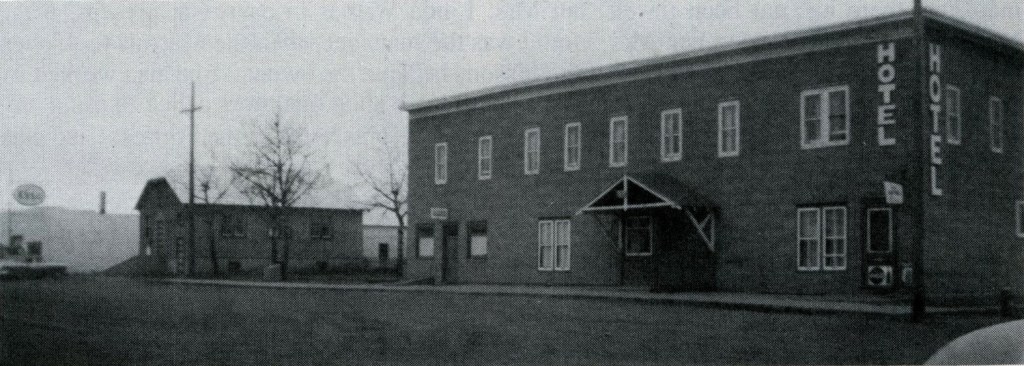
Alix U.F.A. Hall on the left, which became the Legion-Scout Hall and then the Alix Public Library (in Gleanings After Pioneers and Progress, p. 38).
References:
The U.F.A (1922, Jul. 15). “Queenstown Local a Centre for all Community Effort” Vol. 1, no. 10, p. 5. Retrieved from https://archives.ufa.com/permalink/theufav1n10ufoa-5
The U.F.A (1922, Sep. 15). “Dalemead Community Hall a Triumph of Local Organization” Vol. 1, no. 14, p. 5. Retrieved from https://archives.ufa.com/permalink/theufav1n14ufoa-5
The U.F.A (1925, Jul. 2). “Crossfield Juniors Collect Funds for Community Hall” Vol. 4, no. 17, p. 6. Retrieved from https://archives.ufa.com/permalink/theufav4n17ufoa-6
The U.F.A (1927, Aug. 1). “Fine Farmers’ Hall at Bellis” Vol. 6, no. 19, p. 4. Retrieved from https://archives.ufa.com/permalink/theufav6n19ufoa-4
The U.F.A (1929, Aug. 1). “Premier Opens Fine U.F.A. Community Hall at Balzac ” Vol. 8, no. 19, p. 10. Retrieved from https://archives.ufa.com/permalink/theufav8n19ufoa-10
The U.F.A (1930, Mar. 15). “Why You Should Belong to the U.F.A.” Vol. 9, no. 6, p. 6. Retrieved from https://archives.ufa.com/permalink/theufav9n6ufoa-6
Tolton, G. (2009). Deep Roots. Promising Future. Calgary: UFA, pp. 35-37. Retrieved from https://archives.ufa.com/viewer/deep-roots-promising-future?p=12&type=static
United Farmers of Alberta fonds. “Community Halls” (Fonds 1, Series 8, File 6). In custody of the United Farmers Historical Society https://archives.ufa.com/permalink/descriptions8516


My community hall in Keoma, Alberta will be turning one hundred years old this year. It is used for voting, weddings, meetings and there’s a baseball diamond in the back … just like one hundred years ago.
LikeLike
That’s so great to hear that the tradition of halls is alive and well! Thanks so much for sharing this.
LikeLike