
United Farmers of Alberta (UFA) has a rich history and has been a major contributor in helping to build the province of Alberta and the farming culture of Canada. In telling the story of our past, we set the stage for UFA’s future as a strong and influential voice for the farmers of today and tomorrow.
In over 100 years of existence, the United Farmers of Alberta Co-operative (U.F.A.) has gone from a small organization of farmers wanting to improve their way of life to becoming one of the largest agricultural supply and service cooperatives in Western Canada.
1909 – 1920
By the early 1900s, co-operatives were not a new idea. Co-operatives are owned by their members who organize to meet common needs, such as securing access to products or services, and maximizing the sale of their products or services. The reality for farmers was that equipment and supplies were expensive, so farmers worked together by combining their resources to get better deals on supplies and better prices for their commodities.
Farming conditions were coming more to the forefront and issues such as drought, crop disease, barriers to banking and credit, and the hardship of rural living was becoming more apparent. Farmers realized that by banding together, they had a better chance to influence policy and pressure government to take notice of issues that were important to them.
Farmers in Alberta were seeing the rise of agrarian movements from the American Society of Equity, Grain Growers, as well as local organizations that had emerged such as the Lacombe Co-operative Society and Edmonton Agricultural Society. Two of these movements – the Canadian Society of Equity and Alberta Farmers Association amalgamated in 1909 to become the United Farmers of Alberta, a co-operative founded by farmers and ranchers to serve their own needs. This move gave the U.F.A. a stronger, more united voice for its members.
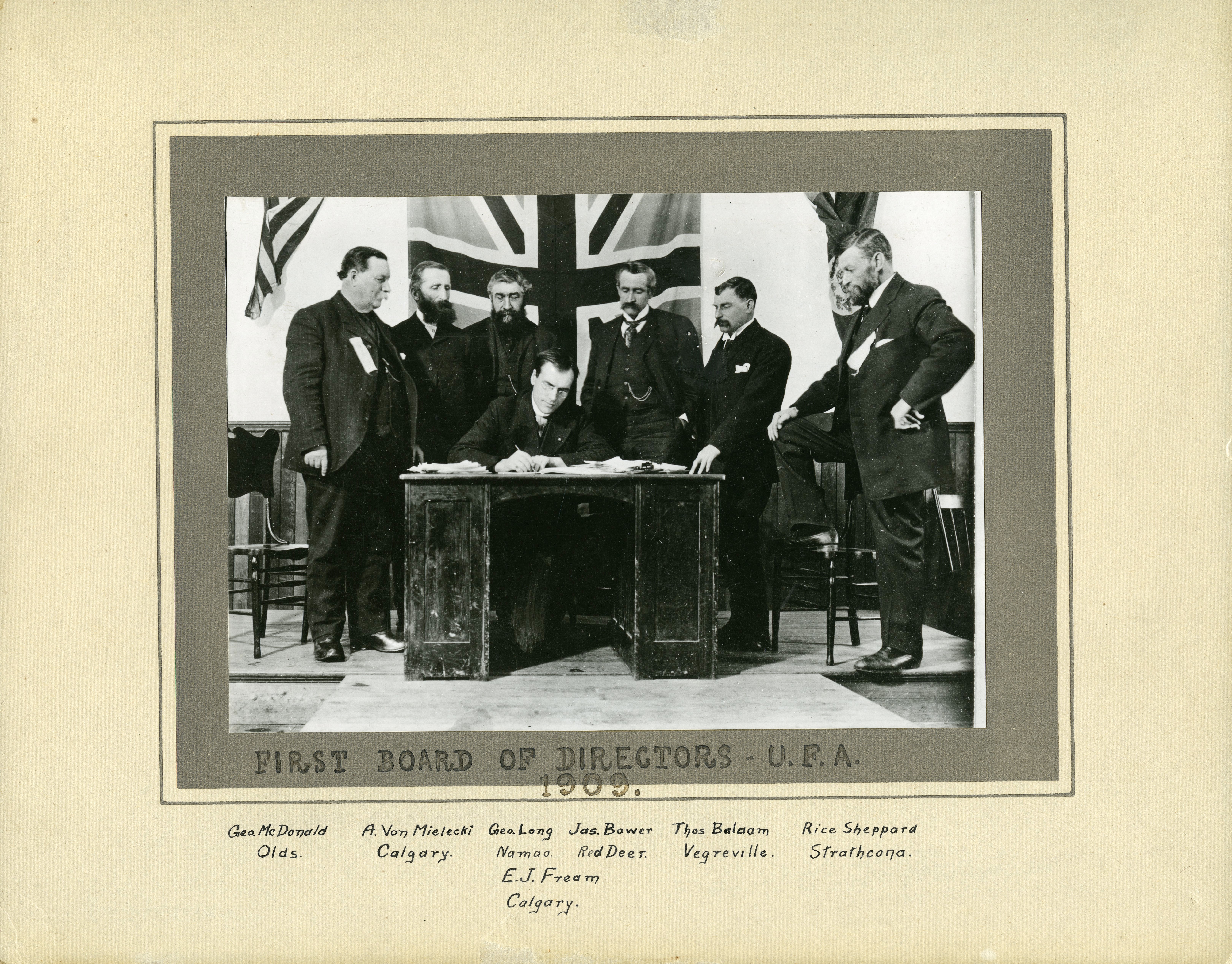
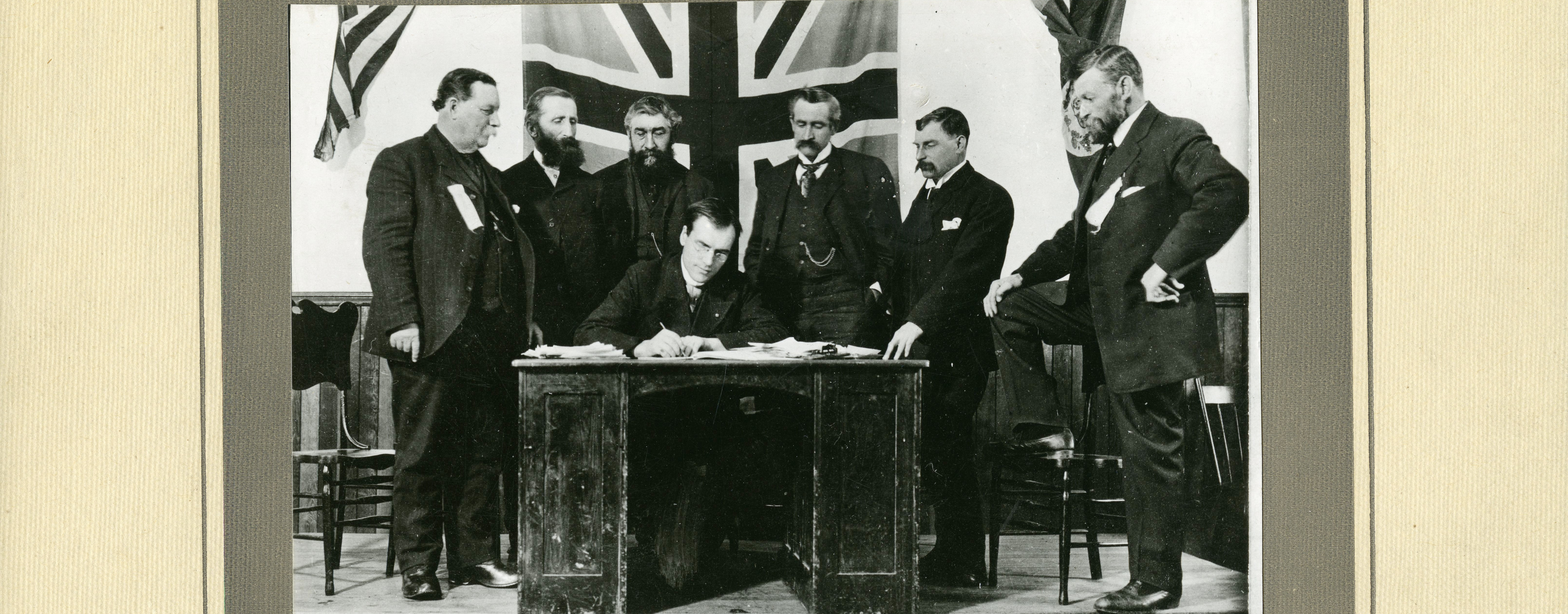
The first executive of the United Farmers of Alberta was George McDonald, A. Von Mielecki, George Long, Thomas Balaam, Rice Sheppard, E.J. Fream, and James Bower of Red Deer who became UFA’s first President from 1909 to 1911. (United Farmers Historical Society, UN 23-1). 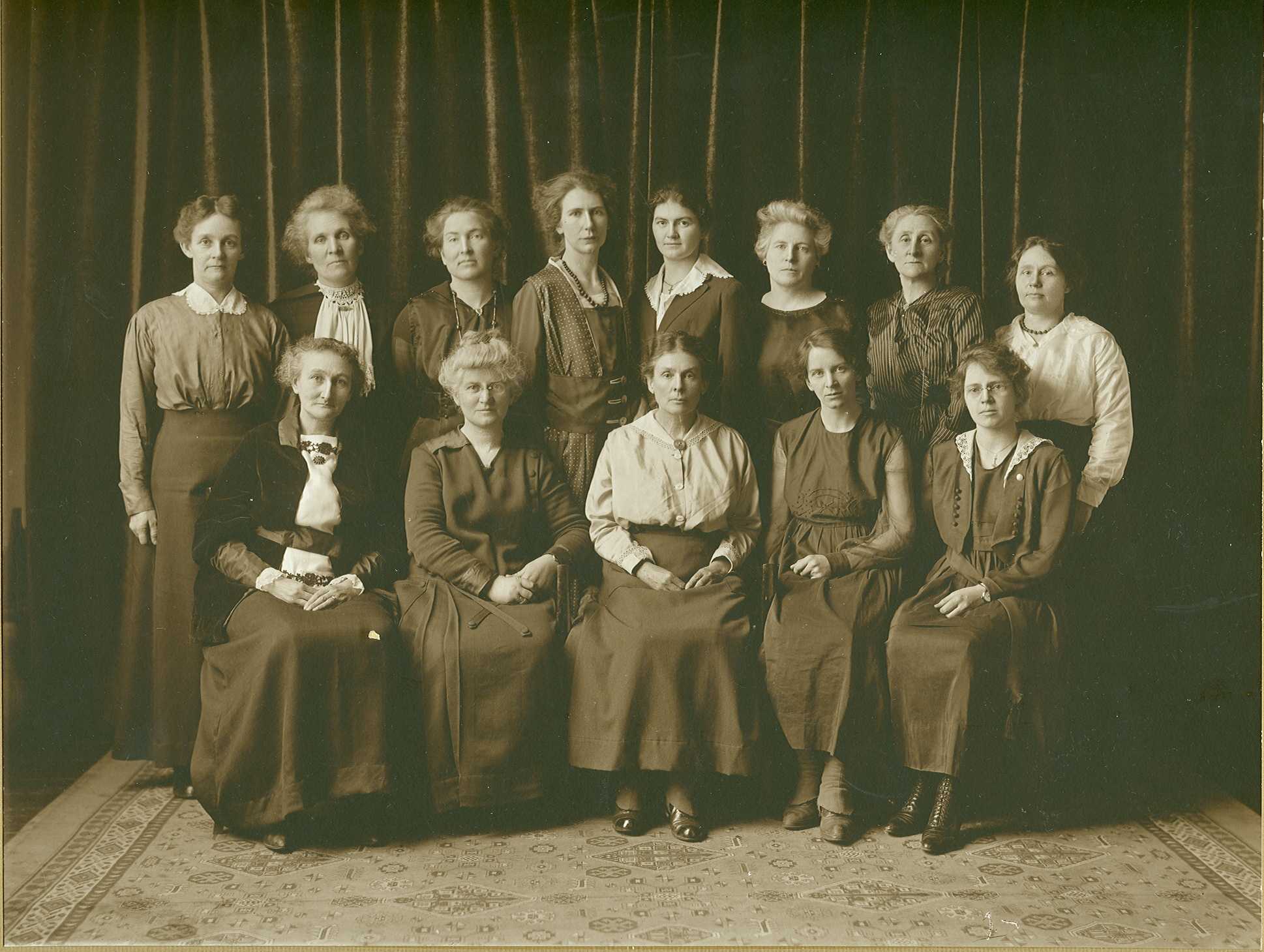
United Farm Women of Alberta board, 1920 (United Farmers Historical Society, UF 2004.0037.46).
In 1913, the U.F.A. amended its constitution to admit women as members and in the following year, a Women’s Section was formed. But it was 1916 that the women members formed a separate organization known as the United Farm Women of Alberta (UFWA). The first UFWA Local was in Alix. The formation of the U.F.A. had seen a new sense of community arise out of shared experiences and common grievances, and farm women were looking to build community among themselves that could address the unique problems that they faced.
1921 – 1935
By 1920, UFA membership had grown to 30,000 members and there were 1,200 locals throughout the province. Farmers had shown that they were organized. Locals worked to bring issues from the grassroots level to the central organization, to be presented and voted on at annual conventions. If approved, the UFA would work to lobby the appropriate channels, such as government or business, to fulfill the demands of their locals.
The local “brought the community together…[going] beyond neighborly assistance, to discussion on weighty issues of economics, politics and the power of community initiative.”
Gord Tolton, author of UFA’s centennial book “Deep Roots, Promising History”
In Alberta, the political mood was one of dissatisfaction with the existing political parties, inspiring farmers to want change.
The U.F.A. had worked with the provincial government up until this point to implement important reforms, but several issues were still unaddressed. Farmers expressed their frustrations with being exploited despite the important work that they did in providing food for their communities. This discontent, compounded with the uncertainties coming out of the First World War and the Influenza pandemic, set the stage for farmers to pursue political activity. In 1919, the U.F.A. Annual Convention passed a resolution to allow its members to enter politics both provincially and federally.
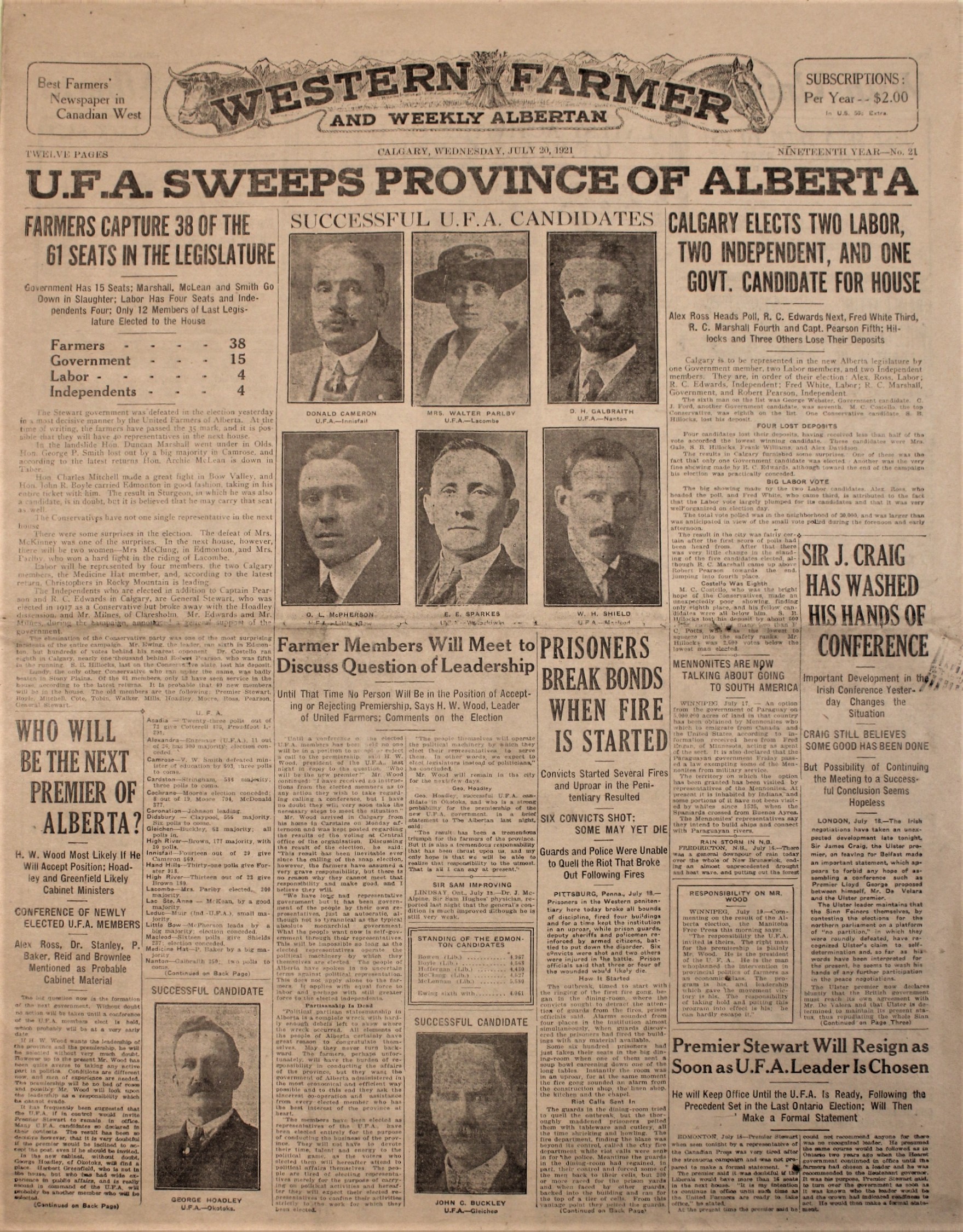
A provincial election was called for July 18, 1921, this was just days after the federal by-election where U.F.A. candidate Robert Gardiner won a seat that easily placed him in parliament.
On the 18th, voters turned out in droves and 38 U.F.A. candidates had won in their ridings, securing two-thirds of the seats needed in the legislature. Herbert Greenfield, a Westlock farmer, became the new premier of Alberta. That same year, UFWA President Irene Parlby became the first woman MLA.
The U.F.A. government under Greenfield did manage to establish some significant reforms including passing drought and debt relief bills, extending credit to farmer-owned cooperatives, helping to establish the Alberta Wheat Pool in 1923 to get fair prices for grain, and putting an end to the losing battle of prohibition.
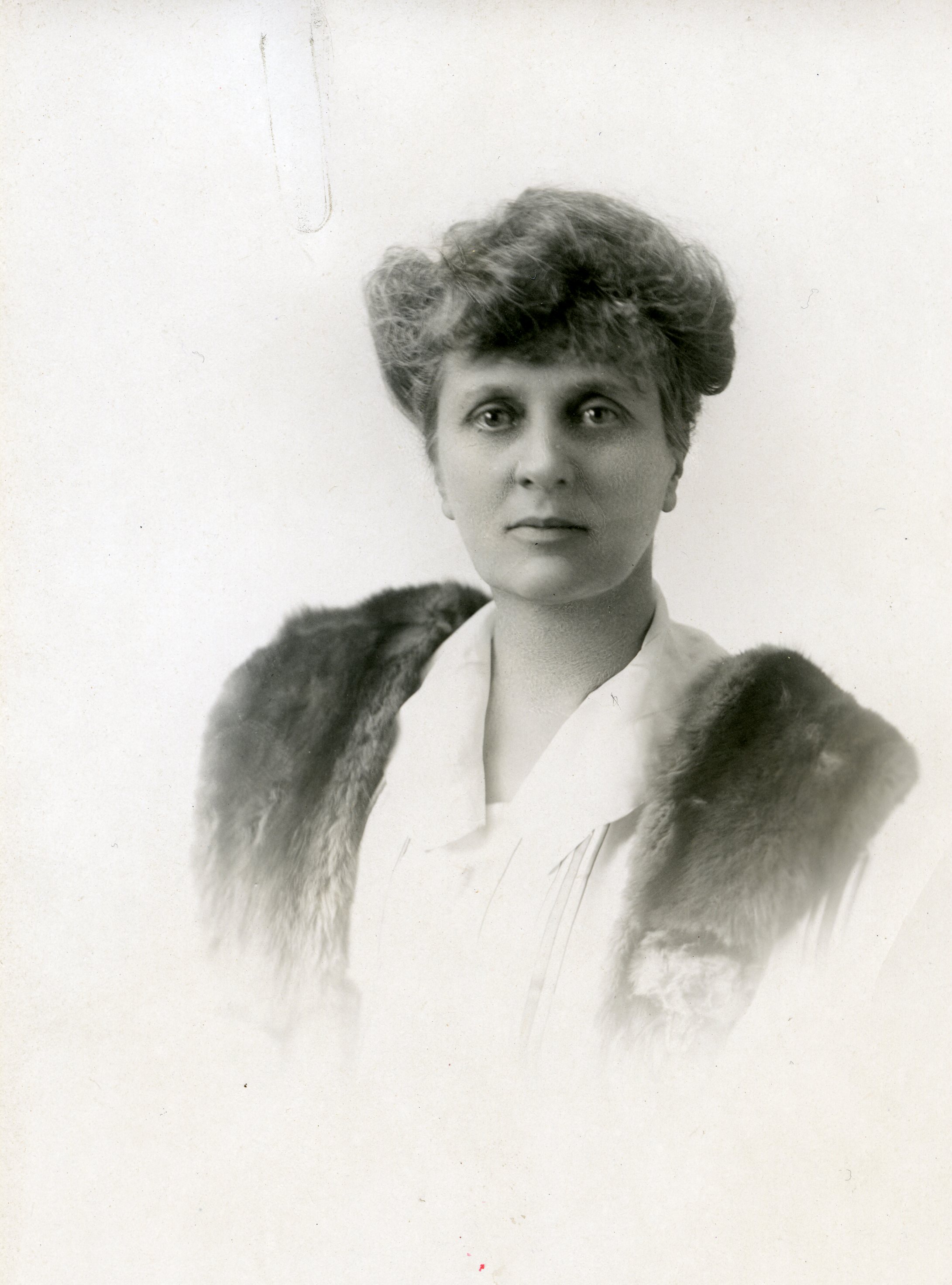
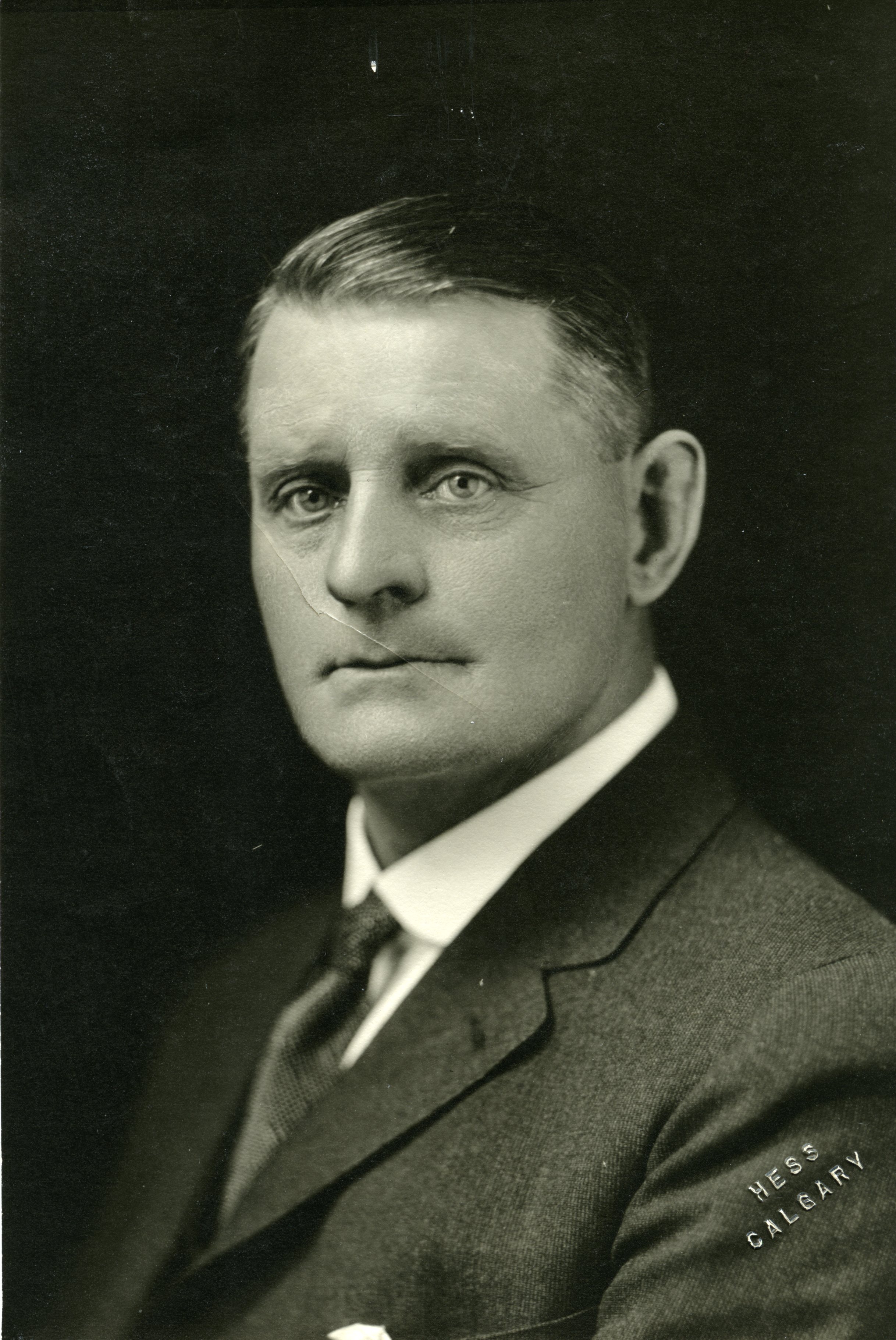
John E. Brownlee became the next U.F.A. premier from 1925-1934 with several significant accomplishments, notably the transfer of mineral rights to the province which has continued to benefit Albertans to this day. He also sat on the Royal Commission on Banking and Currency to assess if Canada should have its own Central Bank, which formed the basis of what is now the Bank of Canada. In addition, Brownlee jump started the creation of the provincial parks system, with the Provincial Parks and Protected Areas Act passed by the Alberta Legislature in 1930.
1935 – 1960s
Governing during the Great Depression proved to be challenging for the U.F.A. government. With the rise of the Social Credit, and their enticement of $25 a month for every adult in Alberta, U.F.A. was no match for William Aberhart, and the parties went head to head in the 1935 election which did not see a single U.F.A. candidate elected provincially (or federally), and William Aberhart became Alberta’s next Premier. Years later at the 1939 Annual Convention, a resolution to never enter politics again was passed.
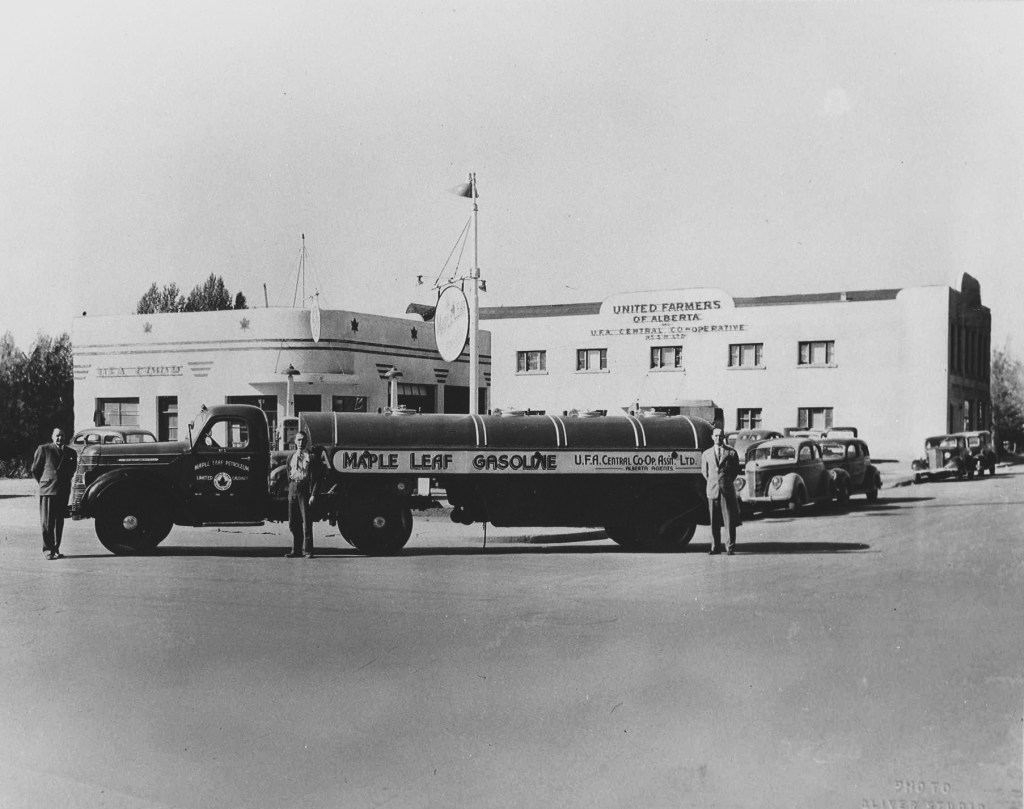
After the exit from politics, the U.F.A. saw their membership decrease, and locals start to disappear. This was a chance for anew, and U.F.A.’s leadership turned their focus to commercial endeavours. Back in 1932, the U.F.A. Central Co-operative Association was incorporated as a subsidiary of the U.F.A., for the purposes of coordinating wholesaling and marketing. By 1940 the co-op established a central office, warehouse, and retail outlet in Calgary (100 block, 11th Avenue SE ). Within a few years, they had sufficient capital to operate a network of hardware, grocery stores and service stations with a presence in several regions of Alberta.
A new era in UFA history began in 1935 with the partnership with Maple Leaf Petroleum to distribute petroleum products exclusively to co-op members. This first entry into the petroleum business would prove to be a major turning point in the success of the company. In the first year of the agreement, 1.8 million gallons of fuel had been sold earning $12,000. U.F.A. purchased Maple Leaf Petroleum for one million dollars in 1957.
Other developments during this time period included:
- A state-of-the art U.F.A. Head office and service station in Calgary to reflect U.F.A.’s commitment to growth and modernization (1946).
- Opening of the first farm supply store in Calgary (1954).
- Establishment of a farm supply store in Edmonton to serve northern Alberta (1957).
- U.F.A. opened their first rural farm stores at Vermilion, Camrose and Grimshaw, with many more to open in the years to come (1964).
UFA’s Petroleum and Farm Supply divisions would continue to play important roles in the expansion and success of the company in the coming decade.
1970s
The 70s saw a steady increase in the mechanization of agriculture and fuel consumption. This led to new agreements with the U.F.A. Petroleum Division to handle all of its Petroleum business from refinery to agencies.
The decade saw increased expansion of the Farm Supply and Petroleum divisions throughout the province with the opening of eight new U.F.A. farm supply stores. By 1974, Farm Supply sales reflected the growing agricultural economy in Western Canada.
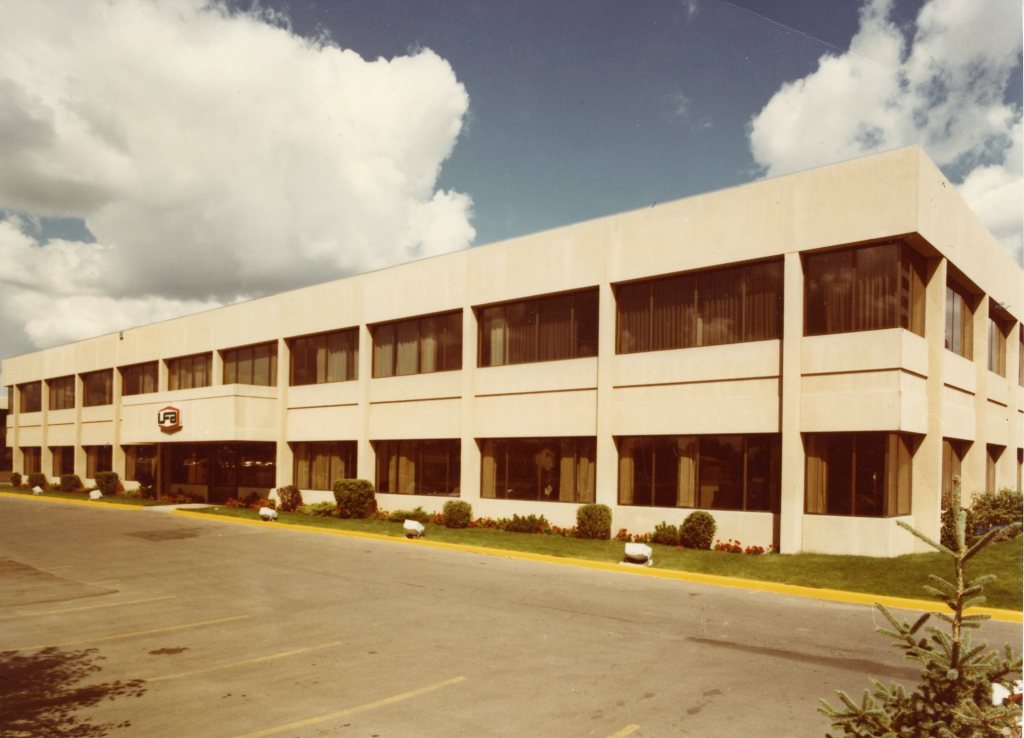
Edmonton became the location for U.F.A.’s Distribution Centre in 1976 and was the main depot for farm supply stores and petroleum agencies throughout Alberta. Meanwhile, a new two-story office building was built in Calgary to better accommodate their growing membership and workforce.
UFA ended the decade on a strong note and was preparing to face the challenges that the next 10 years would bring.
1980s
In 1984, UFA celebrated its 75th anniversary, with a commemorative logo, a special slogan for the year which was “75 Years Progressing with agriculture”, and there was merchandise, giveaways and even a colouring contest with the grand prize of a trip to Australia.
Computers were common in offices everywhere, including UFA, with the first Point-of-Sale (POS) systems being introduced.
This decade began with UFA laying the foundations for continued growth through the 80s despite the recession and some of the highest interest rates ever seen in Canada.
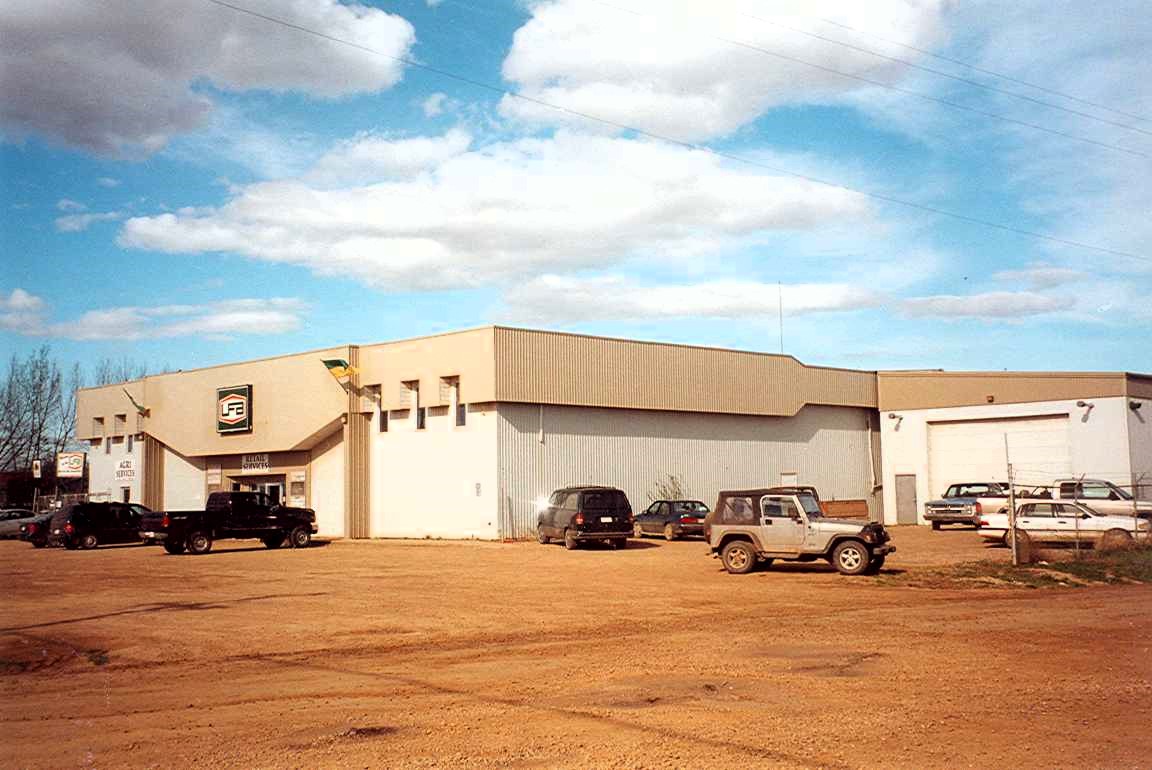


UFA’s Petroleum Division entered the decade with new technology by opening its first Cardlock fuel outlet in 1984. UFA’s Cardlock network would grow over the coming years to become the largest of its kind in Alberta and a significant source of revenue for the company.
The decade ended with the opening of the northern most location in La Crete, Alberta, which included a petroleum agency and a farm supply store.
1990s
The 1990s was a decade of expansion and diversification for UFA. This decade saw the introduction of a youth advisory council of 15 members, which led to initiatives such as AGVANTAGE 25 and other youth-driven programs.
The decade also saw the acquisition of Stirdon Systems (1998). The purchase of Betker Livestock Systems of Saskatoon soon followed in 2001, continuing the tradition of innovation that began with the Farmstead Departments.
The Farm Store network was expanded and many were upgraded, notably the Lethbridge location which features a 12,000 sq. ft. showroom and a drive-through warehouse. Other stores that were upgraded were the facilities in Grimshaw, Hanna and Claresholm. By 1999, there were 34 Farm Stores in Alberta.
The Petroleum Division was expanding in response to opportunities presented by the exit of major competitors in the rural market by expanding its Cardlock network. The network crossed provincial borders with the opening of agencies in Dawson Creek, BC, and in Kindersley and Swift Current, Saskatchewan.
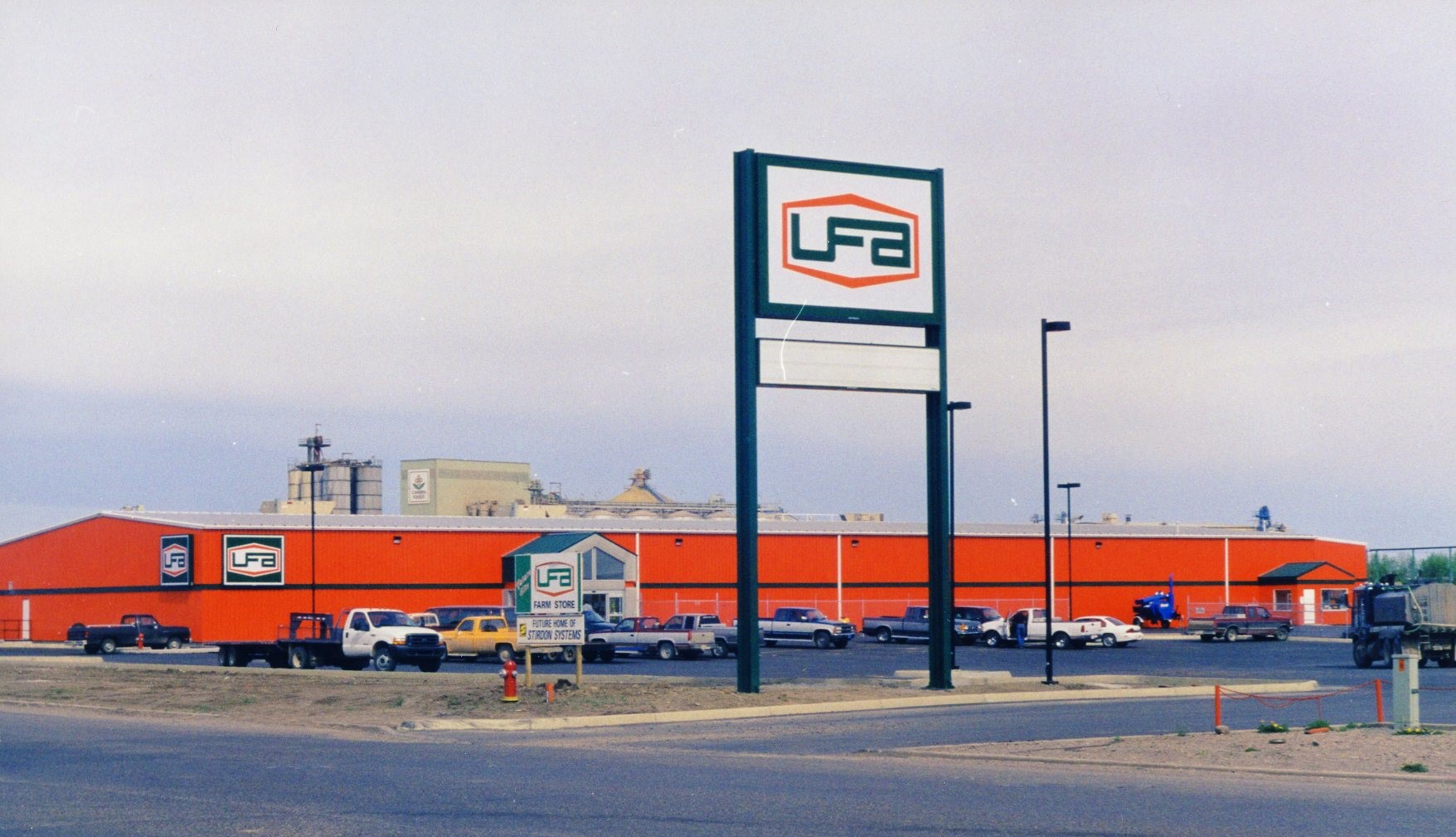
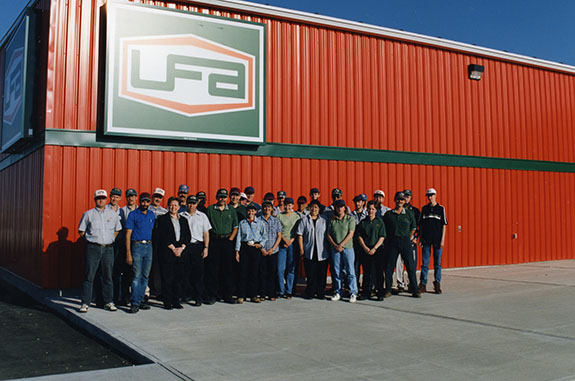
CEO Terry Semeniuk focused on employee satisfaction and customer service – even doing away with the stuffy term “head office” which instead became the Calgary Support Office which it is still known as today.
The dawn of the new millennium left many wondering what was to come, but at UFA, plans were made and the future looked bright.
2000s
In 2004, UFA’s revenue hit $1 billion for the first time and surpassed $2 billion just seven years later, which has directly benefited the organization’s over 120,000 member-owners. Community investment became a key focus – with UFA sponsored sports teams, rodeo and industry events, 4-H, rural farm safety initiatives, and scholarships.
In 2009, UFA celebrated a century of serving agricultural producers. To celebrate, Country music star Paul Brandt hosted a small town concerts and dedicated the song “Small town, big dreams” to UFA. UFA also published a centennial book on the organization’s history titled “Deep Roots, Promising Future”.
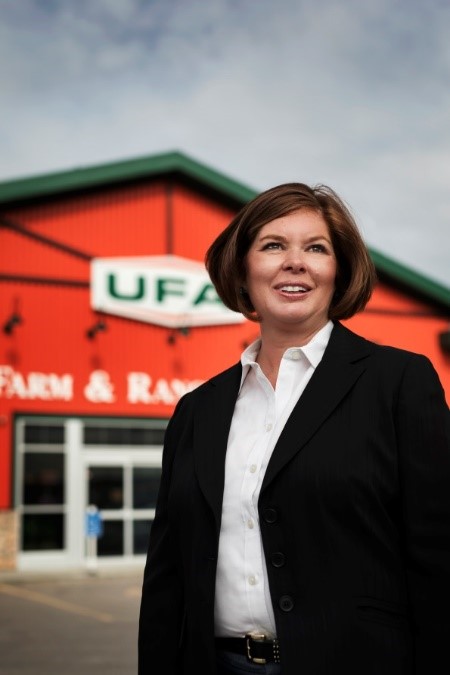
UFA named Carol Kitchen as its new Chief Executive Officer in 2015, making her the first female to lead a large agriculture cooperative in North America.
In 2018, UFA celebrated 109 years of being in business. The Honourable Lois Mitchell, Lieutenant Governor of Alberta, joined 75 community members to commemorate the historic occasion.
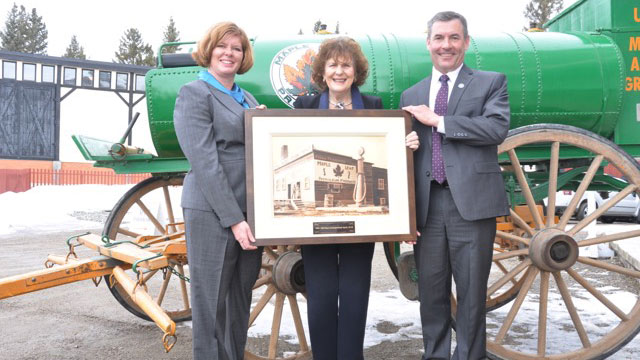
And in 2022, UFA was named one of Alberta’s Top 75 Employers for the 10th year in a row.
Today
While UFA may look different today, the organization’s origins show how integral it is to Alberta’s history. UFA was originally founded on giving a voice to farmers and many of the same principles remain, such as advocating for farmers’ interests and highlighting the value that they bring to their communities. Looking back a century ago, we remember the impact this significant agrarian movement has had on our province and country.
In 2002, the United Farmers Historical Society was formed to acquire, preserve and make available the historical records and artifacts of the United Farmers of Alberta, showcasing the Cooperative’s contributions to agriculture and life in and around Alberta.
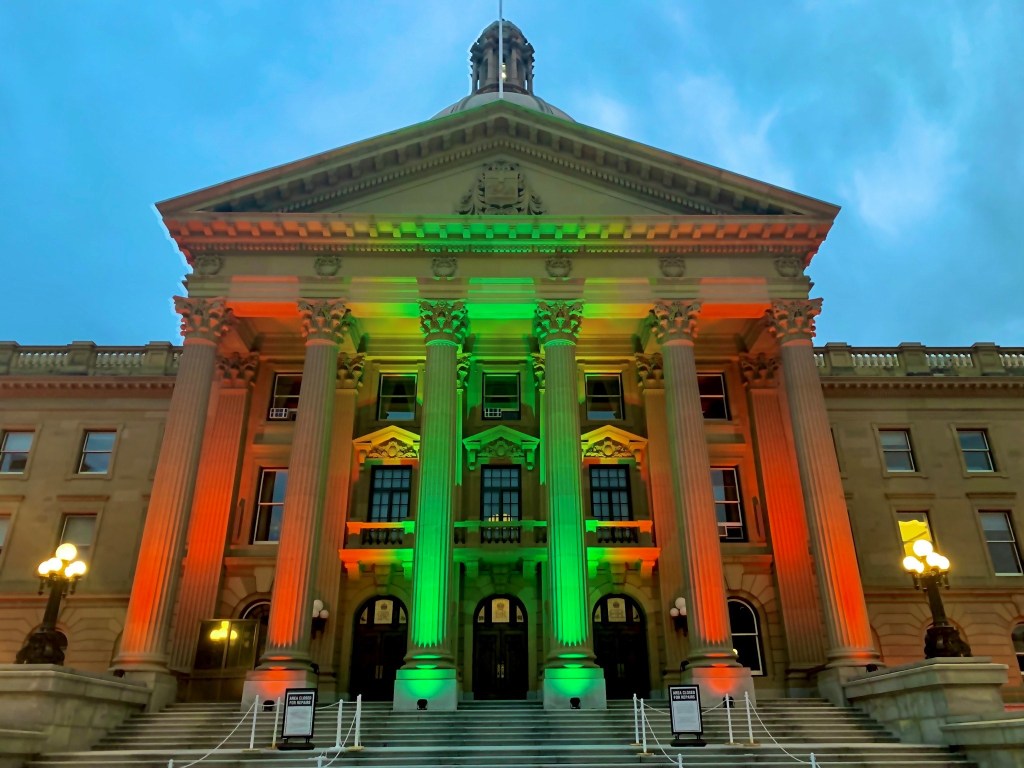
For Farmer’s Day, it is tradition to recognize farmers in the province with a light up event in UFA colours at different locations including the Calgary Tower, Reconciliation Bridge and the Alberta Legislature. This symbolizes UFA’s salute to the tireless work agriculture producers continue to do to feed the world. 
For Farmer’s Day, it is tradition to recognize farmers in the province with a light up event in UFA colours at different locations including the Calgary Tower, Reconciliation Bridge and the Alberta Legislature. This symbolizes UFA’s salute to the tireless work agriculture producers continue to do to feed the world.

