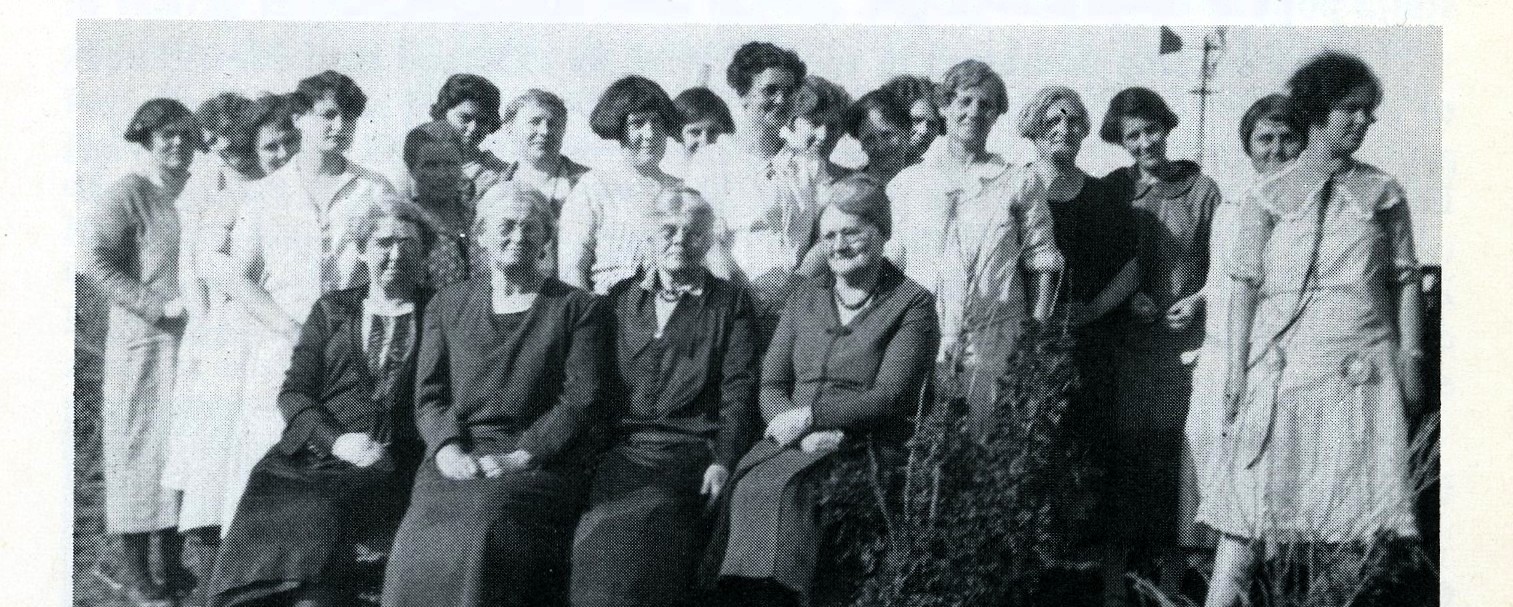

2026 marks 100 years since farm women in the Conrich-Chestermere area gathered to learn, advocate, support their community, and have fun. Through changing names and changing times, the local branch of the United Farm Women of Alberta (UFWA) became a vital part of rural life, leaving a lasting legacy in the region.
Rural Organizing Begins
Beginning with the Conrich Local No. 29 of the United Farmers of Alberta (UFA), established around 1909. Like many UFA locals across Alberta, the organization provided a place where farmers could discuss issues affecting agriculture, support political candidates, and strengthen community ties through social events.
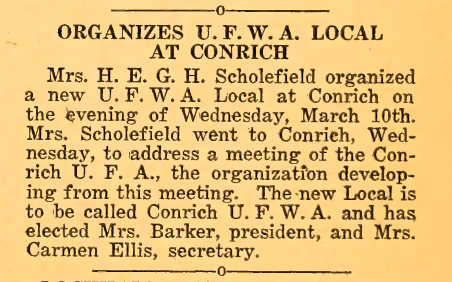
On March 16 1926, local farm women established Conrich Local No. 231 of the United Farm Women of Alberta. The founding members included Mabel Barker, Edith Porter, Jennie Hodgson, Emily Ellis, Frances Mogensen, Margaret Timmins, Maggie Cary, and Frances Hodgson.
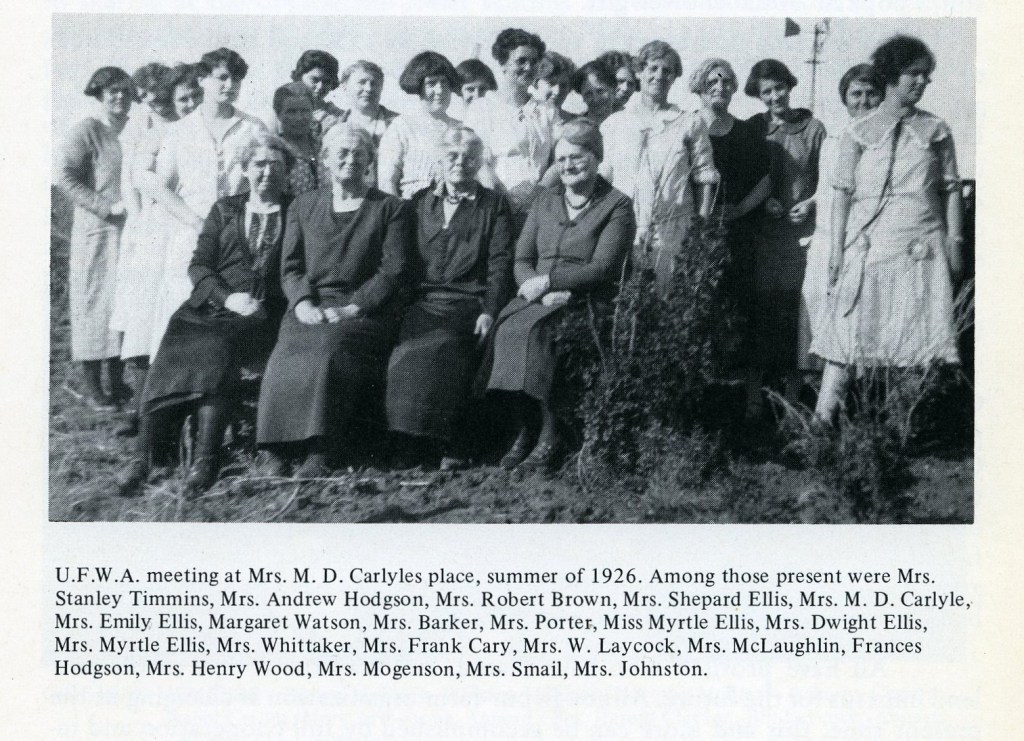
The first meeting was held at Mrs. M. D. Carlyle’s home the following day. Members decided to meet twice a month, with one meeting held in a member’s home and the other jointly with the UFA men. Emily Ellis served as the first secretary-treasurer, while Mabel Barker became the local’s first president.
Despite difficult travel conditions and limited road infrastructure, members remained committed to attending meetings, even relying on a horse-drawn sleigh, such as when Mrs. Ellis gathered members and transported them to a meeting at Mrs. Hodgson’s home.
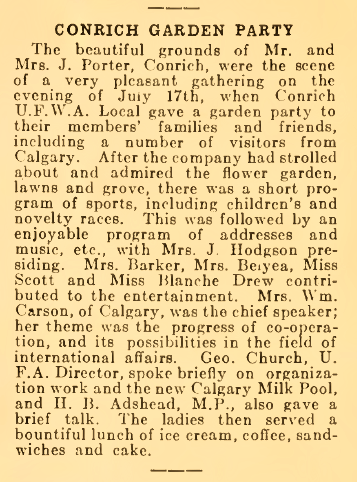
The women paid a $3 membership fee ($2 when to UFA head office and $1 with the local treasury) and met regularly to discuss subjects ranging from health and education to immigration legislation, social services, peace initiatives, and agricultural marketing. Their meetings balanced serious discussion with community-building activities such as garden parties and games. Mr. and Mrs. Joe Porter hosted the first annual garden party in 1926 and it became a popular community tradition featuring singalongs, races, games, lunch, and unique prizes such as a hen with chicks and a baby pig donated by local residents.
Building Community into the 1930s
Throughout the late 1920s and 1930s, the Conrich UFWA local became an important centre of rural life.
Under President Frances Hodgson during 1928-29, members participated in projects such as the UFWA cookbook and community quilting initiatives. During 1930-31, with Emily Ellis serving as president and Hannah McLaughlin as secretary, the group organized auction sales of donated farm goods, handicraft exhibits, and public speaking competitions for UFA Juniors.
The Conrich UFWA had great pride in assisting the Junior UFA to get started in 1928. Which began when the women sponsored Ralph Carlyle to attend Farm Young Peoples’ Week in Edmonton. He returned from this trip with a desire to form a juniors association with his pal Joseph Porter. The Conrich UFWA donated a further $10 to get the Juniors started, which filled an important role for youth in the community.
Even during the difficult years of the Great Depression, the local remained active. In 1932-33, under Mrs. Carlyle’s leadership, meetings featured presentations on home nursing, cheese making, peace movements, travel experiences, and social issues.
By 1934-35, economic challenges had affected membership. Annual dues were reduced from $3 to $1 because money was scarce. Men wishing to join the UFA at this time paid double the women’s rate. Despite financial hardships, the women organized book reviews, hosted neighbouring organizations such as the Shepard Women’s Institute and Dalemead Juniors, held community suppers, and donated clothing to those in need.
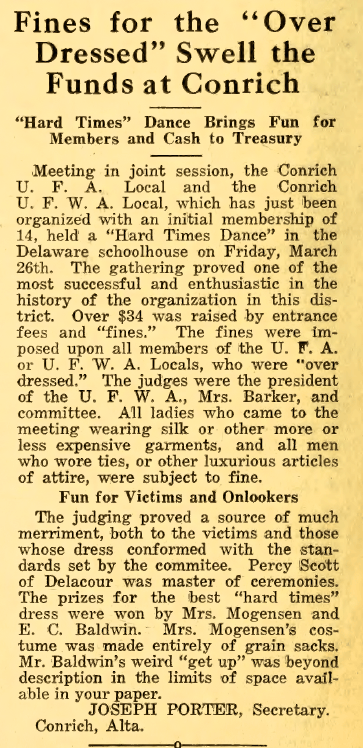
The local’s sense of humour was equally important. A 1926 “Hard Times” dance jointly sponsored by the Conrich UFA and UFWA became memorable enough to be featured in The U.F.A. newspaper under the headline, “Fines for the ‘Over Dressed’ Swell the Funds at Conrich.” Participants who appeared too prosperous at the Depression-themed event paid fines, helping raise money for the organization.
Education, Service, and Recreation
From 1936 to 1939, under President Mrs. Grose and Secretary Mabel Barker, the local continued to expand its activities. Members organized a Swedish-themed evening featuring songs, dancing, and traditional food. They served lunches at local auction sales, and welcomed visits from provincial leaders. Education remained a cornerstone of the group’s mission. Meetings regularly included guest speakers and presentations on contemporary issues affecting farm families and rural communities.
Members valued having a space for local activities, leading to the remodel of the Rockland School into a hall in 1929. As plans for future activities grew, members discussed purchasing Chestermere Hall. In 1938, a meeting was called, and arrangements were finalized to take over the hall.
Community suppers were a longstanding tradition for the Conrich UFWA, beginning with a chicken salad and pie supper in 1926 and evolving into popular annual chicken and later turkey suppers. The first large chicken supper was held in 1940, and in 1954 the event became a turkey supper, complete with a dance and affordable admission for families. Members worked together to organize the meals, supplying water, dishwashing equipment, and rented dishes, while purchasing and preparing dozens of turkeys for the occasion. UFWA members reveal the careful planning involved, from heating the hall and directing crowds with snow fencing to setting admission prices and hiring orchestras for entertainment.
As the years passed, prices and programming changed to reflect community needs, with dances eventually being replaced by longer programs. The tradition continued until 1970, when the final turkey supper drew an impressive crowd of 450 people, highlighting its importance as a cherished community gathering.
Investing in Community and Youth
From its earliest years, the Conrich UFWA played a vital role in supporting and enriching community life. Members contributed to local projects and celebrations, from sewing uniforms for the community baseball team in 1927 to helping organize Alberta’s 1955 Jubilee celebrations, staging a historical pageant for Canada’s Centennial in 1967, and participating in Alberta’s 75th anniversary parade in 1980.
The organization also helped preserve local heritage by supporting the publication of district history book Saddles, Sleighs and Sadirons, and donating copies to area school libraries.
Equally important was its long-standing commitment to young people, sponsoring youth to attend leadership conferences, camps, and public speaking competitions, while supporting the Conrich Jr. UFA, which organized community events such as annual amateur talent nights. Through its dedication to community involvement, historical preservation, and youth development, the Conrich UFWA made a lasting impact on the district.
Supporting the War Effort
The Second World War transformed the focus of many community organizations, and the Conrich UFWA was no exception.
Members were deeply involved in both charitable and wartime support efforts, donating to causes such as the Prisoner of War Fund, fire and flood victims, and children’s hospitals. Members sewed supplies for the Red Cross, knitted clothing for military personnel, sent parcels overseas to soldiers and food packages to Britain, and even collected Christmas cards for reuse in England.
Beyond their charitable work, the organization actively advocated on public issues, successfully lobbying for reduced postage rates on books in 1939 and supporting resolutions related to war materials, farm labour wages, and the removal of the gasoline tax, demonstrating their commitment to both community service and political engagement.
These activities reflected the broader role rural women’s organizations played in supporting both their communities and international humanitarian efforts during wartime.
From UFWA to FWUA
As Alberta society evolved after the war, so did the organization.
In 1949, the United Farm Women of Alberta officially became the Farm Women’s Union of Alberta (FWUA). Membership in the local organization had grown to approximately forty women, and the group continued its focus on education, health, and social reform.
In 1951, members celebrated the local’s twenty-fifth anniversary with speeches, special events, and even a fashion show. The gathering highlighted the accomplishments of several generations of rural women who had contributed to the community since 1926.
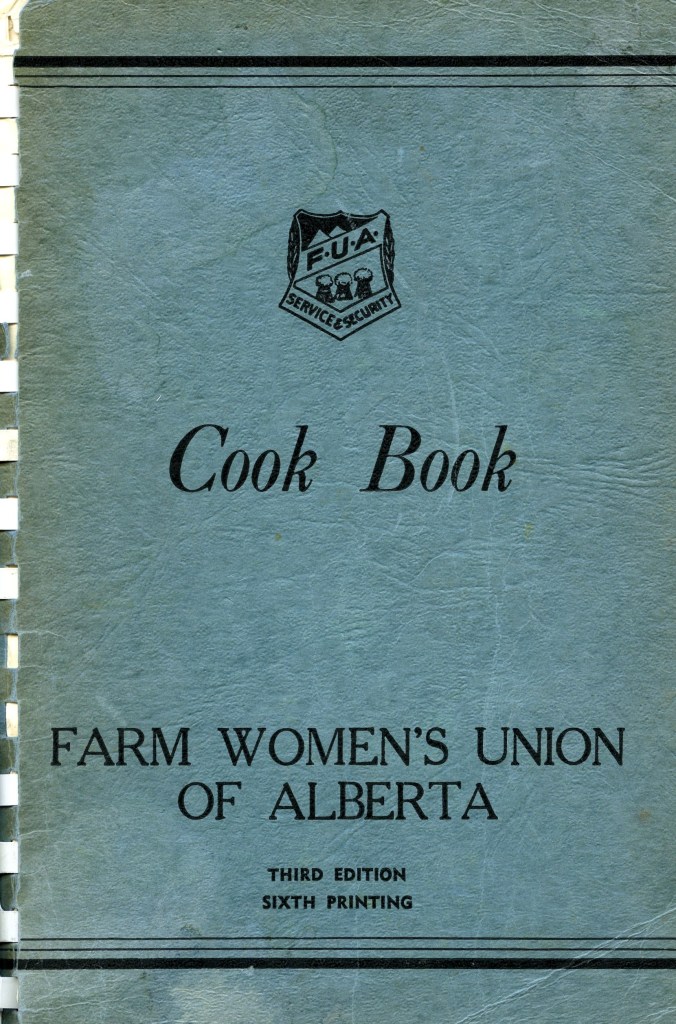
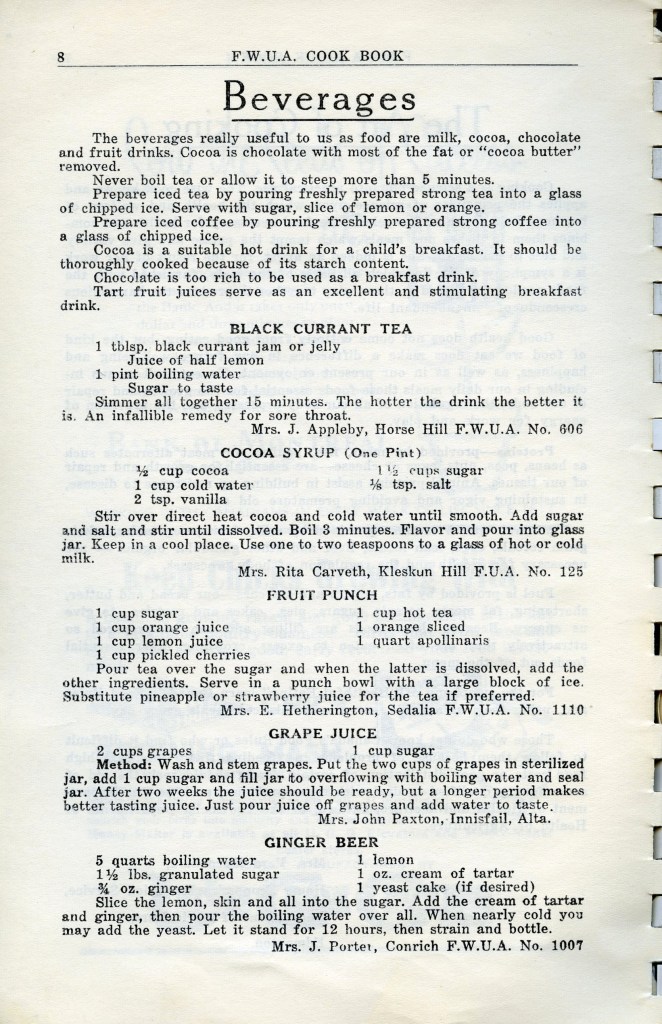
The legacy of the cookbook also continued with the FWUA. In 1952 a committee was formed to select recipes to contribute to FWUA cookbooks in throughout the 1950s and 60s.
In 1958, the local officially adopted the name Chestermere Local No. 1007, reflecting the growing prominence of Chestermere as the area’s community centre.
The Women of Unifarm Era
Another organizational change arrived in 1970 when the provincial body became Women of Unifarm. The local was subsequently renamed Chestermere Local No. 102-07.
Although the name changed, the group’s commitment to community service remained strong. Members supported causes such as the Irene Parlby Scholarship Fund, the Canadian Cancer Society, and the Red Cross. Meetings featured speakers on topics including the introduction of the metric system to agriculture, hearing health, and youth programs such as Goldeye Camp.
The organization continued to provide local women with opportunities for learning, leadership, and friendship while adapting to the changing realities of rural Alberta.
An Enduring Legacy
The Chestermere local formally disbanded in 1997. Its legacy, however, continues through the records, photographs, and memories preserved by archives. From organizing educational programs and charitable initiatives to hosting dances, suppers, and community celebrations, the women of the Conrich-Chestermere UFWA played a significant role in shaping rural life in the region. Their story reminds us that local organizations were often the backbone of rural communities, creating networks of support, leadership, and advocacy that extended far beyond the farm gate.
More than seventy years of organized farm women’s activity took place under the names United Farm Women of Alberta, Farm Women’s Union of Alberta, and Women of Unifarm in the Conrich and Chestermere area. Yet the story does not end with the local’s formal disbandment in 1997. In 2026, the community marked the 100th anniversary of the founding of the Conrich UFWA local, and the organization’s legacy lives on through the descendants of the UFWA and FWUA, whose members continue to gather, volunteer, and advocate in the spirit of the women who first gathered in 1926. Their enduring commitment is a testament to a century of friendship, leadership, and community service in rural Alberta.
Written and researched by Rebecca Bazant and Erin Hoar with historical summaries provided by the Conrich-Chestermere UFWA.
Bibliography
“25th Anniversary 1951” and “1952-2000” histories provided by the Conrich-Chestermere UFWA.
“Conrich U.F.W.A. Centennial 1926-2026” provided by the Conrich-Chestermere UFWA.
Chestermere Historical Society. Saddles, Sleighs and Sadirons. (1971).
Clarke, Kay. “UFWA: United Farm Women of Alberta in Chestermere.” (April 16, and July 2019 July Historic Calgary Week presentation). Retrieved from https://chestermerehistoricalfoundation.org/wp-content/uploads/2020/09/UFWA-Kay-Clarke-2019-July-HCW.pdf
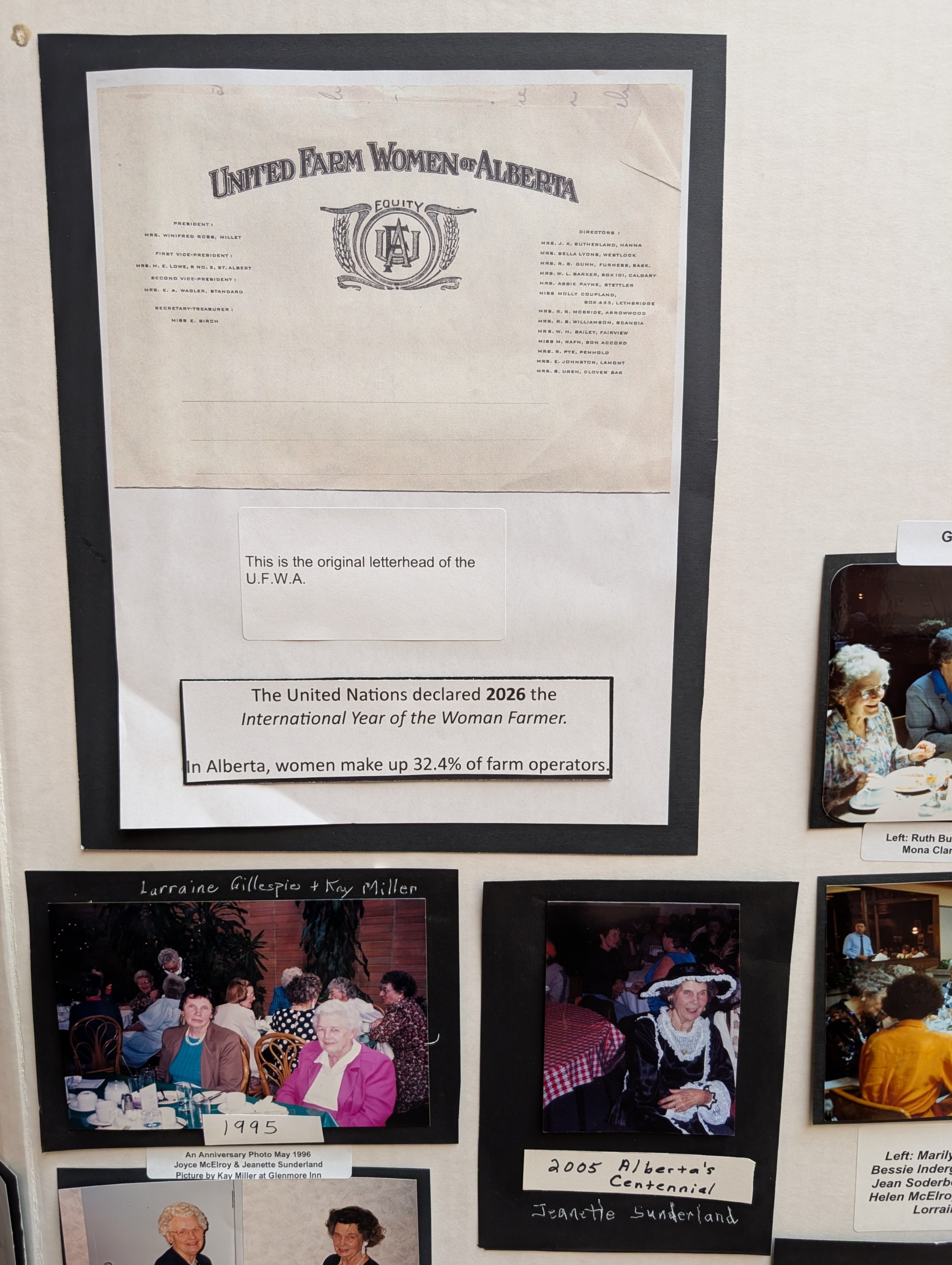
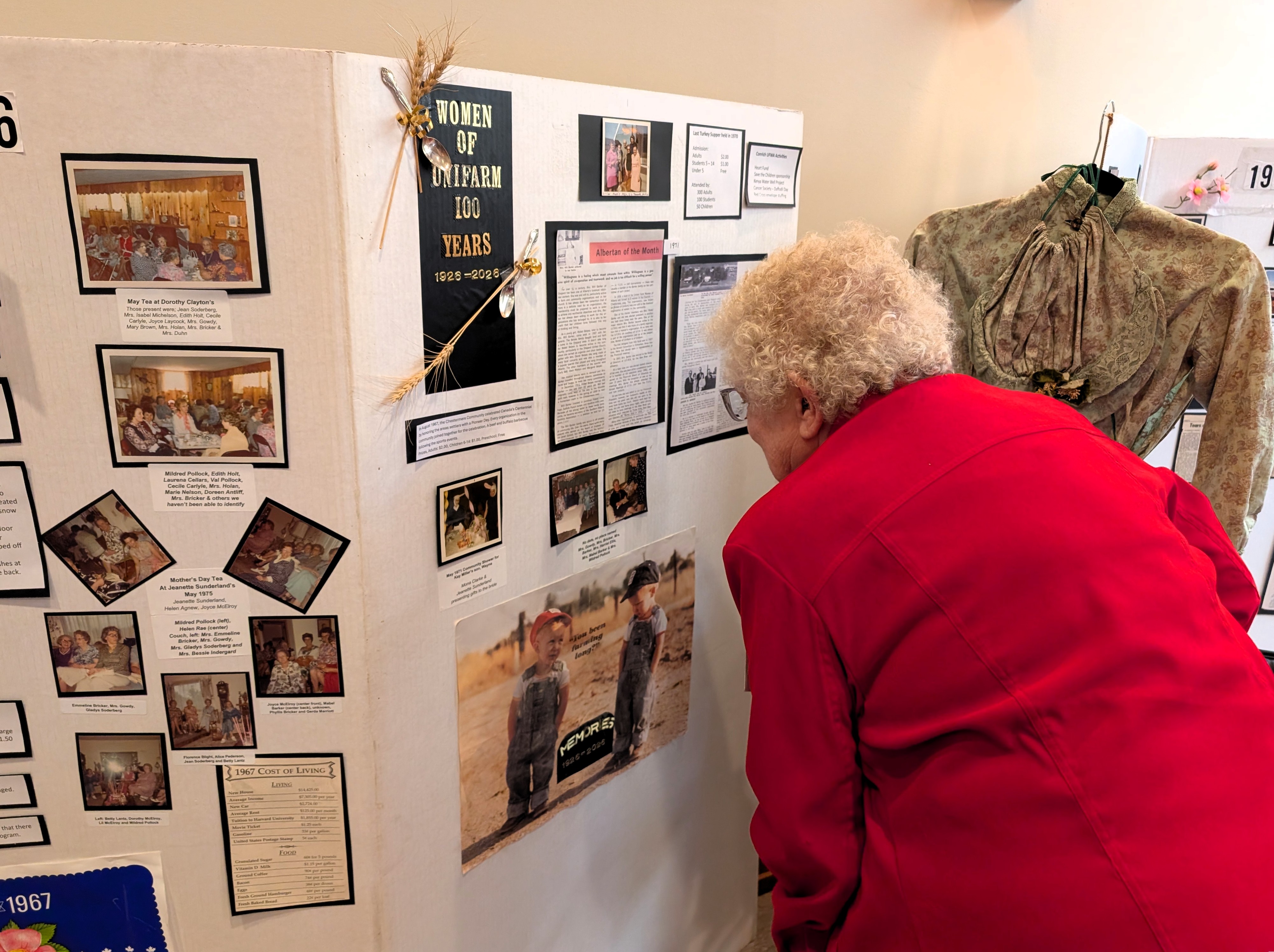
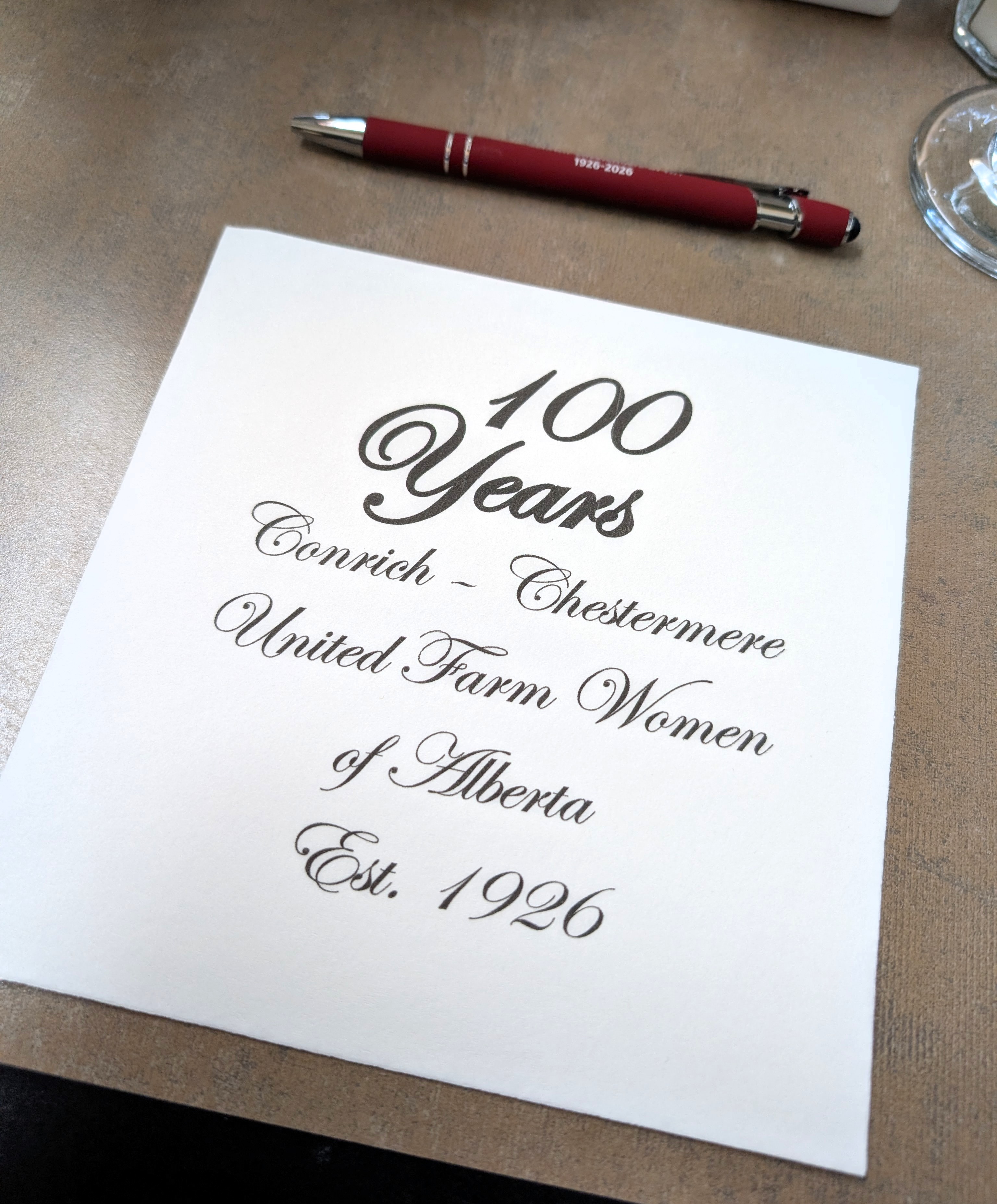
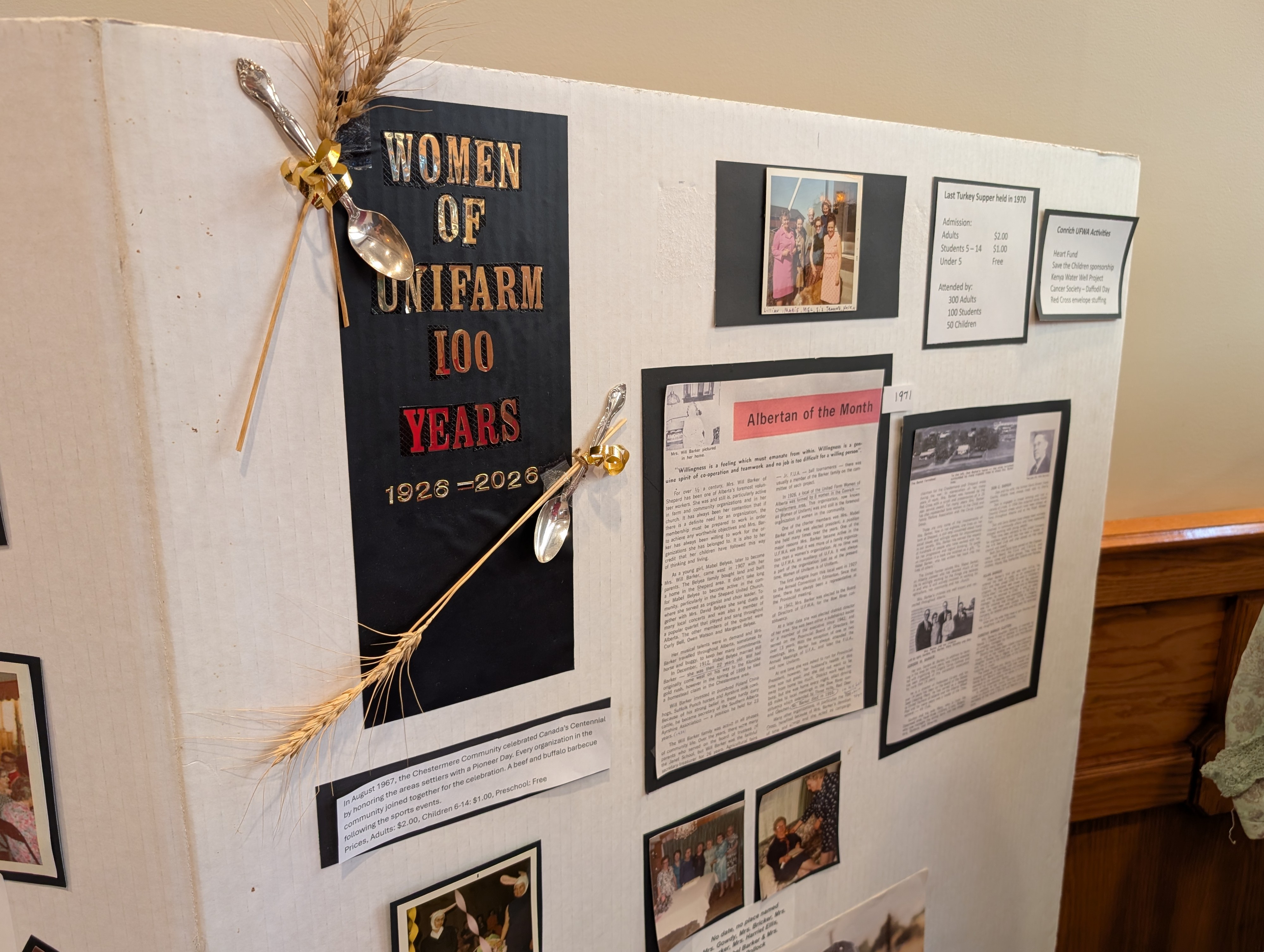
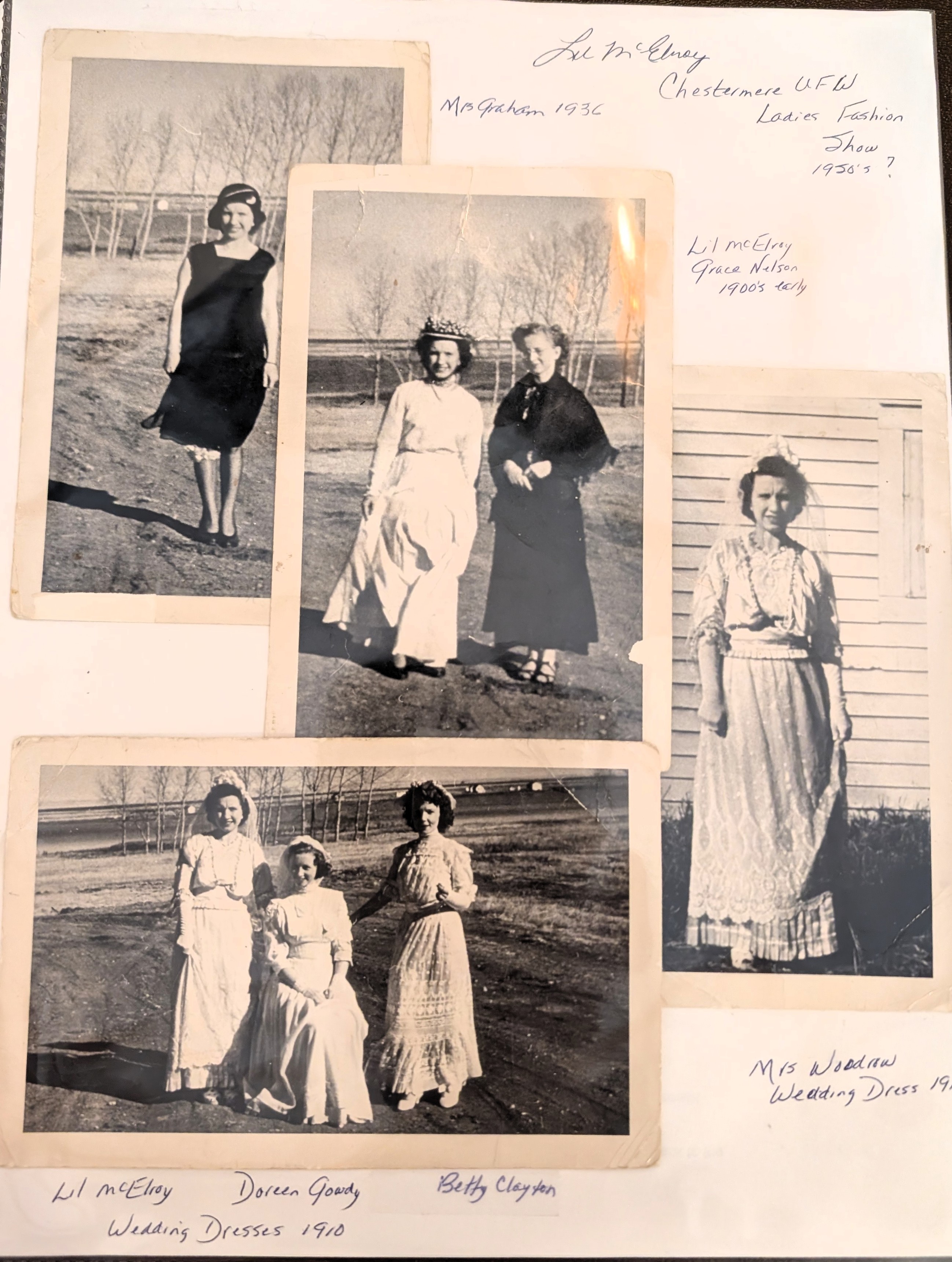
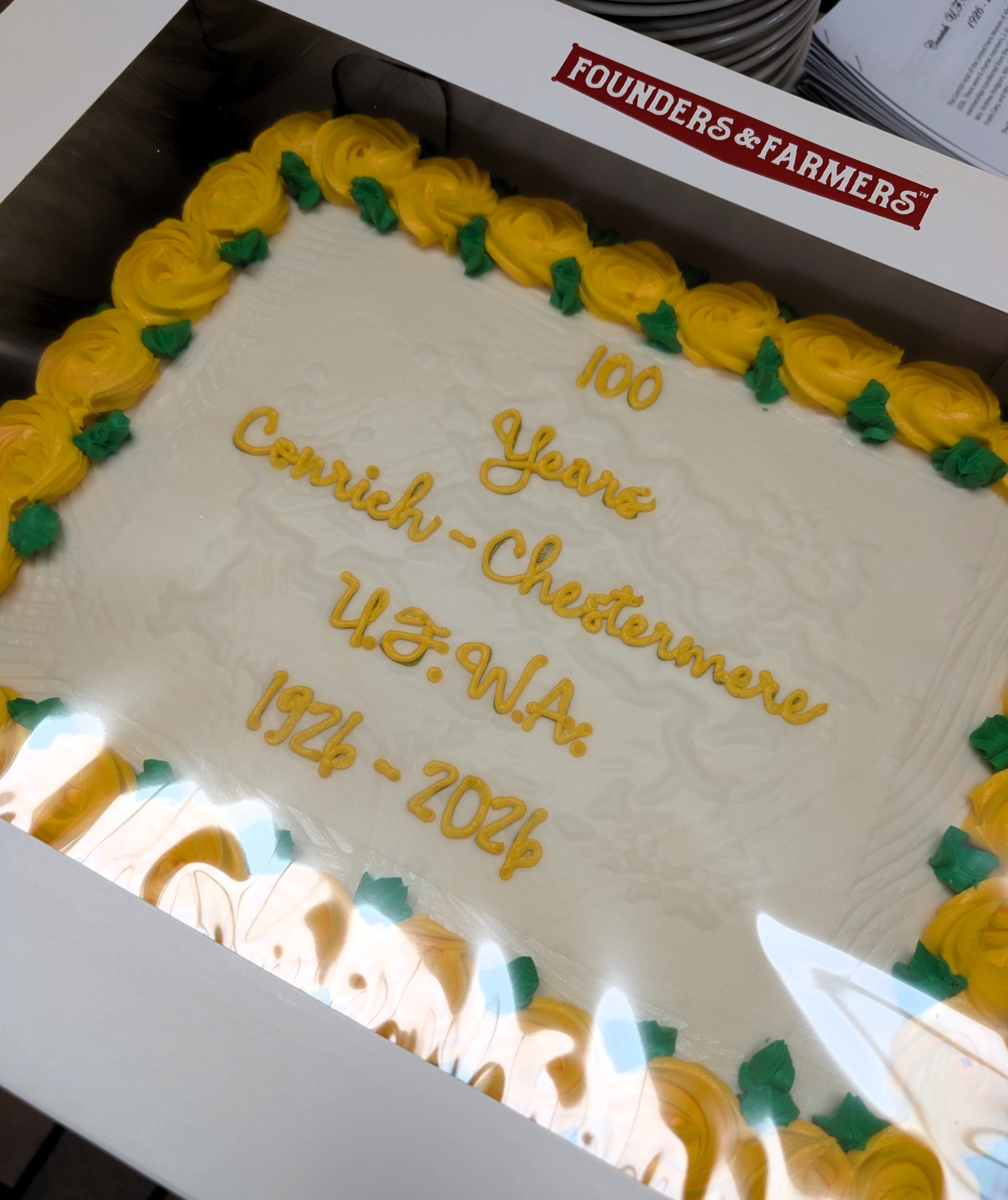
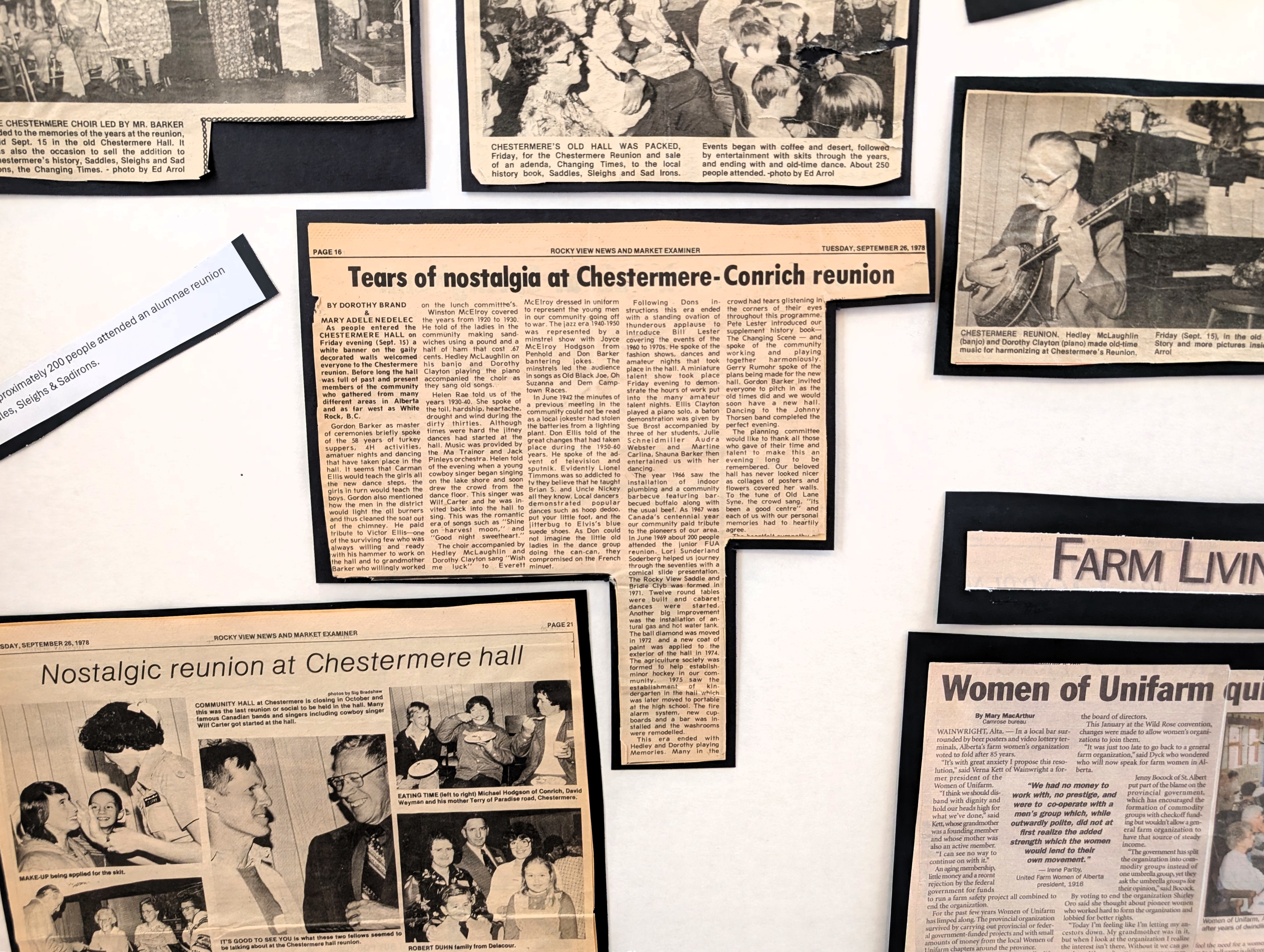
This past September, the Conrich-Chestermere UFWA invited the United Farmers Historical Society archivist to their centennial celebration. These connections endure today through the members, their daughters, and granddaughters, who continue to meet for annual get-togethers and luncheons. The spirit of the Conrich-Chestermere UFWA lives on, and we were so pleased to be included in their 100th anniversary.

