
By Tara Currie, Mount Royal University Practicum Student
Introduction
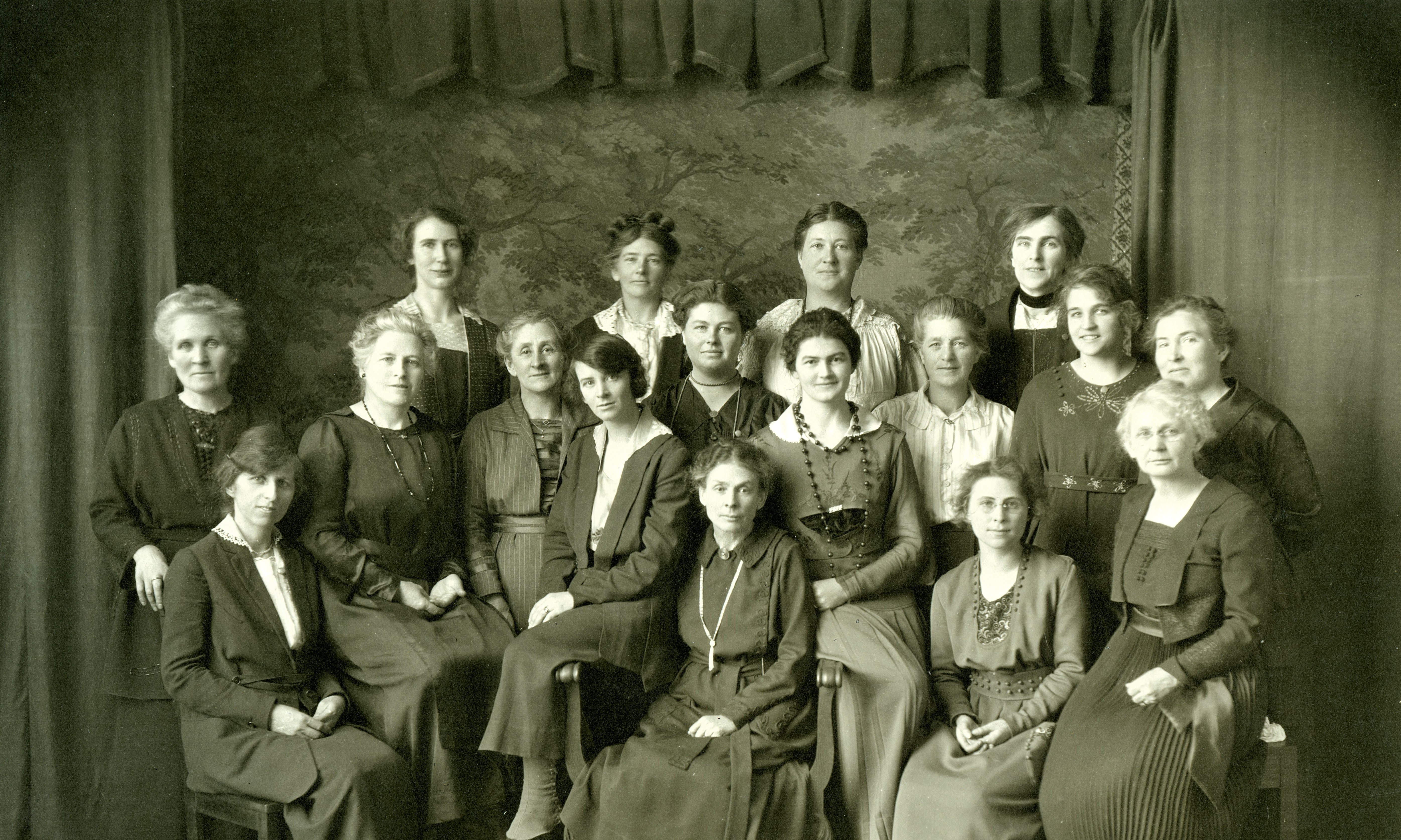
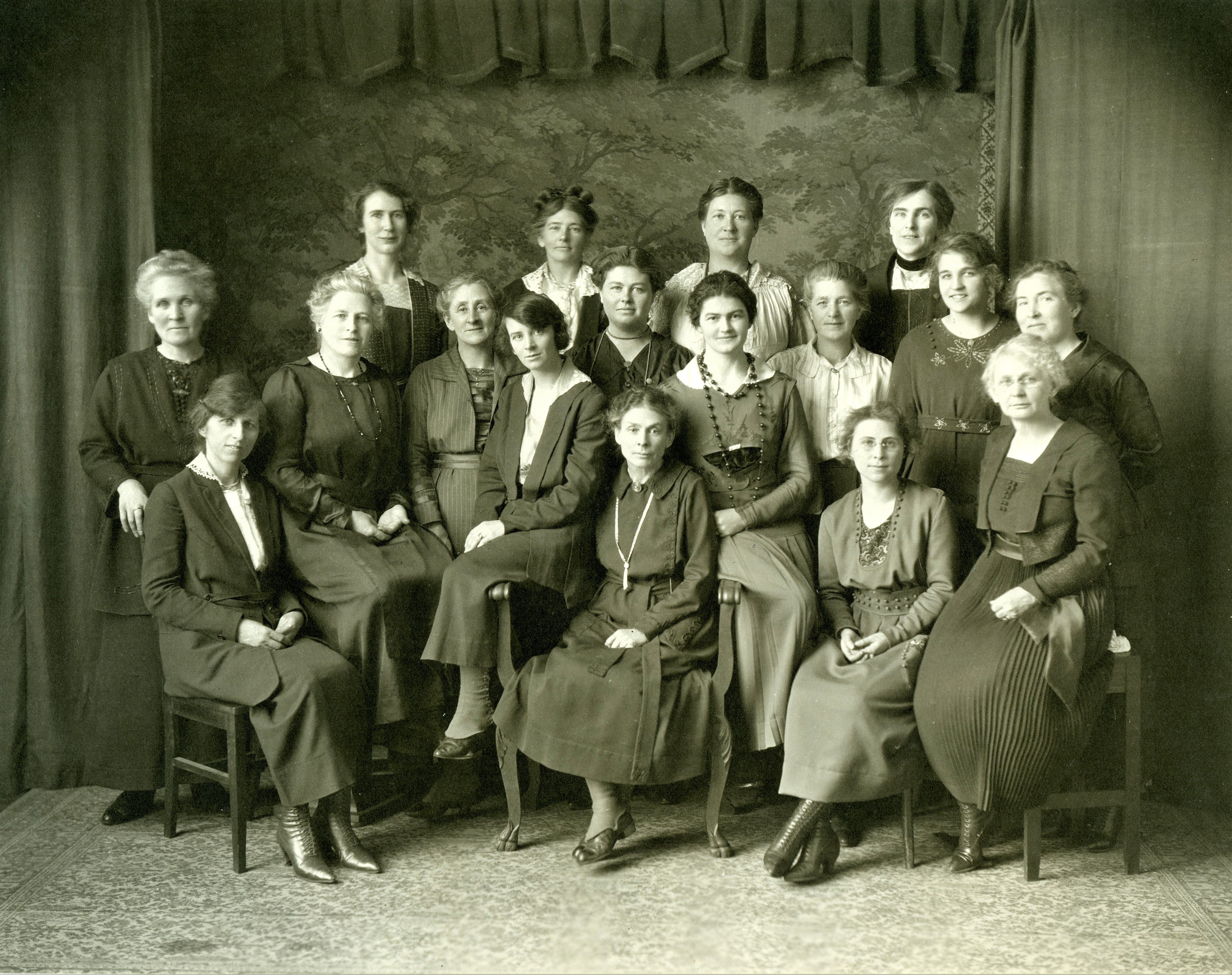
At the 1912 United Farmers of Alberta (UFA) annual convention in Calgary, a resolution was achieved and passed by the UFA which reinforced women’s suffrage and by 1913, women were welcomed as members of UFA. In 1915, the Women’s Auxiliary of the United Farmers of Alberta was established and over forty chapters were created throughout the province. The following year, their name was changed to the United Farm Women of Alberta (UFWA). That same year, certain women were able to vote in municipal and provincial elections. A community of organized farm women helped give rise to the farming movement in Alberta and were integral to women’s sense of belonging, political and social action, and community improvement in the province’s rural areas.
Women joined the UFWA for social interaction such as dinners, dances and plays, as well as for fundraising, educational and political endeavors. Women also campaigned, wrote, and progressed Alberta agricultural principles and themes, especially with regards to female matters. The advancement of farming women in the early 1900s, began by bridging social gaps to build communities and spearheading political activism for rural families.
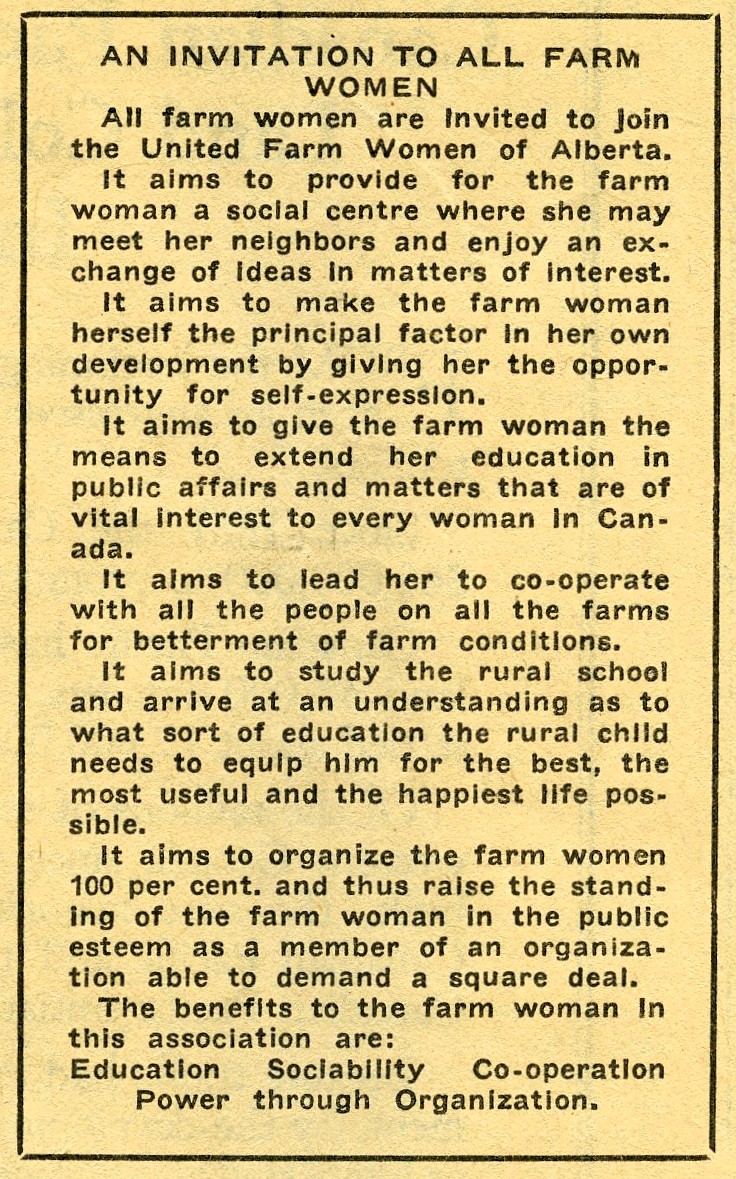
This blog post will focus on how the United Farm Women of Alberta utilized grassroots mobilization and the communicative power of UFA publications, particularly with the column “Interests of the United Farm Women” in The U.F.A. newspaper, to advance women’s rights, promote social reform, and transform rural communities in early twentieth-century Alberta, leaving a legacy of empowerment and progress. Their organized efforts shaped societal, health, educational, and political reforms. As can be seen with the UFWA, women formed powerful organizations to influence politics and support their own interests. As the UFWA progressed, they influenced and helped organize many (new) Locals attracting more inspirational women and drawing in increased membership for revival. As farm women evolved, they continued to be integral to the farming community and elevate agrarian democracy in their communities.
“Interests of the United Farm Women“
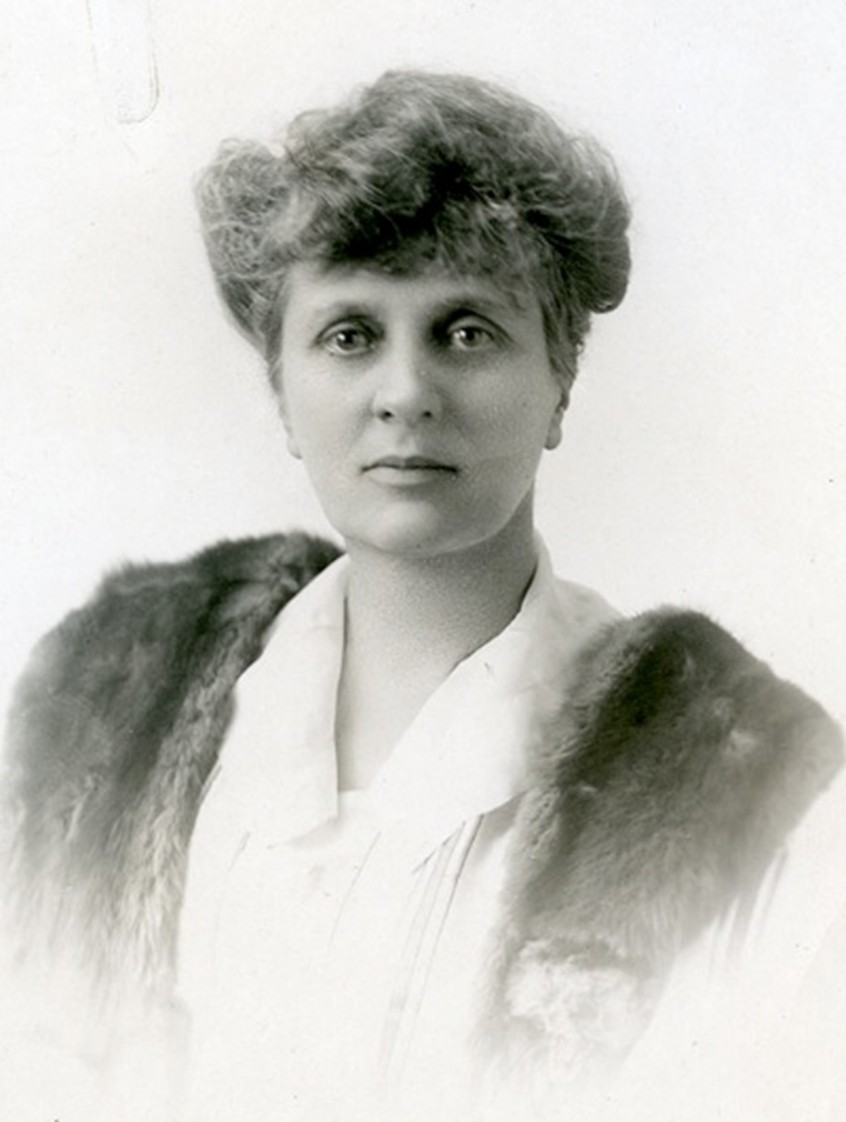
The U.F.A. newspaper was a critical communication method for early farming communities. It was published from 1922 to 1934, and featured sections on UFA central governance, politics, and organizational activities that advocated for change, and discussed challenges and important matters to the farming community. “Interests of the United Farm Women” was a section in The U.F.A. newspaper. It was an early voice for farm women with many early pieces written by Miss J.B. Kidd, Provincial Secretary for the UFWA. Over the years, there were contributions from various women including Irene Parlby, the first President of the UFWA and MLA in the UFA government, who later became the second woman in Canada to become a provincial cabinet minister.
In the early 1900s rural Alberta newspapers were vital, they served as a primary means of communication to stay informed about agricultural practices, market prices, and government policies. These writings facilitated the formation of agricultural organizations and co-operatives, which were critical for sharing resources and improving the way of life among farm women. This was especially evident with the “Interests of the United Farm Women” writers for The U.F.A. newspaper. These women played a role in raising awareness of issues that impacted rural Alberta and wrote on female-centered concepts such as seasonal recipes, pattern making, UFWA resolutions, Alberta laws impacting women including the Homestead Law, and making a will. There was also a monthly (sometimes twice) exclusive letter to ladies called “Dear Farm Women.” This became a necessary communication tool for connecting women, sharing knowledge, and fostering community support in Alberta during this period.
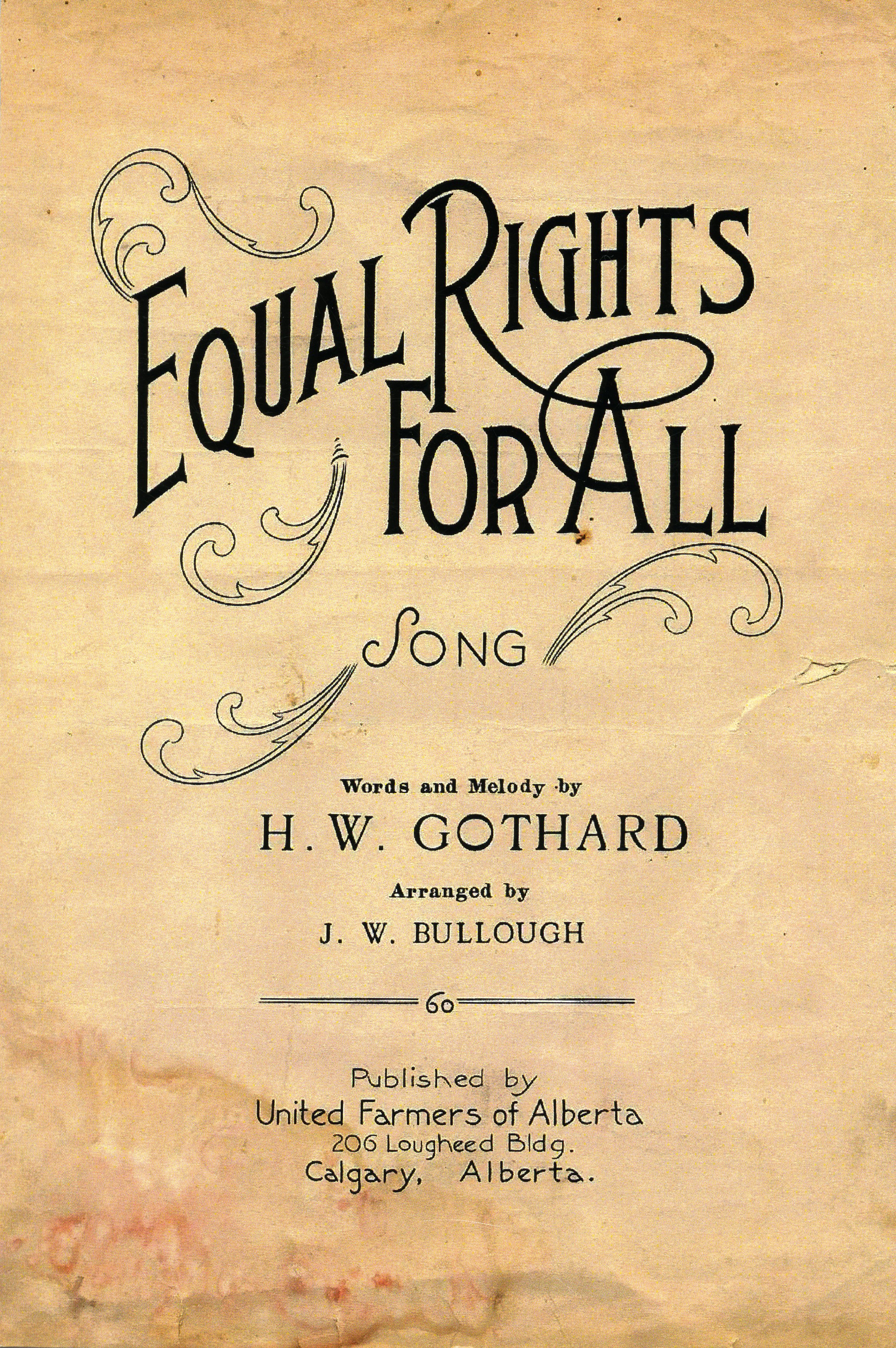
Of particular interest in the early activities of the UFWA was the prevalence of local community songs which promoted a movement of pride and agricultural loyalty. Following World War Two, author Brad Rennie in his book The Rise of Agrarian Democracy notes that UFA song sheets, including “Equal Rights for All” sold over 1,000 copies. These songs became so instrumental at UFA and UFWA gatherings that singing was encouraged at the beginning of conventions and meetings to bolster the spirit of togetherness. In the early UFWA Meeting Minutes from 1926 to 1936, it stated that Mrs. Wyman moved a motion and was seconded by Mrs. Price to appoint a committee for song books at conventions.
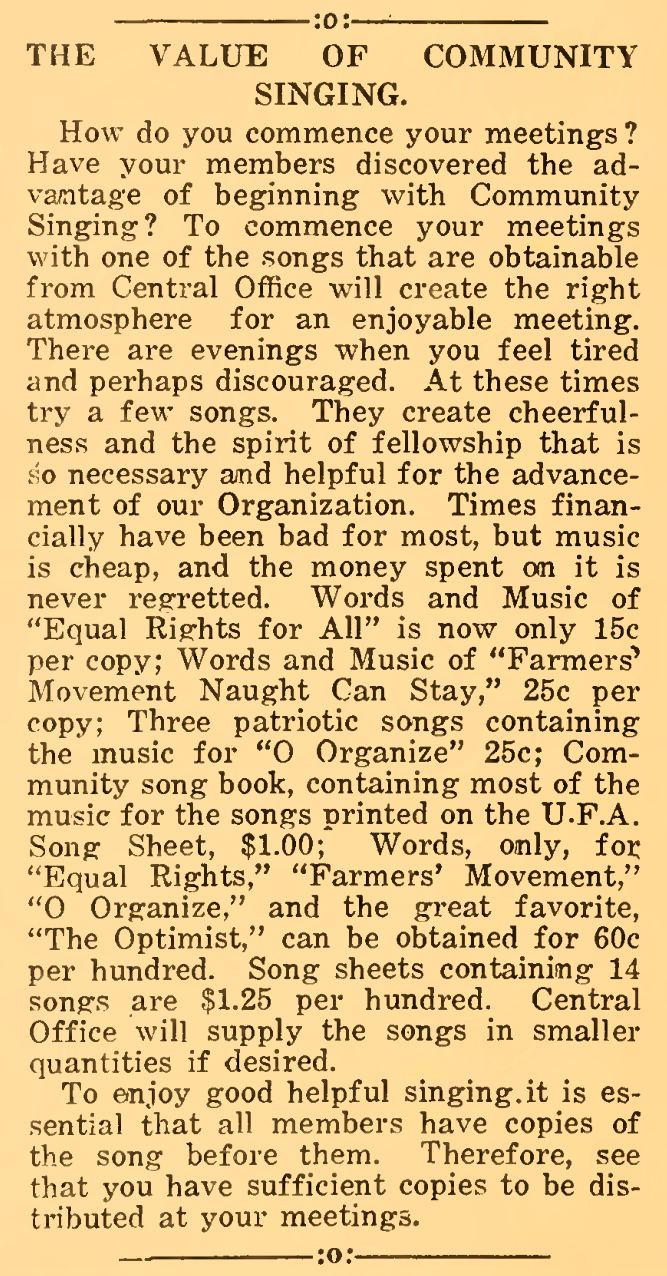
Through these songs, women formed bonds and reinforced community rural spirit and in the May 15, 1922 issue of The U.F.A. newspaper, the column “The Value of Community Singing” offered an aspiring message as to why it was so uplifting – it emphasized the merit of community singing as a way to create a cheerful and collaborative atmosphere during meetings. Singing fostered fellowship, uplifted spirits, and enhanced engagement, making gatherings more enjoyable and productive.
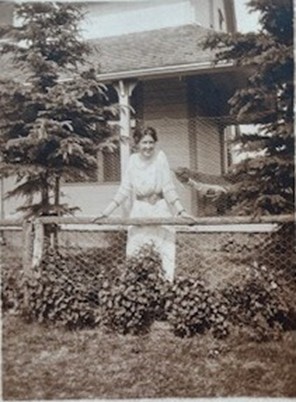
Zella Spencer (née Crowe)
Within the “Interests of the United Farm Women” section was a column called “Dear Farm Women” and was a letter on current affairs and issues to farming women. These letters were introduced in the latter years of the “Interests of the United Farm Women” feature and at first were signed off as “Yours sincerely U.F.W.A.” Then on May 15, 1928, the name H. Zella Spencer appears on the “Dear Farm Women” column. In an interview with Zella Spencer’s granddaughter, she concluded that her grandmother probably had not signed her name to the column when she first wrote but may have been convinced to do so. Zella Spencer soon became known as an enthusiastic and heartfelt writer who faithfully wrote to the farm women of rural Alberta.
Zella Spencer (née Crowe) lived a long and accomplished life. Born in 1884 to a farming family from Old Barns, Nova Scotia, she enjoyed a lifespan that extended into her nineties. She became a teacher and first taught in Nova Scotia, then her career extended to Ottawa, Winnipeg, Los Angeles and then Alberta. Her granddaughter fondly recalls a memory of her grandmother’s stories about the Parliamentary Library in Ottawa, a place where Mrs. Spencer spent fifteen years as a regular patron. Well known to the library staff, a librarian once told Zella that she “reads so much” and Zella affectionately declared “I am the luckiest woman.” Her deep appreciation for knowledge and access to information laid the foundation for her later involvement with The U.F.A. newspaper.
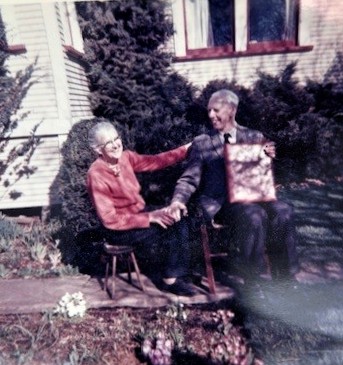
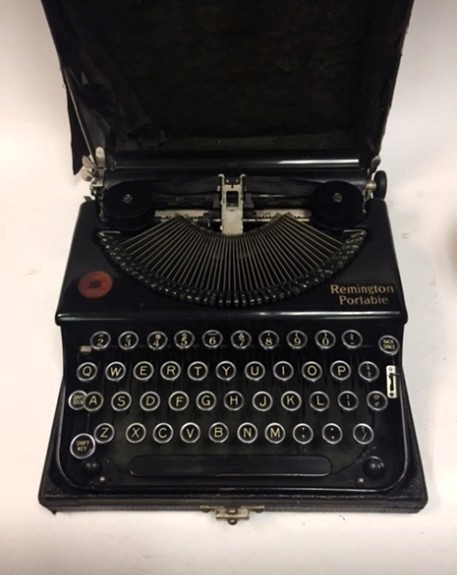
Her granddaughter has warmly shared a document called “A Tribute” authored by Zella Spencer in her later years on one of her favourite writing instruments, the typewriter. The composition recalls a story about her and her husband, Henry Elvins Spencer, and offers a fascinating window into their personal history, family connections, and farming community in the early twentieth century. Central to their narrative is not only their remarkable journey, but also Zella’s experience as a stenographer in Winnipeg and Los Angeles, to teaching and homesteading in rural Alberta. Throughout this, the enduring presence of her Remington portable typewriter travelled with her everywhere. This tool, gifted by Henry’s colleagues in the House of Commons, became a steadfast companion in both her professional and personal life, serving as a bridge for communication and documentation for more than four decades.
Her Remington was more than just a piece of equipment; it was integral to her daily life. Zella used the typewriter to maintain close ties with her three children, who lived in London, Ontario; Ottawa; and California, through weekly letters. It also facilitated her work as an influential voice for rural women, notably through the “Dear Farm Women” column in The U.F.A. newspaper, where she advocated for essential rural services and strategies for community betterment. As Zella and Henry approached their nineties, the typewriter remained a symbol of continuity, aiding in correspondence, political work, and family connection. In an era when communication was often challenging, her typewriter became a lifeline, enabling Zella and Henry to remain close to loved ones, contribute to their community, and leave a legacy of engagement and advocacy. Their story is a testament to how ordinary objects can play extraordinary roles in the chronicles of Canadian life.
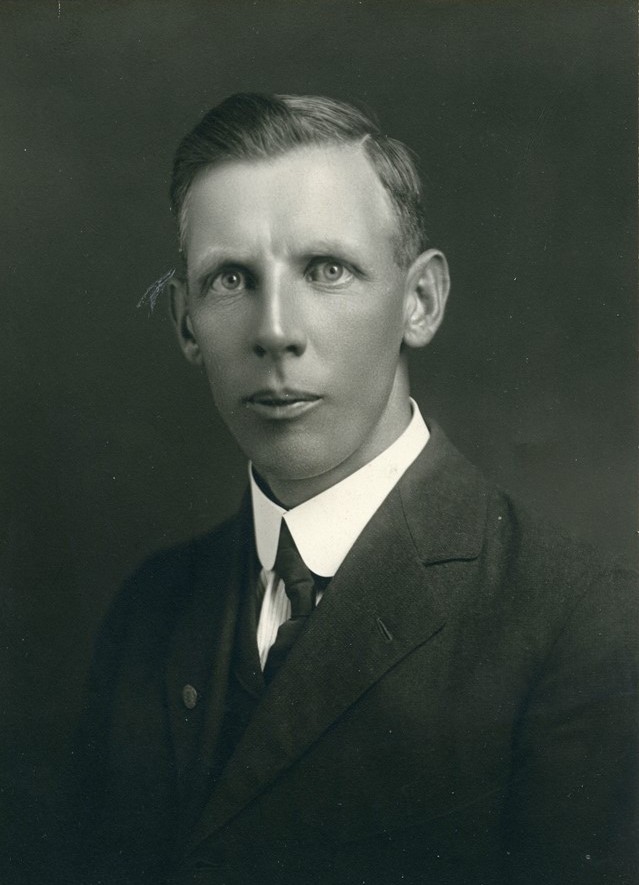
After starting a family, Zella began attending UFA conventions and events where she became socially and politically active, and developed connections and friendships with other prominent UFWA members, including first UFWA President Irene Parlby. In an interview with Mr. Henry Spencer by the Glenbow Foundation on January 21, 1962, the transcript reads “my wife was quite interested in the farm life and in the farm women’s movement – when they organized with the other part of the U.F.A. movement, became vice president later on with Mrs. Irene Parlby.” When UFA pursued federal politics in 1919, Zella was invited to the convention in 1922, but her husband Henry was not. They recently had a baby boy and Mr. Spencer offered to take care of their child while Zella went on a mission to the meeting. Henry was nominated at the convention, but not present, and Zella spoke on behalf of her husband. She was asked “do you think he will be the best man?” She replied with “of course I do, look at what he is doing now, looking after the baby so that I can come to this convention. I am sure that you will agree with me.” Henry won his seat and went on to serve several terms as the Federal U.F.A. elected Member of Parliament for the Battle River-Camrose constituency.
Zella’s life was marked by adaptability and resilience. She moved to the prairies, specifically to East Clover Bar, Alberta, to continue her teaching career. Here she met her future husband and farmer, Henry Elvins Spencer, and they married in 1913. Henry and his brother Herbert were new settlers to Canada and Zella helped them adjust to rural Alberta life and acclimate to Canada. The couple’s involvement in local and provincial affairs, especially education, was significant. Henry’s leadership roles included serving as president of the Alberta School Trustees Association and secretary of the Canadian School Trustee Association, reflecting their deep commitment to improving educational opportunities and advocating for community needs. These pursuits mirrored the broader historical context of Western Canadian farmers and women, who organized for economic and political reform during times of hardship.
Zella came from a family that was committed to community participation. She was deeply connected to grassroots community needs and advocated for essential services such as schools, medical care, and telephone access during a time when communities needed rural people to take on these responsibilities. Zella also continued to write and soon became an influential voice for rural women through The U.F.A.’s “Dear Farm Women” column. After selling the homestead, Henry and Zella lived for a period in Edmonton before moving to the Comox Valley in 1948.
The family of Zella Spencer shared documents, photographs, and provided a wealth of information to be able to lay a context on who wrote “Dear Farm Women” and built the story of how Zella monumentally contributed to the UFWA movement, The U.F.A. newspaper and the positive influence she had on the women’s farming community. Along with her husband, Henry, together they were a power couple within the UFA movement for many years.
“Dear Farm Women“
The “Dear Farm Women” feature first debuted in The U.F.A. newspaper on January 15, 1927. The first letter was titled “Religion Not Safety, But Service” and was signed off by the U.F.W.A. We see H. Zella Spencer’s name emerge on May 15, 1928. While it is uncertain if Zella began the “Dear Farm Women” feature initially in 1927, a year later, The U.F.A. newspaper mentioned she will continue to write this column.
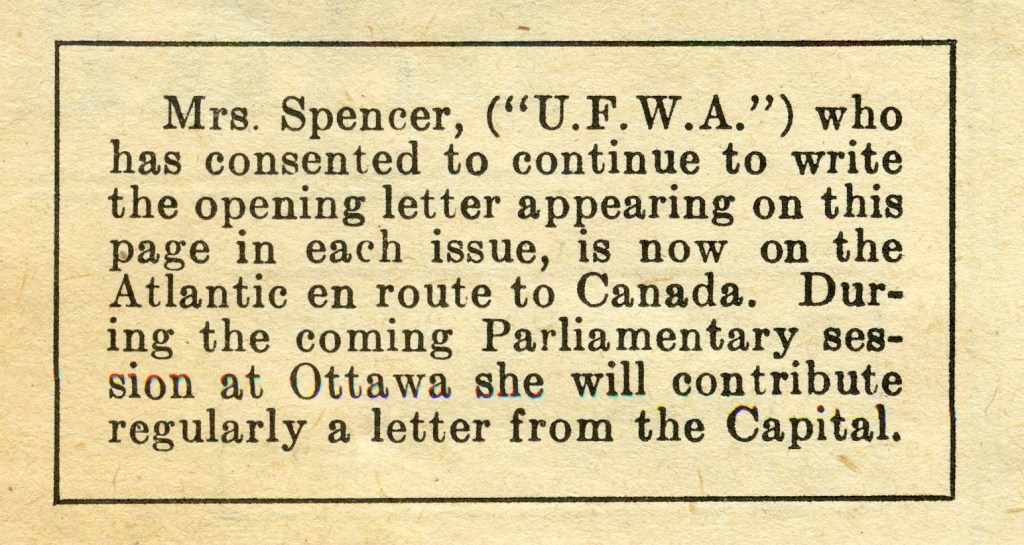
Preserving Canada’s Heritage: Insights from H. Zella Spencer
The following are select samples of Zella’s writing in The U.F.A. newspaper. The “Dear Farm Women” excerpts cover various topics in culture and heritage that were of interest to the United Farm Women of Alberta and brought to life through Zella’s own personal experiences.
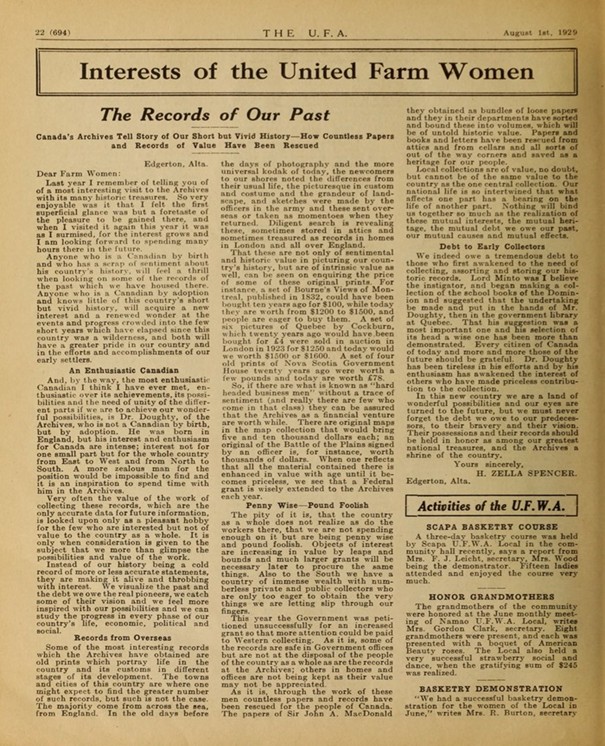
“Dear Farm Women” – August 1, 1929
In this “Dear Farm Women” column, H. Zella Spencer reflects on the immense value of Canadian archives, recounting her experiences during a visit to the Library and Archives of Canada in Ottawa, August of 1929. She emphasizes the essential role these archives play in safeguarding the nation’s collective memory. Under the stewardship of Dr. Doughty, an English-born Canadian dedicated to historical preservation, the archives have amassed a remarkable collection of documents, prints, maps, and rare artifacts, including significant overseas acquisitions. Spencer advocates for increased government investment, cautioning against the shortsightedness of underfunding such a vital resource. She lauds early collectors like Lord Minto and Dr. Doughty, whose commitment laid the foundations for preserving Canada’s unique heritage for future generations.
“Dear Farm Women” – January 15, 1931
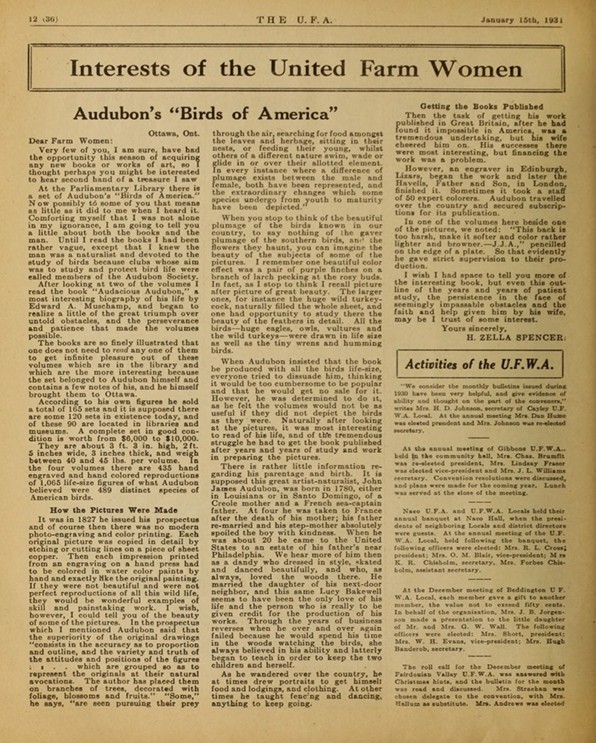
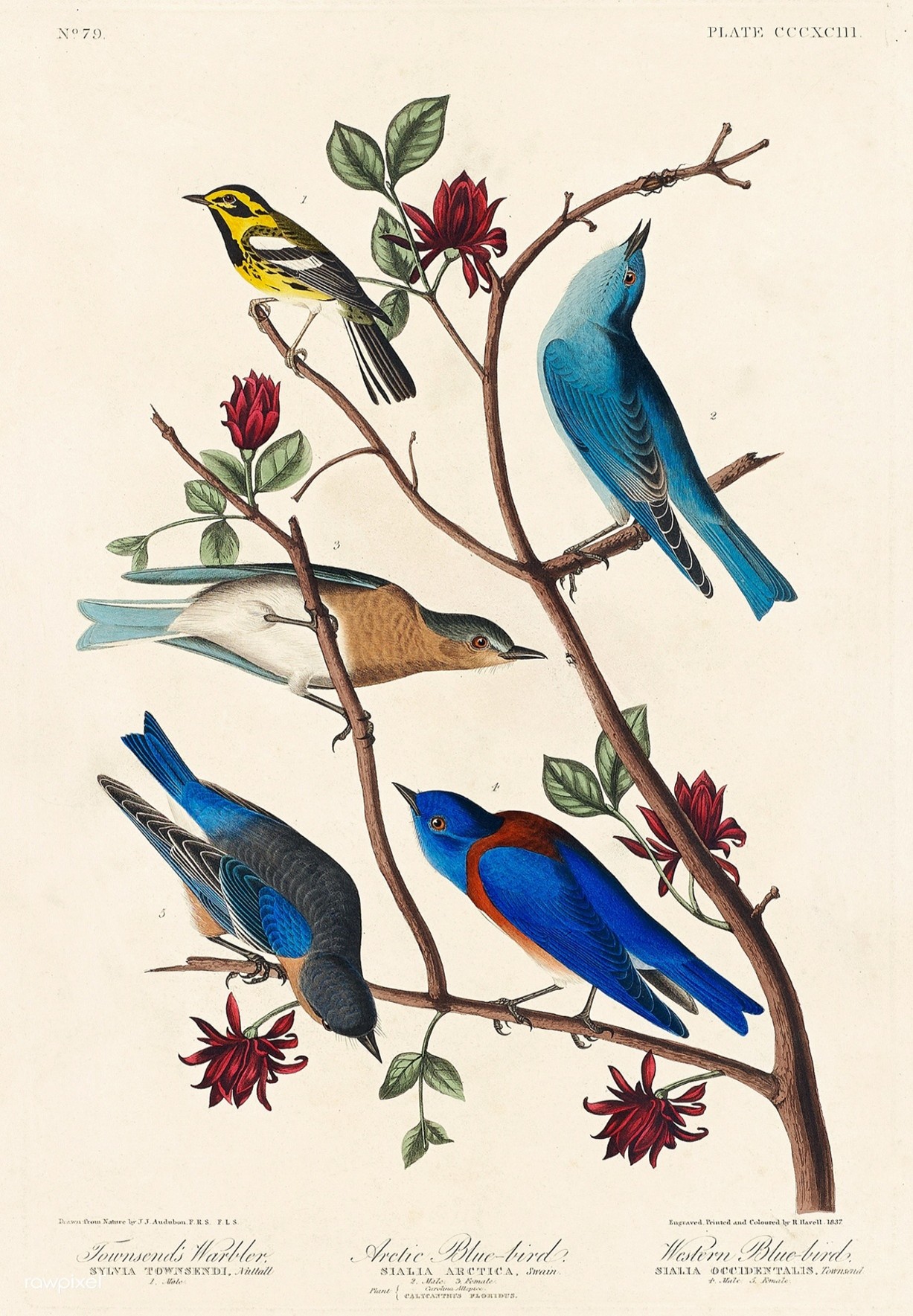
Another noteworthy topic explored by Spencer is the extraordinary “Birds of America” by John James Audubon, a rare and valuable collection housed in the Parliamentary Library. Through her January 1931 letter, she describes the exquisite artistry of this book series, which features life-sized, hand-engraved, and hand-colored depictions of over one thousand birds, representing nearly five hundred distinct species. Spencer shares Audubon’s compelling life story, including his perseverance through adversity, the steadfast support of his wife Lucy Bakewell, and his unwavering commitment to portraying birds in their true-to-life grandeur. She notes that only 120 complete sets are believed to exist, each valued as a masterpiece of both art and natural history.
“Dear Farm Women” – May 15, 1928
Some Interesting Points in Parliament Procedure
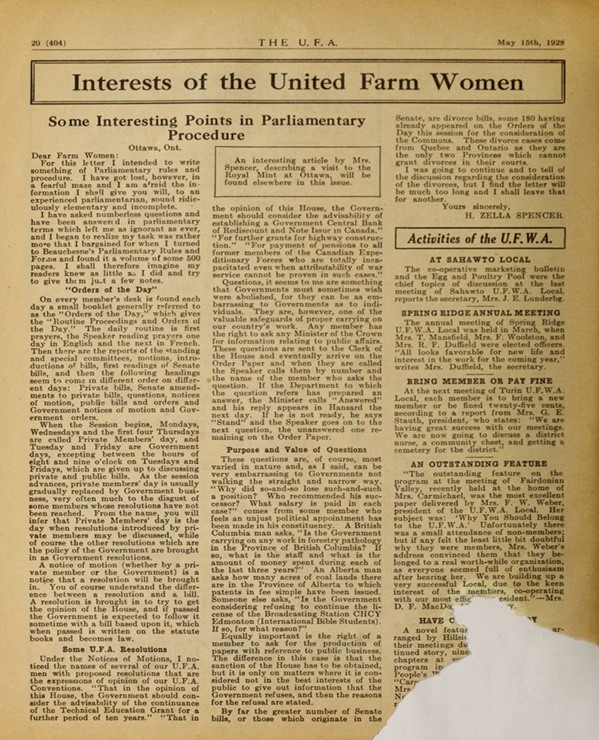
In addition to her reflections on cultural treasures, Zella offers clear and practical guidance on parliamentary procedure in her May 15, 1928 letter. She demystifies the workings of Canada’s parliamentary system for her readers, explaining terms such as “Orders of the Day,” “Routine Proceedings,” “Private Members’ Day, and “Government days.” Spencer distinguishes between resolutions, which express opinion, and bills which become law if passed. She also underscores the critical function of parliamentary questions, which provides members with a mechanism to seek information and hold the government to account. Furthermore, she highlights the unique role of Senate bills, particularly divorce bills which were especially prevalent in provinces lacking dedicated divorce courts, such as Quebec and Ontario.
Throughout her “Dear Farm Women” letters, Spencer’s purpose is clear: to educate and inspire rural women by sharing her insights into Canadian history, culture, and governance. She consistently stresses the importance of preserving Canada’s heritage and actively participating in the country’s civic life, empowering her audience to value both the stories of the past and their own role in shaping the future.
Conclusion: The Enduring Importance of the United Farm Women of Alberta and The U.F.A. Newspaper
The United Farm Women of Alberta (UFWA) exemplified the transformative power of grassroots organization, collective action, and community spirit. Through their advocacy, UFWA empowered rural women, advanced women’s rights, including suffrage and political reforms and fostered strong community bonds across Alberta. Their efforts in educational advocacy, cultural contributions, and heritage preservation left a lasting imprint on the province’s social and political landscape.
Central to this legacy was The U.F.A. newspaper, which served as a critical and prominent communication method for the early farming community. Published from 1922 to 1934, the newspaper provided a platform for rural voices, highlighted the political environment of UFA governance, and advocated for change and challenges that mattered to the farming community. It was especially important for connecting and engaging farm women, with dedicated columns like “Dear Farm Women” written by H. Zella Spencer, which addressed current affairs, issues, and topics of conversation relevant to women. Through these columns, the newspaper educated, inspired, and empowered rural women to participate actively in civic life.
The U.F.A. newspaper was more than a publication, it was a lifeline for information, advocacy, and social connection. It bridged distances, fostered unity, and amplified the voices of rural women, helping them discover their power to shape their own futures. By preserving stories, sharing knowledge, and championing reform, the newspaper played a pivotal role in advancing agrarian democracy and nurturing a tradition of civic engagement that continues to inspire. The UFWA and The U.F.A. newspaper together stand as attestation to the enduring strength of grassroots movements. Their unwavering commitment to progress, empowerment, and heritage has left a profound legacy, reminding us that meaningful change often begins with collective action at the local level, and that the voices of determined individuals can indeed shape the future for generations to come.
Bibliography
Gothard, H.W. “Equal Rights for All,” (sheet music). Glenbow Museum and Archives, 1920. Item iw-glen.230, (Photo). Alberta on Record. https://albertaonrecord.ca/iw-glen-230.
Langford, Nanci and Jessica Poulin, eds. “United Farm Women of Alberta.” The Canadian Encyclopedia. October 10, 2006, last modified January 7, 2022. https://thecanadianencyclopedia.ca/en/article/united-farm-women-of-alberta.
Langford, Nanci. Politics Pitchforks and Pickle Jars – 75 years of Organized Farm Women in Alberta. Detselig Enterprises Ltd, Calgary, 1997.
Maclean, Unca Miss. “An interview with Mr. Henry Spencer, (January 21, 1962). Glenbow Foundation. From Zella Osberg Family, (Transcript).
Osberg, Zella. (Granddaughter of Mrs. H. Zella Spencer), phone interviews by Tara Currie and Erin Hoar. Calgary, (March 2026).
Rennie, Bradford James. The Rise of Agrarian Democracy: The United Farmers and Farm Women of Alberta, 1909 – 1921. University of Toronto Press, 2000.
Spencer, H. Zella. “Interests of the United Farm Women: Dear Farm Women – Audubon’s Birds of America.” U.F.A. Vol.10, no.2 (January 15, 1931), 12. https://ufhsarchives.andornot.net/permalink/theufav10n2ufoa-12.
Spencer, H. Zella. “Interests of the United Farm Women: Dear Farm Women – The Records of Our Past.” U.F.A Vol. 8, no.19, (August 1, 1929), 22. https://ufhsarchives.andornot.net/permalink/theufav8n19ufoa-22.
Spencer, H. Zella. “Interests of the United Farm Women: Dear Farm Women – Some Interesting Points in Parliamentary Procedure.” United Farmers Historical Society, 20. https://ufhsarchives.andornot.net/permalink/theufav7n14ufoa-20.
Spencer, Zella. “Tribute – Ode to Typewriter,” [c. 1980’s]. Zella Osberg Collection.
Spencer, Zella. “Zella Osberg Collection.” March 2026, (Photo). Calgary, AB.
U.F.W.A. “Index to U.F.W.A minutes from 1926 – 1931,” 295. United Farmers Historical Society. https://ufhsarchives.andornot.net/permalink/theufwa2117ufoa-295.
U.F.W.A. “Religious Not Safety, but Service.” U.F.A. Vol. 6. no.2, (January 15, 1927), 16. https://ufhsarchives.andornot.net/permalink/theufav6n2ufoa-16.
UFHS Photo Collection. “Irene Palby, [1919 – 1935].” United Farmers Historical Society. UFA Fonds 11, Series 3, File 6, (Photo). https://ufhsarchives.andornot.net/permalink/descriptions1084.
UFHS Photo Collection. “UFWA Board of Directors [1921].” United Farmers Historical Society. UF.2004.0037.48 (Photo). https://ufhsarchives.andornot.net/permalink/descriptions11375.
UFHS Photo Collection. “Henry Elvins Spencer – 1917 – 1925.” Fonds 11, Series 3, File 5. United Farmers Historical Society. https://ufhsarchives.andornot.net/permalink/descriptions8241.
United Farmers of Alberta. “The U.F.A.” Vol. 3. No.28, (December 1, 1924, 34. https://ufhsarchives.andornot.net/permalink/theufav3n28ufoa-34.
United Farmers of Alberta. “The Value of Community Singing.” U.F.A. Vol. 1. No.6. (May 15, 1922) 7. https://ufhsarchives.andornot.net/permalink/theufav1n6ufoa-7.
United Farmers of Alberta Fonds. “Correspondence regarding copyright & Publication of U.F.A songs – 1920- 1921.” Fonds 1, Series 8, File #4. United Farmers Historical Society. https://ufhsarchives.andornot.net/permalink/descriptions1235.
Wikipedia Commons. “File: Illustration from Birds of America (1827) by John James Audubon, digitally enhanced by rawpixel-com 397.jpg.” https://upload.wikimedia.org/wikipedia/commons/4/4a/Illustration_from_Birds_of_America_%281827%29_by_John_James_Audubon%2C_digitally_enhanced_by_rawpixel-com_397.jpg.
Wikipedia. “United Farmers of Alberta – UFA MPS.” Last edited January 1, 2026. https://en.wikipedia.org/wiki/United_Farmers_of_Alberta
Further Reading
Audubon. “John. J. Audubon’s Birds of America.” National Audubon’s Birds of America Digital Library. https://www.audubon.org/art/birds-of-america
Langford, Nanci. Politics Pitchforks and Pickle Jars – 75 years of Organized Farm Women in Alberta. Detselig Enterprises Ltd, Calgary, 1997.
Rennie, Bradford James. The Rise of Agrarian Democracy: The United Farmers and Farm Women of Alberta, 1909 – 1921. University of Toronto Press, 2000.


That was such an interesting and detailed blog post, it was fantastic to learn more about Zella Spencer!
LikeLike
Very well done.
LikeLike